Clear Sky Science · en
Gene variants in the pheromone vomeronasal receptors and QTLs around behavioral and fat metabolism genes associated with altered feed efficiency in cattle
Why smarter cows matter for all of us
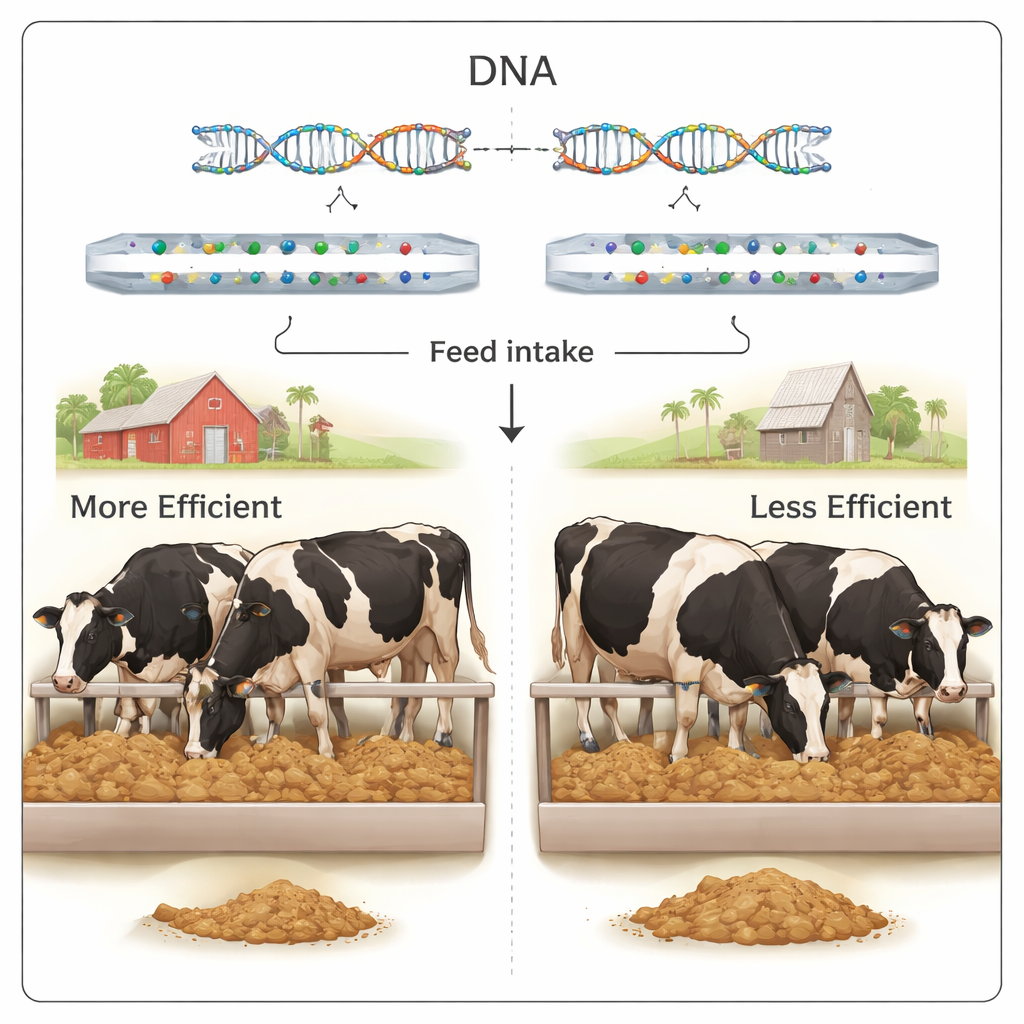
Feeding dairy cows is one of the biggest costs on a farm and a major source of greenhouse gases. If cows could turn the same amount of feed into more milk—or the same milk from less feed—farmers would save money and the environment would benefit from fewer wasted nutrients and lower emissions. This study explores why some cows are naturally more “thrifty” eaters than others, focusing on tiny differences in their DNA that may shape appetite, behavior, and how their bodies handle fat.
Measuring which cows are thrifty eaters
To understand feed efficiency, the researchers used a measure called residual feed intake, or RFI. Rather than just counting how much a cow eats, RFI compares how much feed a cow actually consumes with how much it is expected to need, given its body weight and milk output. Cows that eat less than expected for their size and production have negative RFI and are considered more efficient. Those that eat more than expected have positive RFI and are less efficient. This approach lets scientists look for animals that waste less feed without simply favoring cows that give more milk.
Combining herds to reveal hidden genes
Finding genes that influence a complex trait like feed efficiency usually requires large numbers of animals. Previous studies often relied on relatively small, single research herds, limiting the genetic differences that could be detected. In this work, the team combined detailed feed measurements and DNA data from Holstein cows in two countries, the United States and Israel. By pooling these distinct herds, they increased both the total number of cows and the variety of gene versions present. This joint analysis uncovered 14 positions in the genome where small DNA changes were strongly linked to differences in RFI, suggesting these regions harbor genes that affect how efficiently cows use their feed.
Smell, social signals, and fat handling
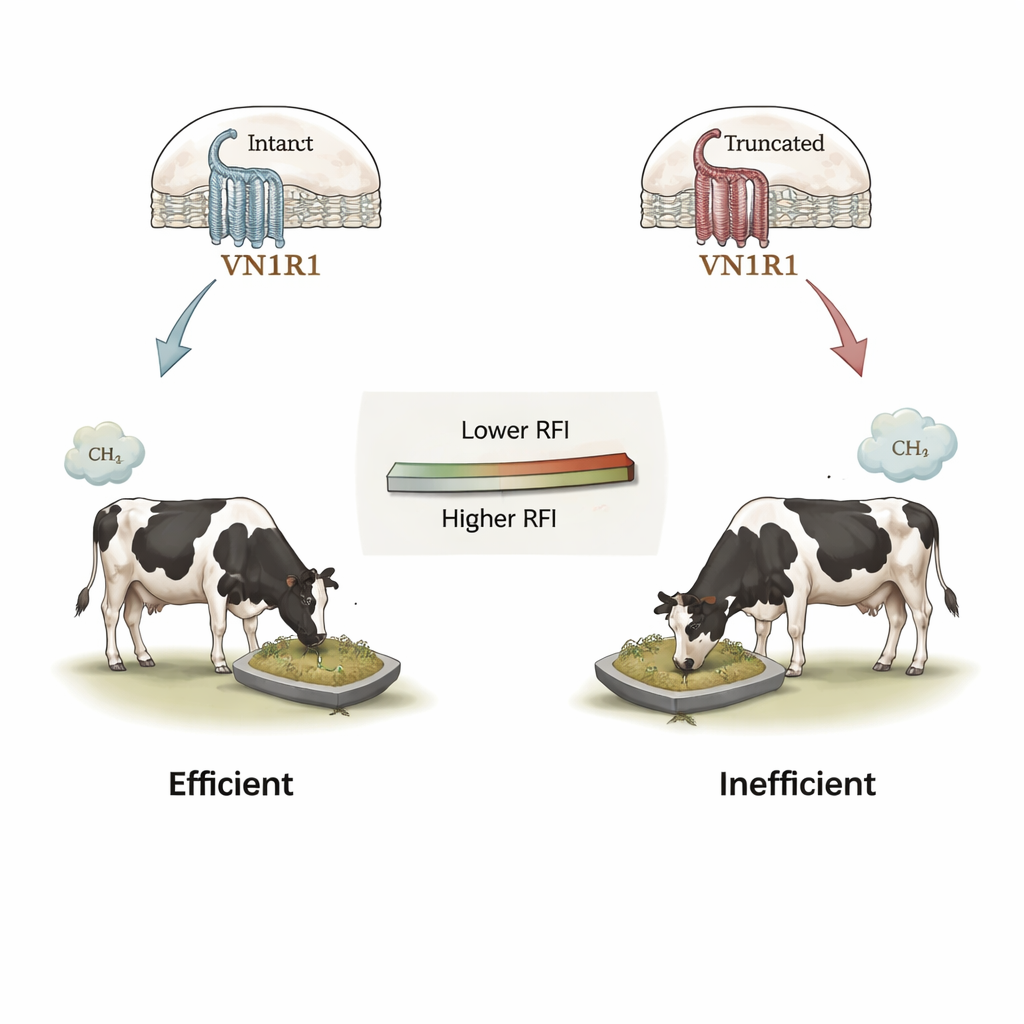
When the scientists examined the genes near these 14 DNA markers, three themes emerged. First, one hotspot contained a tight cluster of pheromone receptors—molecules in the so‑called vomeronasal system that help animals sense chemical signals from their environment and from other animals. Earlier research has hinted that smell and pheromones can influence appetite and feeding behavior in mammals. Here, a specific receptor gene called VN1R1 showed several versions, including broken, shortened forms of the protein. Second, genes related to social and behavioral responses were found near other markers, hinting that how a cow responds to its surroundings and herd mates might subtly shape its eating habits. Third, markers near genes involved in fat metabolism suggested that how a cow stores and burns fat is also tied to feed efficiency.
A broken receptor and wasteful feeding
To test whether VN1R1 really matters for efficiency, the team dug deeper into whole‑genome data from additional cattle populations, including Irish Holstein-Friesian bulls whose feed efficiency was already known. They identified key changes in the VN1R1 gene that cause the receptor protein to be cut short—essentially a non‑working version. One particular truncation, which produces an 89–amino acid fragment instead of a full receptor, was significantly more common in animals with high, unfavorable RFI. In other words, animals with an intact VN1R1 tended to be better at turning feed into milk, while those with the broken version tended to eat more than necessary. Surprisingly, these broken forms were frequent across American, Israeli, Irish, and New Zealand Holsteins, hinting at a long‑standing tug‑of‑war in breeding between different traits, such as high milk yield versus pure feed thriftiness.
What this means for future farms
For non‑specialists, the key message is that feed efficiency is not just about how big a cow is or how much milk it gives; it also reflects how its brain senses food and social cues, and how its body manages fat. This study provides early evidence that genes involved in chemical sensing—particularly the VN1R1 pheromone receptor—as well as genes tied to fat metabolism, help shape how efficiently cows use their feed. While the work is exploratory and needs confirmation in larger herds, it points toward practical possibilities. In the future, breeders could test bulls and cows for unfavorable versions of VN1R1 and related genes, selecting animals that are more efficient eaters. Such genetic selection, combined with existing breeding programs, could lower feed costs for farmers and reduce the environmental footprint of milk production.
Citation: Shirak, A., Yang, L., Bhowmik, N. et al. Gene variants in the pheromone vomeronasal receptors and QTLs around behavioral and fat metabolism genes associated with altered feed efficiency in cattle. Sci Rep 16, 7430 (2026). https://doi.org/10.1038/s41598-026-37314-3
Keywords: feed efficiency, dairy cattle, residual feed intake, pheromone receptors, genetic selection