Clear Sky Science · en
Beyond glycemia: adropin, asprosin, and irisin as potential biomarkers for cardiovascular risk in diabetes and prediabetes
Why new blood clues for heart health matter
Millions of people live with diabetes or its early stage, prediabetes, and their risk of heart disease is much higher than average. Doctors usually rely on classic numbers such as blood sugar, cholesterol, blood pressure, and age to estimate that risk. This study asked whether three newly discovered blood proteins—adropin, asprosin, and irisin—could add extra insight, possibly warning of trouble earlier than today’s tests can.
Three little-known messengers in the blood
Adropin, asprosin, and irisin are small proteins that help the body manage energy, fat, and sugar. Animal work suggests that adropin and irisin may protect blood vessels and improve the way the body uses sugar, while asprosin tends to rise when the body is struggling with insulin resistance. Because heart disease in diabetes grows out of long-standing problems with weight, blood sugar, and fat handling, scientists have wondered whether simple blood tests for these proteins could serve as early warning beacons for future heart trouble.
How the researchers tested the idea
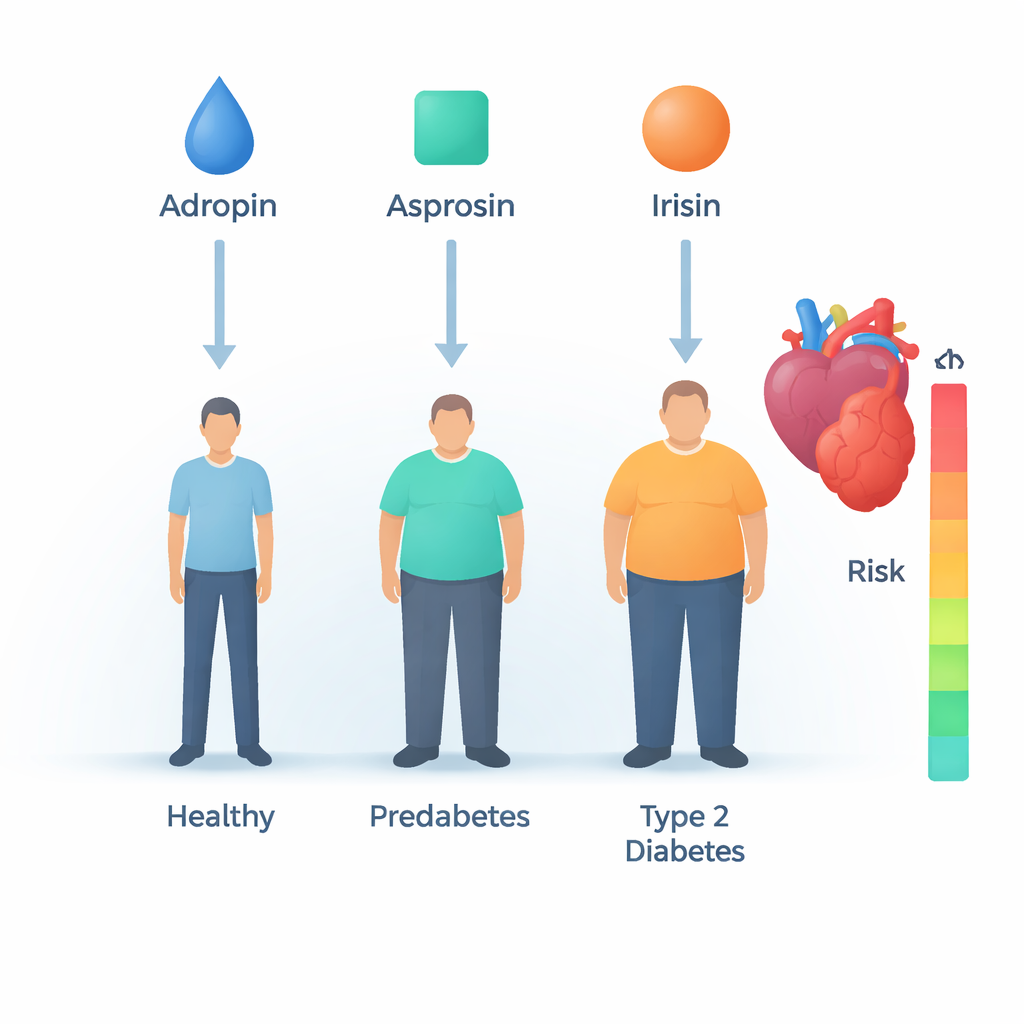
The team in Turkey enrolled 89 adults between 30 and 60 years old: 30 with type 2 diabetes, 30 with prediabetes, and 29 with normal blood sugar. The groups were carefully matched for age, sex, and body mass index so that differences in the new proteins would not simply reflect those basic traits. All volunteers had their waist size, blood pressure, and standard blood tests measured, including fasting sugar, long-term sugar control (HbA1c), and cholesterol and triglyceride levels. Blood samples were then used to measure adropin, asprosin, and irisin with a specialized laboratory test. Each person’s 10‑year chance of developing heart disease was calculated using the well-known Framingham Risk Score, which combines age, blood pressure, smoking, cholesterol, and other factors.
What the study found—and did not find
Contrary to expectations, average levels of adropin, asprosin, and irisin did not differ clearly between people with diabetes, those with prediabetes, and healthy volunteers. The usual risk factors behaved as expected: worse blood sugar, higher blood pressure, larger waistlines, and unhealthy cholesterol patterns were all tied to higher heart risk scores. But when the researchers looked directly for links between the three proteins and calculated heart risk, they found no strong or reliable relationships. In other words, these blood messengers did not, by themselves, sort people into high‑ and low‑risk heart disease groups better than the standard measurements already in use.
Hidden patterns in body fat and blood signals
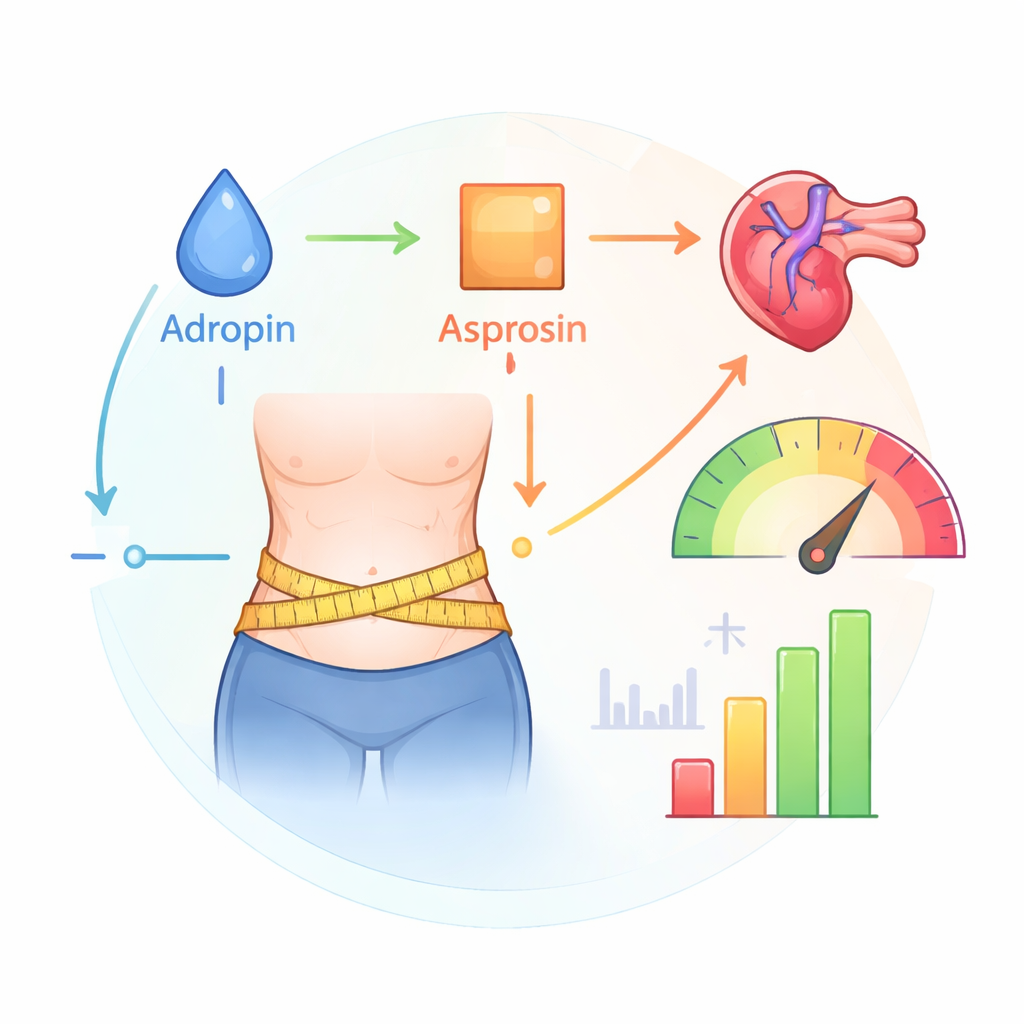
Even though the new proteins did not predict heart risk on their own, the study uncovered intriguing patterns. People with the lowest adropin levels tended to have larger waists and higher body mass index, hinting that low adropin may be an early marker of unhealthy weight gain. Waist size was also larger in those with lower asprosin levels, a surprising finding given past work linking high asprosin to diabetes. Perhaps most striking, adropin, asprosin, and irisin tended to rise and fall together in all three groups, suggesting that they may be part of a tightly coordinated network that responds to subtle shifts in metabolism long before disease becomes obvious.
What this means for patients and the future
For now, this work indicates that adropin, asprosin, and irisin are not ready to be used as stand‑alone blood tests to predict heart disease in people with diabetes or prediabetes. Traditional risk factors—such as blood sugar, blood pressure, cholesterol, and waist size—remain the most reliable guides for patients and doctors. However, the shared movements of these three proteins, and the hint that low adropin tracks with early obesity‑related changes, suggest they may be windows into hidden metabolic stress. Larger and longer studies could reveal how these signals change over time and whether combining them with standard measures might someday sharpen heart risk prediction and open doors to new treatments.
Citation: Karapınar Göze, E., Ürün Ünal, B., Ünlü, A. et al. Beyond glycemia: adropin, asprosin, and irisin as potential biomarkers for cardiovascular risk in diabetes and prediabetes. Sci Rep 16, 7745 (2026). https://doi.org/10.1038/s41598-026-37306-3
Keywords: type 2 diabetes, cardiovascular risk, biomarkers, adropin asprosin irisin, prediabetes