Clear Sky Science · en
Quantifying the realistic reduction potential of food waste in Swedish households
Why Scraped Plates Matter Less Than You Think
We are often told that throwing away food at home is one of the biggest problems in the modern food system: bad for the climate, our wallets, and our health. This study followed 41 Swedish households for almost three years to see, in detail, what actually ends up in the kitchen food-waste bin. By combining smart scales, cameras, and careful analysis, the researchers ask a simple but surprisingly neglected question: how much of this waste could realistically be avoided, and how big a difference would it make if it were?
Peels, Coffee Grounds, and Truly Wasted Food
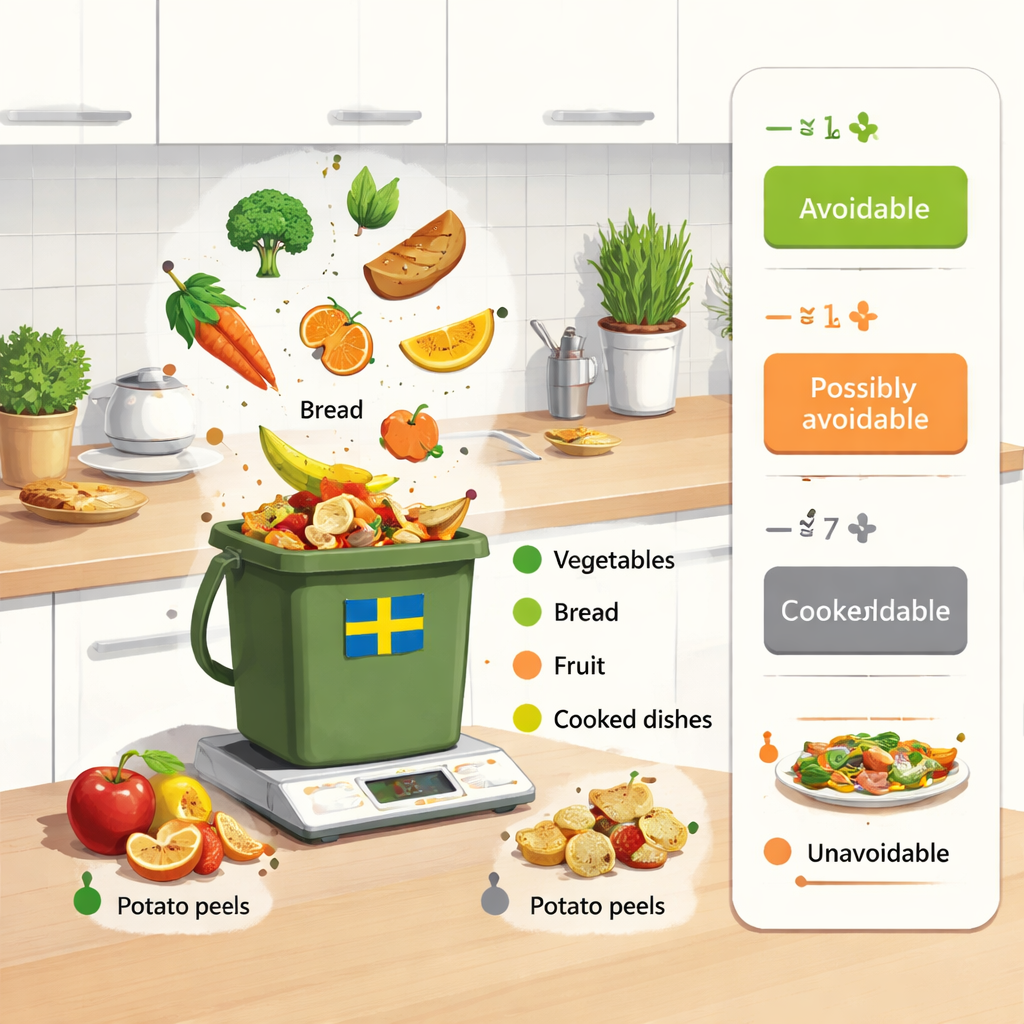
Not all food waste is equal. Banana peels, bones, and coffee grounds are hard to turn into dinner, while a forgotten salad or uneaten bread slice clearly could have been eaten. The team sorted more than 94,000 “waste events” into three groups: avoidable food (still edible or once edible), possibly avoidable food (like potato peels or broccoli stalks that some people eat and others discard), and unavoidable scraps. They found that only about one third—31.7 percent—of household food waste was realistically preventable. Two thirds were peels, grounds, and other inedible leftovers that most people would never consider food in the first place.
Counting Climate, Money, and Lost Nutrients
To understand the impact of this preventable waste, the researchers looked beyond weight. Using environmental databases, supermarket prices, and nutrient tables, they calculated the climate footprint, cost, and nutritional content of the food that could have been saved. On average, each person threw away about 16 kilograms of preventable food per year, responsible for 19 kilograms of carbon dioxide emissions and about 66 euros in lost food purchases. A striking finding was the quality of the wasted food: vegetables, fruits, and grain-based dishes dominated, and the “borderline” items—especially potato peels—were packed with dietary fiber, vitamin C, folate, and iron. In nutritional terms, the bin was richer than many people’s plates.
What Really Happens if We Halve Food Waste?
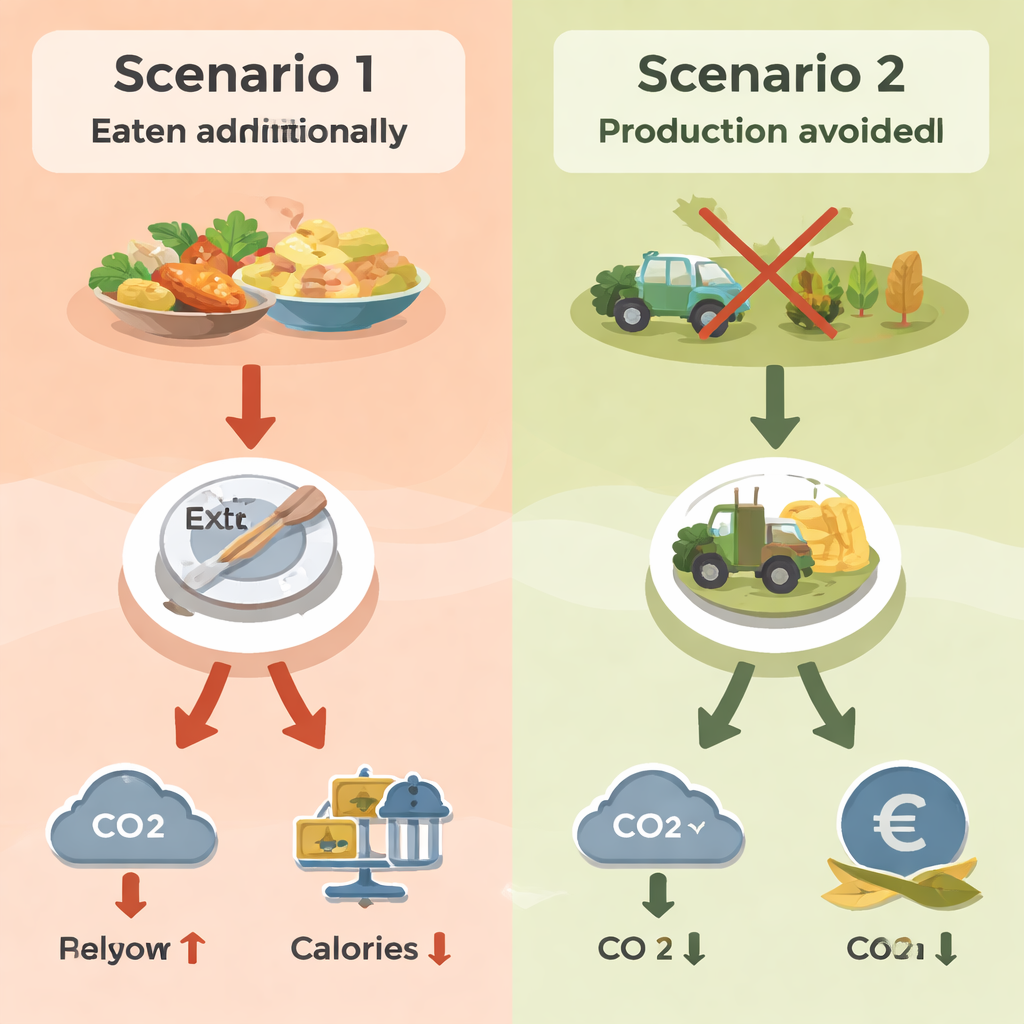
A global goal under the United Nations’ sustainability agenda calls for cutting consumer food waste in half by 2030. This study tested two realistic what-if stories built around that target. In the first, households simply eat half of the food they currently waste on top of their usual diets. That reduces the amount sent to the bin, but the food still has to be produced, transported, and stored. Because Sweden already turns food scraps into biogas through anaerobic digestion, less waste also means less energy recovered. When everything was added up, this “eat more to waste less” route slightly increased climate impact and offered no savings, while adding a small but steady bump in calories.
Saving by Buying Less, Not Just Eating More
In the second scenario, households prevent waste by planning better, storing food properly, and cooking the right amounts, so that half of their current preventable waste is never produced at all. Here, both production and waste treatment are avoided for that share of food, and families spend less at the supermarket. Even after allowing for a rebound effect—some of the saved money being spent on other climate-impacting goods—the climate benefit was modest: about 6 kilograms of carbon dioxide saved per person per year, or roughly half a percent of food-related emissions in Sweden. The financial gain was also small, around 33 euros per person per year, equivalent to just a few euros a month.
Rethinking Priorities Without Ignoring the Bin
The study’s message is not that food waste does not matter, but that its impact for Swedish households is smaller than often advertised, especially where waste is already collected separately and turned into energy. While reducing preventable waste can slightly cut emissions and household spending—and can also help people eat more nutrient-rich parts of foods, like peels and vegetable stems—the biggest gains for the food system are likely to come from other changes, such as shifting toward more plant-based diets. For readers, that means tackling food waste is still worthwhile, but it should be seen as one piece of a broader effort to make everyday eating healthier and more sustainable, rather than the single silver bullet it is sometimes claimed to be.
Citation: Sjölund, A., Sundin, N., Svensson, E. et al. Quantifying the realistic reduction potential of food waste in Swedish households. Sci Rep 16, 4323 (2026). https://doi.org/10.1038/s41598-026-37302-7
Keywords: household food waste, Sweden, climate impact, nutrition, sustainable diets