Clear Sky Science · en
MI-181 enhances ciliation and cilia length in a cigarette smoke exposed airway epithelial model
Why tiny lung hairs matter
Every time you breathe, your airways rely on microscopic hairs called cilia to sweep out dust, germs, and chemicals. Cigarette smoke is notorious for damaging these tiny cleaners, contributing to chronic lung diseases such as chronic obstructive pulmonary disease (COPD). This study explores whether a laboratory-designed compound, MI-181, can help regrow and repair these smoke-injured cilia in a realistic model of the human airway.
How smoking trips up the lungs’ cleaning crew
The lining of your windpipe and bronchi is covered with multiciliated cells—cells bearing dozens of moving cilia that push mucus and trapped particles toward the throat. Years of work have shown that cigarette and e-cigarette fumes shorten these cilia, reduce how many ciliated cells are present, and disturb their structure. When that happens, mucus and pollutants linger, fueling infections and chronic inflammation. At the molecular level, smoke dampens the activity of a key gene regulator called FOXJ1, which normally switches on many of the parts needed to build and anchor motile cilia.
Building a lab-grown airway to mimic real lungs
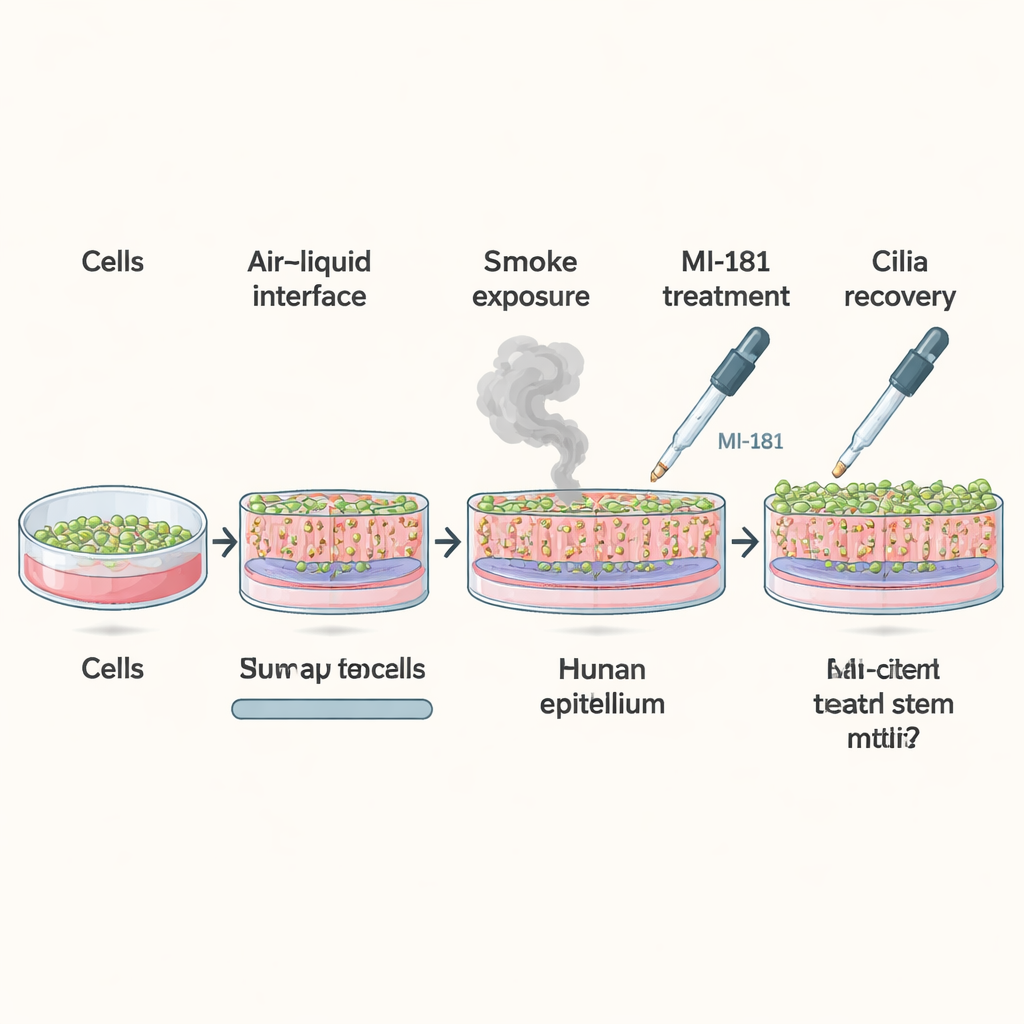
To test whether MI-181 could counteract this damage, the researchers turned to airway basal stem cells taken from the trachea and bronchi of three non-smoking donors. In the lab, they grew these cells on porous membranes and then exposed the top side to air, creating an "air–liquid interface" that encourages the cells to form a layered, ciliated airway surface similar to that in real lungs. Once the cilia had fully developed, the cultures were exposed to puffs of research-grade cigarette smoke for three days, then allowed to recover for two days either with or without various doses of MI-181.
Helping damaged cilia grow back longer
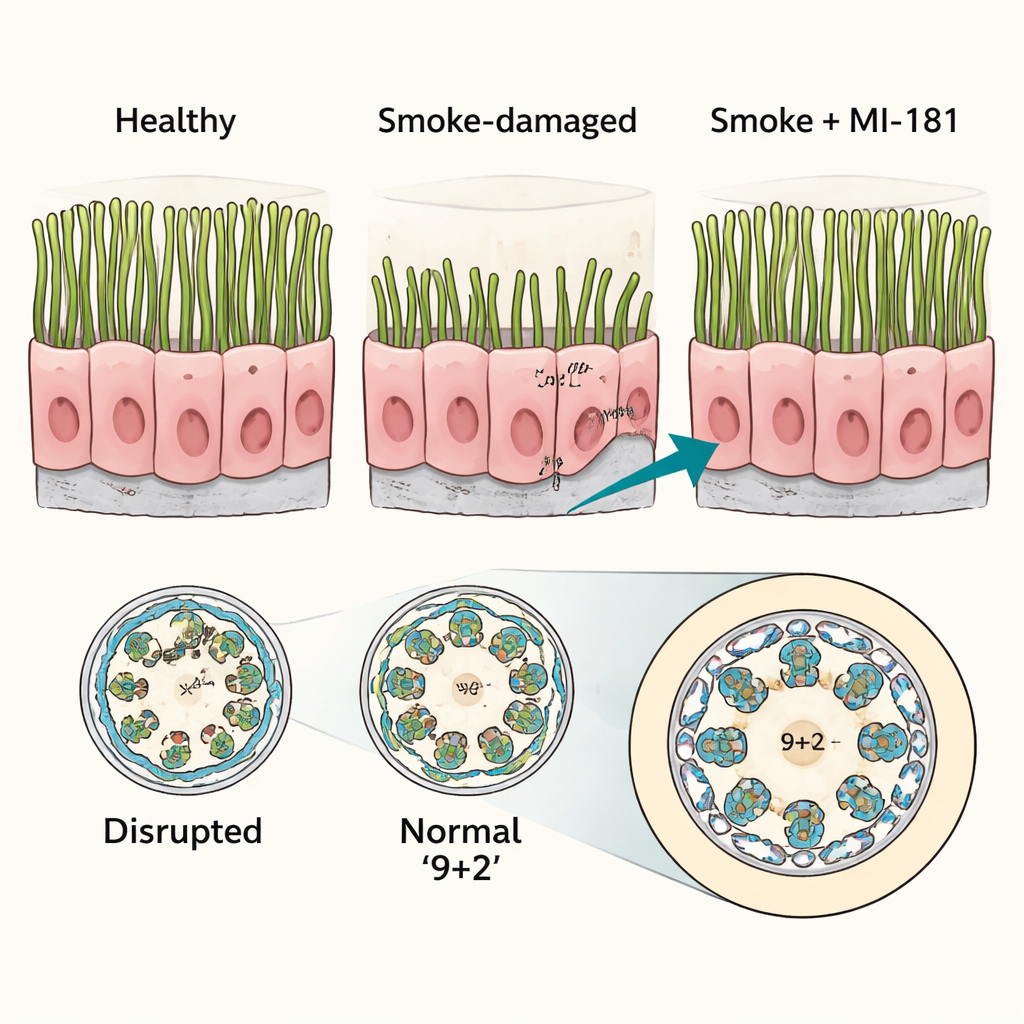
Microscope images showed that cigarette smoke shortened cilia in all three donors, and in two donors it also reduced the area covered by cilia, meaning fewer cells were properly multiciliated. When the smoke-exposed cultures were simply left to recover, cilia partly regrew. Adding MI-181 during this recovery phase boosted that regrowth: across all three donors, cilia became longer than in untreated controls, even reaching or surpassing normal lengths. In the donors whose ciliated area had shrunk after smoke exposure, low-dose MI-181 increased the surface area covered by cilia, though the exact response varied from person to person, suggesting natural differences in how people might respond to the drug.
Repairing the inner architecture of cilia
The team also asked whether the new cilia were built correctly on the inside. Using a high-resolution technique called transmission electron microscopy, they inspected cilia cross-sections from one donor. After smoke exposure, many cilia showed internal defects—distorted arrangements of the microtubule rails that power beating. Even after a short recovery without treatment, some of these flaws remained. In contrast, cilia from cultures treated with MI-181 during recovery showed the classic "9+2" microtubule pattern expected of healthy motile cilia, indicating that the drug-supported regrowth restored normal internal structure, not just length.
What this could mean for people with smoke-damaged lungs
The study suggests that MI-181 can encourage damaged airway cells to rebuild longer, structurally normal motile cilia and, in some cases, to regain more ciliated surface area after cigarette smoke injury. MI-181 likely works by freeing up building-block proteins that cilia need, and it also tends to boost levels of FOXJ1 in most donors, helping cells re-activate their cilia-building program. Because the experiments were done in lab-grown tissue from only three individuals and did not directly test how well the cilia beat or clear mucus, this is still an early proof of concept. Nonetheless, it points toward a future in which medicines might help restore the lungs’ natural cleaning system in smokers and people with COPD, improving airway health by repairing, rather than just relieving, smoke-induced damage.
Citation: Gholkar, A.A., Cherry, C., Gimeno, T.V. et al. MI-181 enhances ciliation and cilia length in a cigarette smoke exposed airway epithelial model. Sci Rep 16, 6136 (2026). https://doi.org/10.1038/s41598-026-37296-2
Keywords: airway cilia, cigarette smoke, COPD, epithelial repair, MI-181