Clear Sky Science · en
Real-world performance of an AI system for diabetic retinopathy screening
Why this matters for people with diabetes
Diabetes can silently damage the back of the eye and cause vision loss before any symptoms appear. Regular eye checks can prevent most diabetes-related blindness, but eye doctors and clinic time are limited. This study looked at whether an artificial intelligence (AI) program could safely help screen people with diabetes for eye damage during routine diabetes visits, catching those who need specialist care while easing pressure on eye clinics.
A new way to check eyes in the diabetes clinic
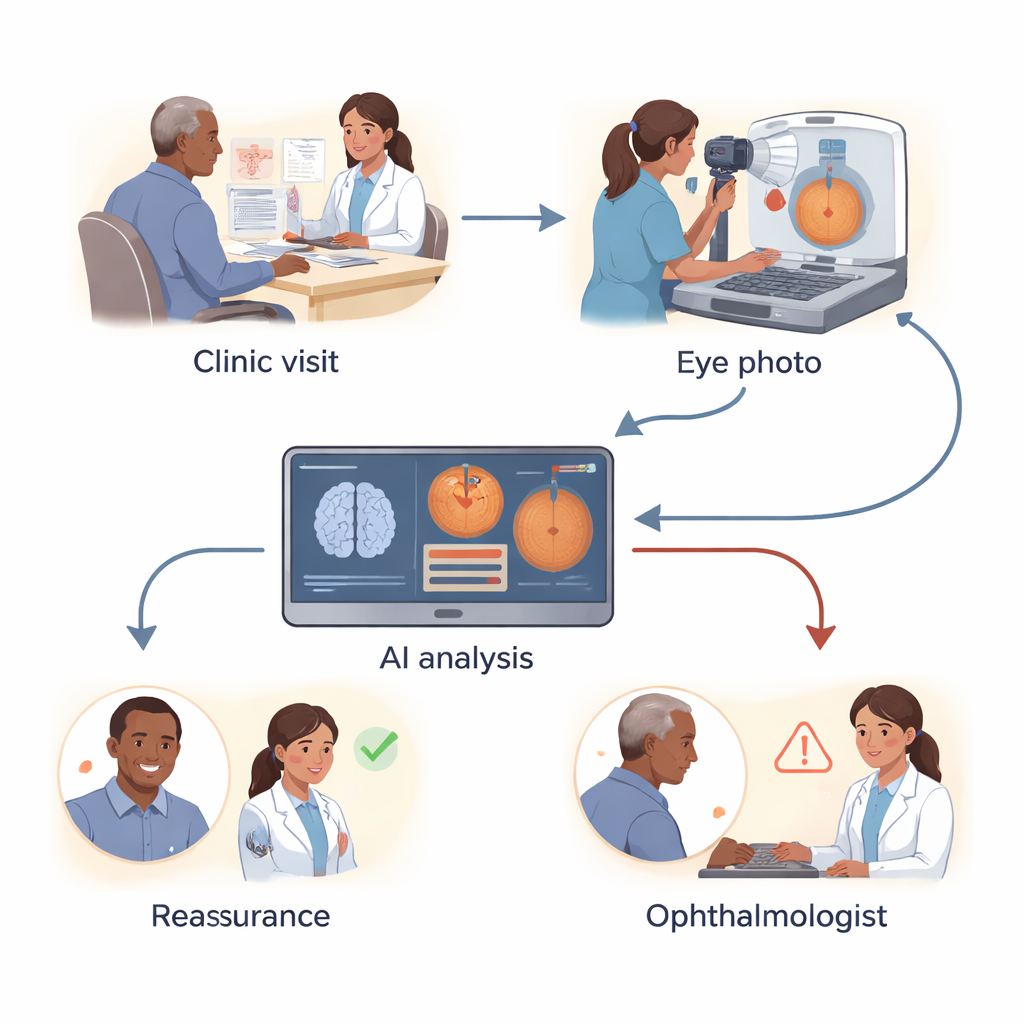
Researchers at a Brussels university hospital tested an AI-based system designed to spot “referable” diabetic eye disease—stages where patients should see an eye specialist. Adults with diabetes visiting the endocrinology clinic had quick photographs taken of the back of each eye with a small camera, without dilating eye drops. The images were analyzed on the spot by the AI software, which decided whether each patient should be referred for possible sight-threatening diabetic retinopathy or macular swelling. A retinal specialist later reviewed all images independently using a standard grading scale, providing the benchmark against which the AI’s decisions were judged.
How well the AI spotted risky eye disease
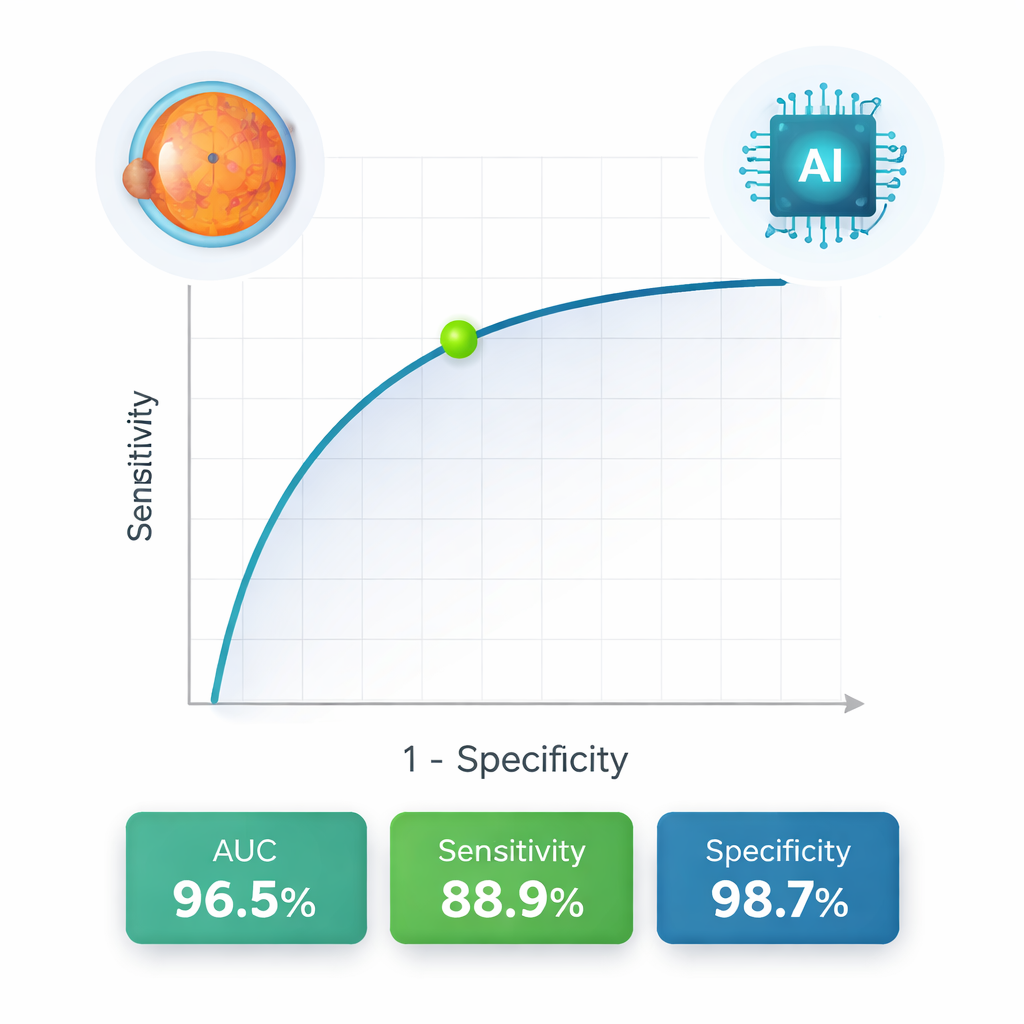
Of 405 people screened, 353 had images that were clear enough to compare AI and human decisions. In this group, about 1 in 6 had diabetic eye disease serious enough to warrant referral. The AI system performed very strongly: it correctly identified nearly 9 out of 10 patients who needed referral and correctly reassured almost all of those who did not. In technical terms, the system reached a sensitivity of 88.9%, a specificity of 98.7%, and an overall accuracy (area under the curve) of 96.5%. When the human expert found vision-threatening stages of disease, the AI system flagged all of these patients for referral, meaning the highest-risk individuals were not missed.
Consistent results across different people
The team also checked whether the AI worked equally well for different ages, sexes, ethnic groups, diabetes types, body weights, and image qualities. Across all these subgroups, performance remained high, with no meaningful drop in accuracy in any category. In particular, accuracy was excellent in younger adults, in women, in European patients, in those with type 1 diabetes, and when image quality was rated as very good. Statistical models showed that two familiar diabetes factors—higher blood sugar at diagnosis and longer duration of diabetes—were strong predictors of serious eye disease for both AI and human grading, confirming that the AI’s decisions were aligned with known medical risk patterns.
What this means for clinics and patients
Beyond diabetic eye damage, nearly a quarter of patients were referred to eye specialists for other newly detected problems, such as changes in the optic nerve or signs of age-related macular degeneration. Only a minority of these referrals were for diabetic retinopathy itself, underscoring how a simple eye photograph can uncover many important eye conditions. The AI tool, however, was built specifically to recognize diabetic retinopathy and macular swelling, not these other diseases, so it is best viewed as a triage aid rather than a full eye exam replacement. In practice, clinics can use the system to automatically sort large numbers of retinal photographs, allowing eye doctors to spend more time on complex or treatment-needing cases instead of screening healthy images.
Takeaway for everyday readers
This real-world Belgian study shows that an AI program can safely and efficiently help screen people with diabetes for serious eye damage during routine clinic visits, performing at least as well as regulatory benchmarks for such tools. For patients, this could mean quicker, more convenient eye checks, fewer unnecessary specialist visits, and a better chance of catching dangerous changes before vision is lost. For health systems facing a growing wave of diabetes, AI-supported eye screening offers a practical way to expand protection against preventable blindness while using specialist time more wisely.
Citation: Berrada, L., Crenier, L., Lytrivi, M. et al. Real-world performance of an AI system for diabetic retinopathy screening. Sci Rep 16, 7609 (2026). https://doi.org/10.1038/s41598-026-37292-6
Keywords: diabetic retinopathy, artificial intelligence, eye screening, deep learning, teleophthalmology