Clear Sky Science · en
Biochemical profiling provides a low-cost and globally accessible method to detect falsified vaccines and insulin
Why spotting fake medicines matters to everyone
Vaccines and insulin save millions of lives, but not every vial that reaches a clinic is what it claims to be. Around the world, especially in low- and middle-income countries, criminals sell falsified vaccines and diabetes treatments that may contain little more than salt water or other cheap liquids. These fake products can leave people unprotected, cause harm, and undermine trust in real vaccines. This study explores a surprisingly simple idea: can the same routine blood-testing machines already sitting in hospital laboratories be repurposed to tell genuine vaccines and insulin from dangerous fakes, quickly and cheaply?
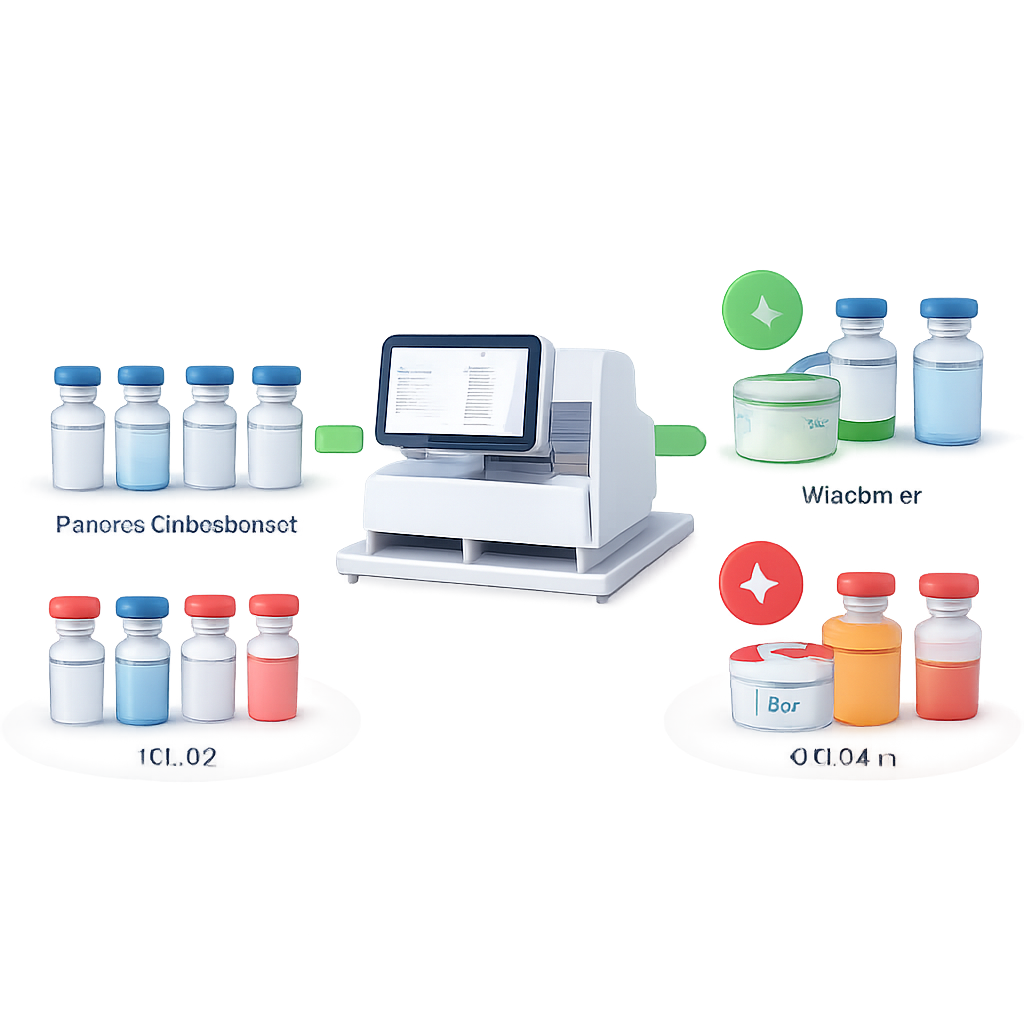
A new use for a familiar hospital machine
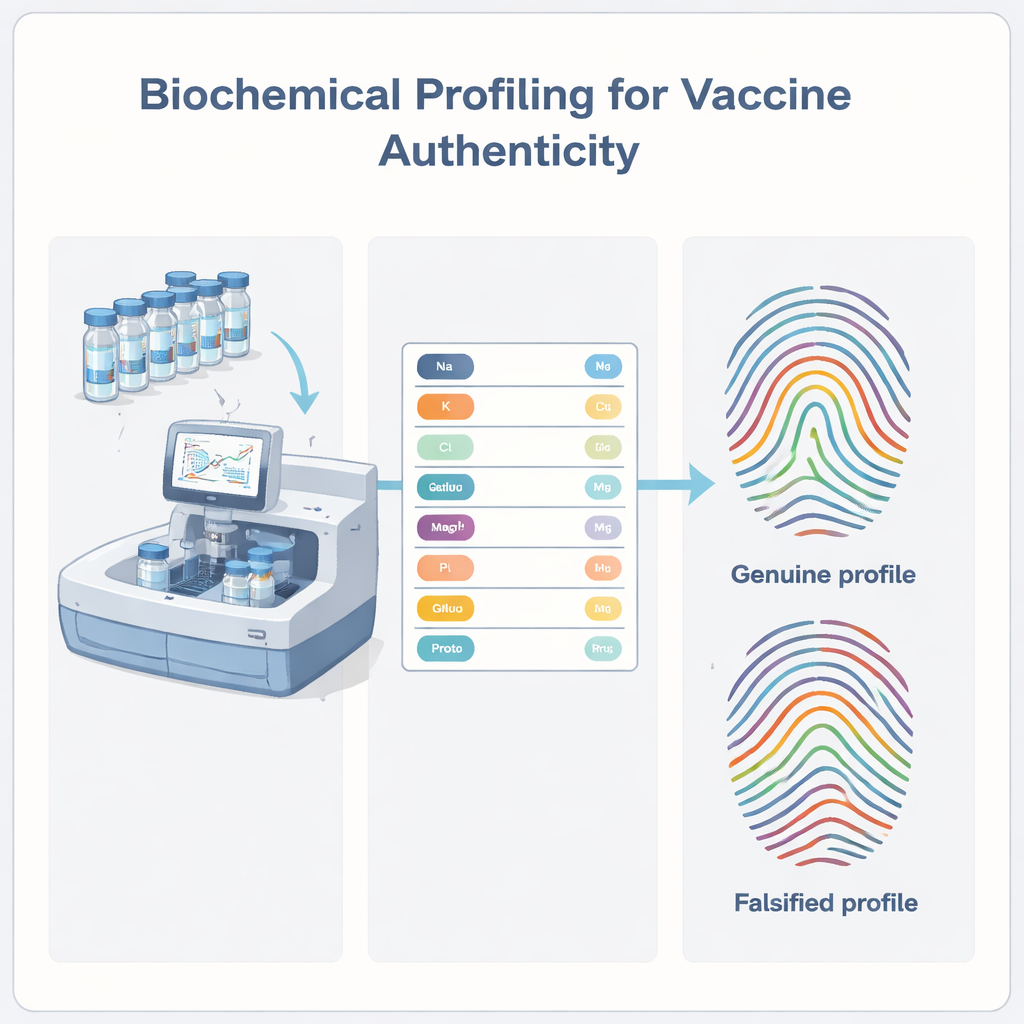
Most medium-to-large hospitals use automated chemistry analyzers every day to measure substances like salts, sugar, and proteins in blood and urine samples. The researchers asked whether these machines could also “fingerprint” liquid medicines. They focused on eight basic chemical components that many vaccines and insulin solutions contain: sodium, potassium, chloride, calcium, magnesium, phosphate, glucose, and protein. If every genuine product has its own characteristic pattern of these ingredients, then a fake made from simple substitutes should stand out as different.
Testing real products against likely fakes
The team assembled a panel of real medical products—including several COVID-19 vaccines, influenza and other routine vaccines, and two types of insulin—alongside liquids known to have been used in falsified medicines, such as saline, glucose solution, tap water, cosmetic hyaluronic acid, and certain antibiotics. Using a standard Abbott clinical chemistry analyzer in its usual “urine” testing mode, they ran each sample multiple times, both when the identity was known and later in a blinded fashion where the operator did not know which vial was which. For each run, the machine reported whether each of the eight analytes was detectable and, if so, at what concentration.
Distinct chemical fingerprints emerge
Every genuine vaccine and insulin product produced a unique combination of these eight measurements, effectively creating a chemical signature. For example, some vaccines showed a mix of sodium, chloride, magnesium, and protein, while others featured potassium or phosphate in distinctive ways. By contrast, falsified surrogates such as pure water, saline, or 5% glucose showed much simpler patterns—perhaps only sodium and chloride, only glucose, or almost nothing at all. Crucially, the analyzer’s measurements were highly repeatable over many days, with very small variation in most tests. Even when protein readings were imperfect—for instance, detecting apparent protein in a vaccine that should not contain it—the same pattern recurred reliably, allowing that product to be recognized by its profile.
From signatures to a simple decision tree
To turn these patterns into a practical tool, the researchers built a decision tree—a step-by-step yes/no flowchart—that used the eight analyte results to sort unknown samples. For example, if magnesium was present, the sample would be directed down one branch; if not, it would go another way. Following this branching logic, the tree successfully identified all genuine vaccines and insulin products and correctly distinguished them from all falsified surrogates in the study, including different batches of a COVID-19 vaccine. In real-world use, laboratories could compare a suspect vial’s profile to a reference library or even use simple “cue cards” listing expected results, especially in settings without advanced computing.
What this means for safer vaccines and insulin
This proof-of-concept work shows that existing hospital chemistry analyzers—already widely available around the globe—can double as low-cost, accessible tools to screen for fake liquid medicines. The method will not catch every substandard product, especially those with only subtle manufacturing errors, and larger studies with more products are needed. Still, as part of a toolbox that includes other laboratory and field tests, biochemical profiling could help health authorities and hospitals rapidly flag suspicious vaccines or insulin before they reach patients. In practical terms, it offers a new way to make better use of equipment that many health systems already own, improving medicine safety without the need for expensive new technology.
Citation: Brook, J., Bharucha, T., Arman, B.Y. et al. Biochemical profiling provides a low-cost and globally accessible method to detect falsified vaccines and insulin. Sci Rep 16, 6581 (2026). https://doi.org/10.1038/s41598-026-37281-9
Keywords: falsified vaccines, insulin quality, clinical chemistry analyzer, medicine authenticity, global health security