Clear Sky Science · en
Altered resting state EEG microstate dynamics in acute concussion in adolescents
Why teen concussions need better brain checks
Every year, countless teenagers hit their heads playing sports and walk away with a concussion diagnosis that still relies heavily on how they say they feel. Yet the brain changes behind these injuries remain largely hidden, and standard scans like MRI are expensive, slow, and not always available. This study explores whether a quick, portable brain test based on EEG—recording the brain’s electrical activity from the scalp—can reveal subtle patterns that distinguish recently concussed adolescent athletes from their healthy peers.
Listening to the resting brain
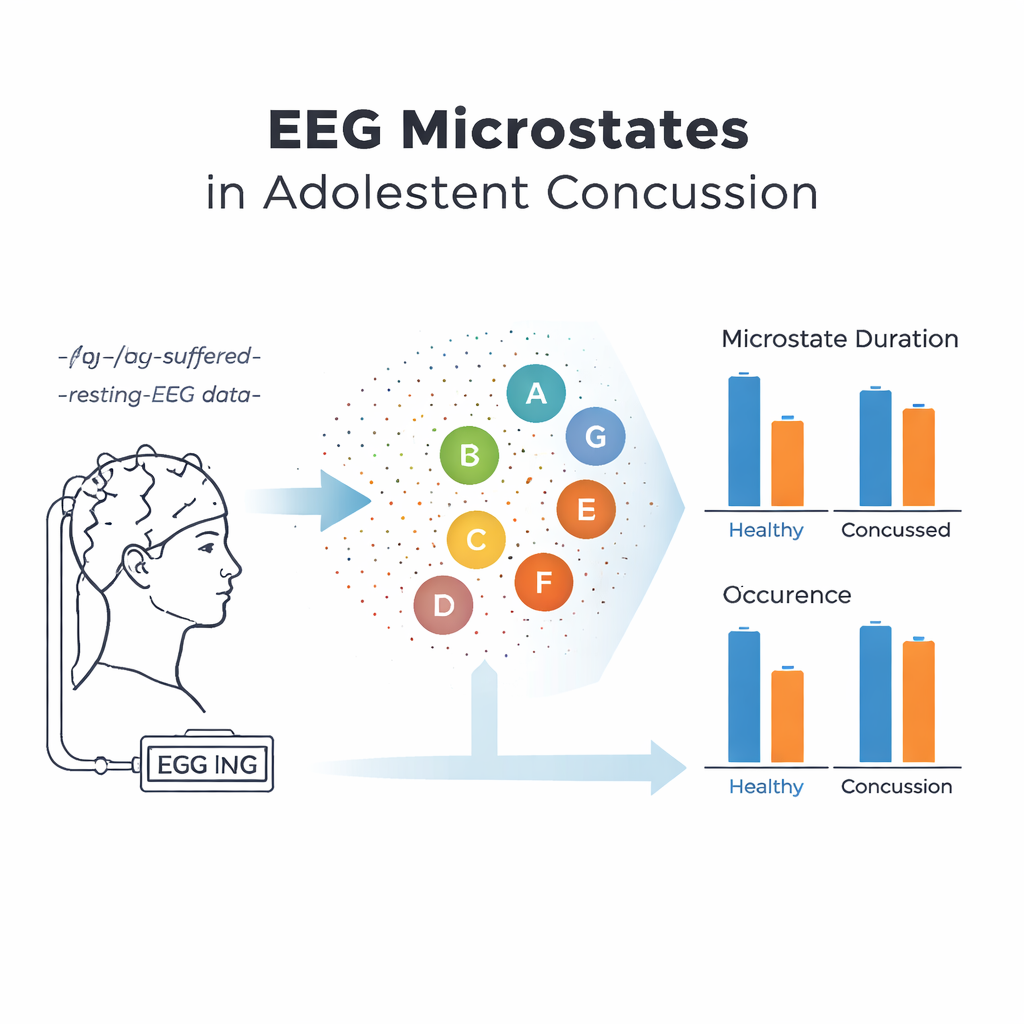
Instead of testing athletes while they perform tasks, the researchers focused on the brain at rest, with eyes closed. Even in this quiet state, our brain cycles through brief, stable patterns of activity that last just fractions of a second. These patterns, called “microstates,” can be thought of as snapshots of how large brain networks talk to each other over time. By studying how long each microstate lasts, how often it appears, and how much total time it occupies, scientists can infer whether the brain’s internal communication has been disrupted by an injury such as a concussion.
How the study was carried out
The team recruited 34 right-handed male athletes between 10 and 18 years old; after removing noisy recordings, data from 20 healthy and 12 concussed players were analyzed. All concussed athletes had been injured within the previous two weeks and still had symptoms such as feeling foggy, dizzy, tired, or irritable. The researchers recorded five minutes of eyes-closed EEG from each participant using a 64-sensor cap. They then carefully cleaned the signals to remove noise from eye blinks, muscle activity, and bad electrodes before applying a specialized computer method to identify microstates.
Seven brain “snapshots” and what changed
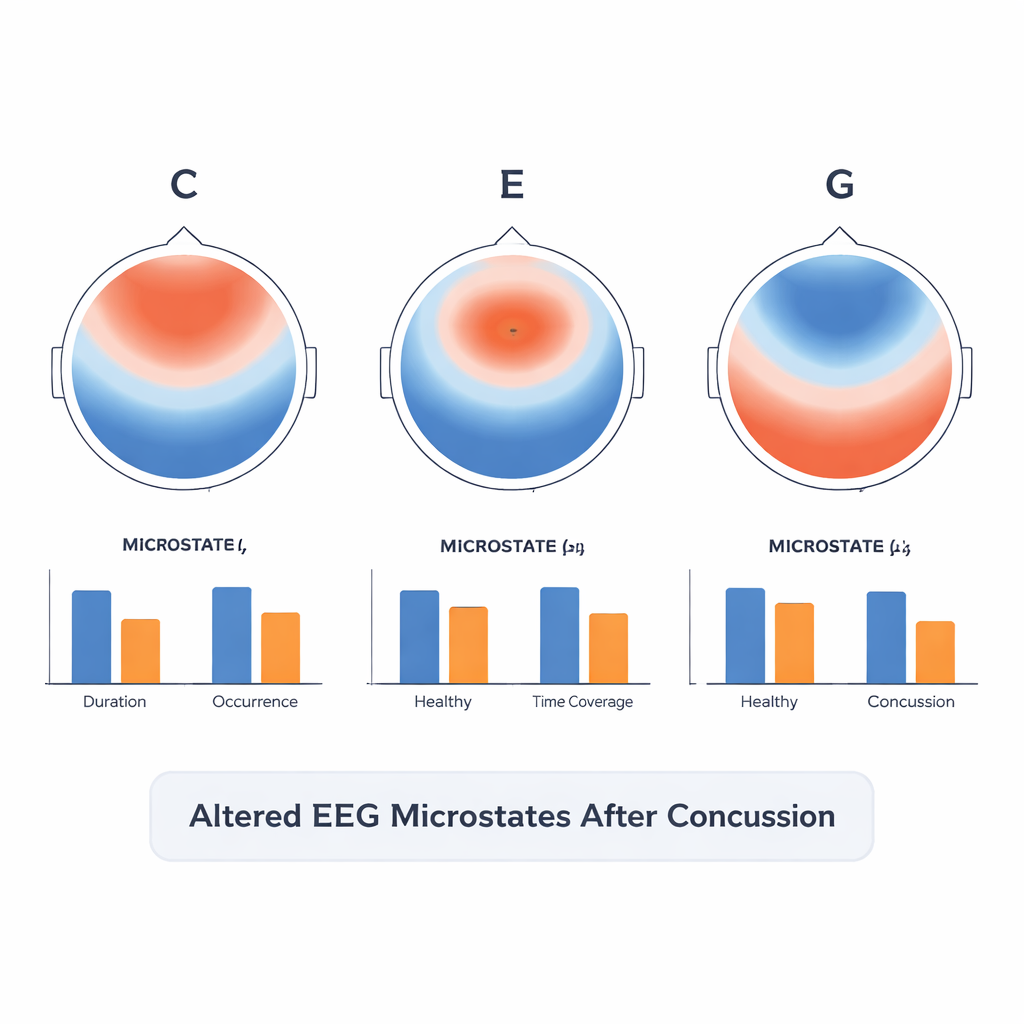
From all the EEG recordings combined, the researchers extracted seven distinct microstates, labeled A through G, which match patterns reported in other large studies. These microstates are linked to known brain networks that support attention, self-reflection, and movement. When they compared healthy and concussed teens, clear differences emerged in three of the seven microstates. One pattern (microstate E), associated with a network that helps the brain notice important events and switch between mental tasks, was shorter in duration in concussed athletes. Another pattern (microstate G), tied to sensorimotor and balance-related regions, occurred less often, lasted for a shorter time, and covered less of the resting period after concussion.
A brain pulled inward and less ready to respond
In contrast, microstate C, linked to brain areas involved in self-focused thought and mind-wandering, showed the opposite change: it appeared more often and occupied more time in the concussed group. This may reflect a brain that is more inwardly focused and less efficient at switching outward to process the environment—consistent with complaints like feeling distracted, foggy, or “not quite right.” Although the link between changes in microstate E and the severity of symptoms did not reach strict statistical significance, the trends suggested that athletes who felt worse tended to show more disruption in this key attention-related pattern.
What this could mean for sideline care
These early findings suggest that even a mild concussion in adolescents can measurably disturb the brain’s moment-to-moment activity patterns, long before anything would show up on a standard scan. Because EEG equipment is portable and relatively inexpensive, combining it with microstate analysis could one day offer coaches and clinicians an objective, brain-based way to support concussion diagnosis and track recovery. While this was a small, all-male study and more work in larger, more diverse groups is needed, it points toward a future in which a few minutes of quiet brain recording might help answer a pressing question for families, athletes, and doctors alike: is the brain truly ready to play again?
Citation: Sattari, S., Damji, S., McLeod, J. et al. Altered resting state EEG microstate dynamics in acute concussion in adolescents. Sci Rep 16, 6986 (2026). https://doi.org/10.1038/s41598-026-37259-7
Keywords: adolescent concussion, EEG microstates, brain networks, sports-related head injury, concussion biomarker