Clear Sky Science · en
Lane departure on combined curves: driver heterogeneity, centrifugal risk, and crash prevention
Why drifting out of your lane is so dangerous
On winding mountain highways, a momentary drift over the lane line can quickly turn into a deadly crash. This study looks inside that split second: how different kinds of curves, driver backgrounds, and vehicle speeds combine to push cars out of their lanes, and how smarter warning systems and better road design could pull them back in time.
Curvy roads that trick the eye
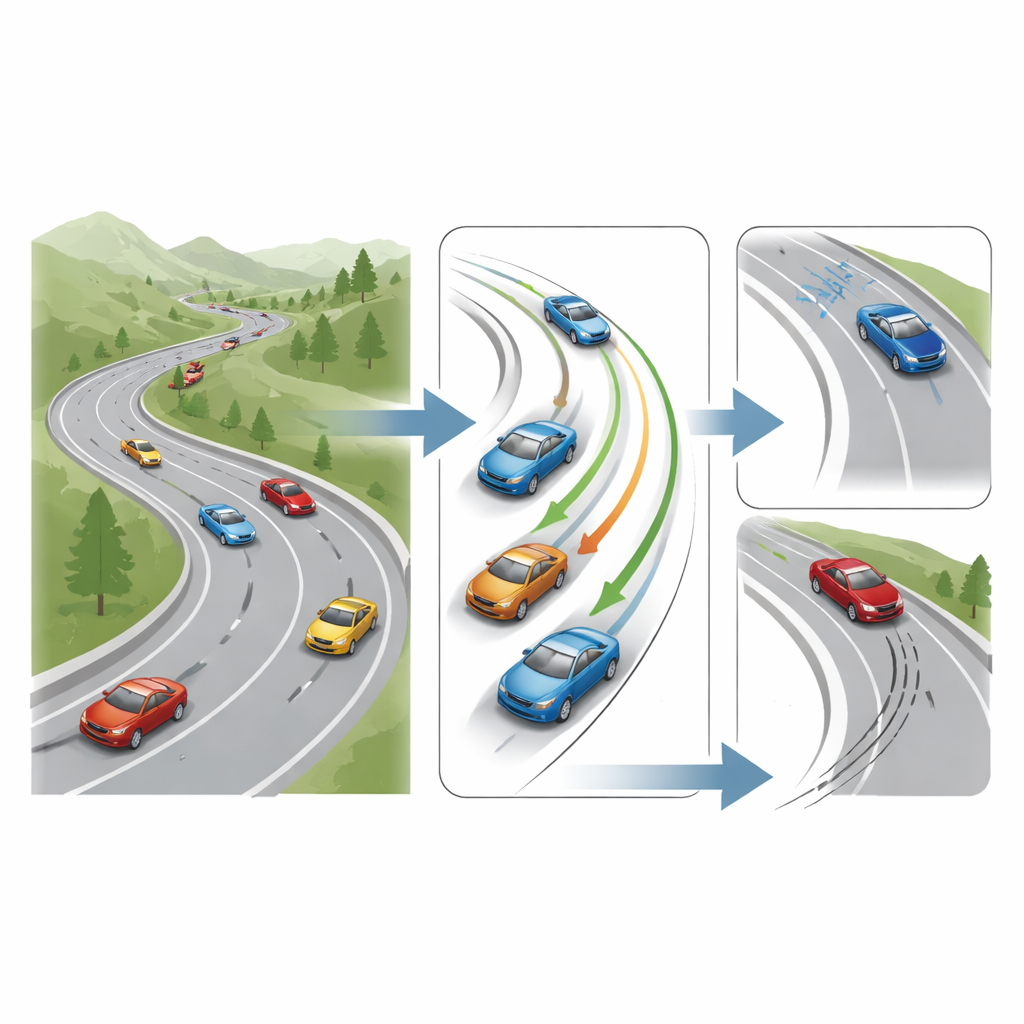
The researchers focused on “combined curves” common on mountain freeways, where the road bends and slopes up or down at the same time. These shapes are harder for drivers to judge than simple flat bends. In particular, dips in the road (sag-curves) and hill crests (crest-curves) tended to produce more lane departures than steady uphill or downhill curves. The way the ground rises or falls can make a bend look sharper or flatter than it really is, so drivers choose speeds and steering angles that do not quite match the true shape of the road.
Two very different ways to drift
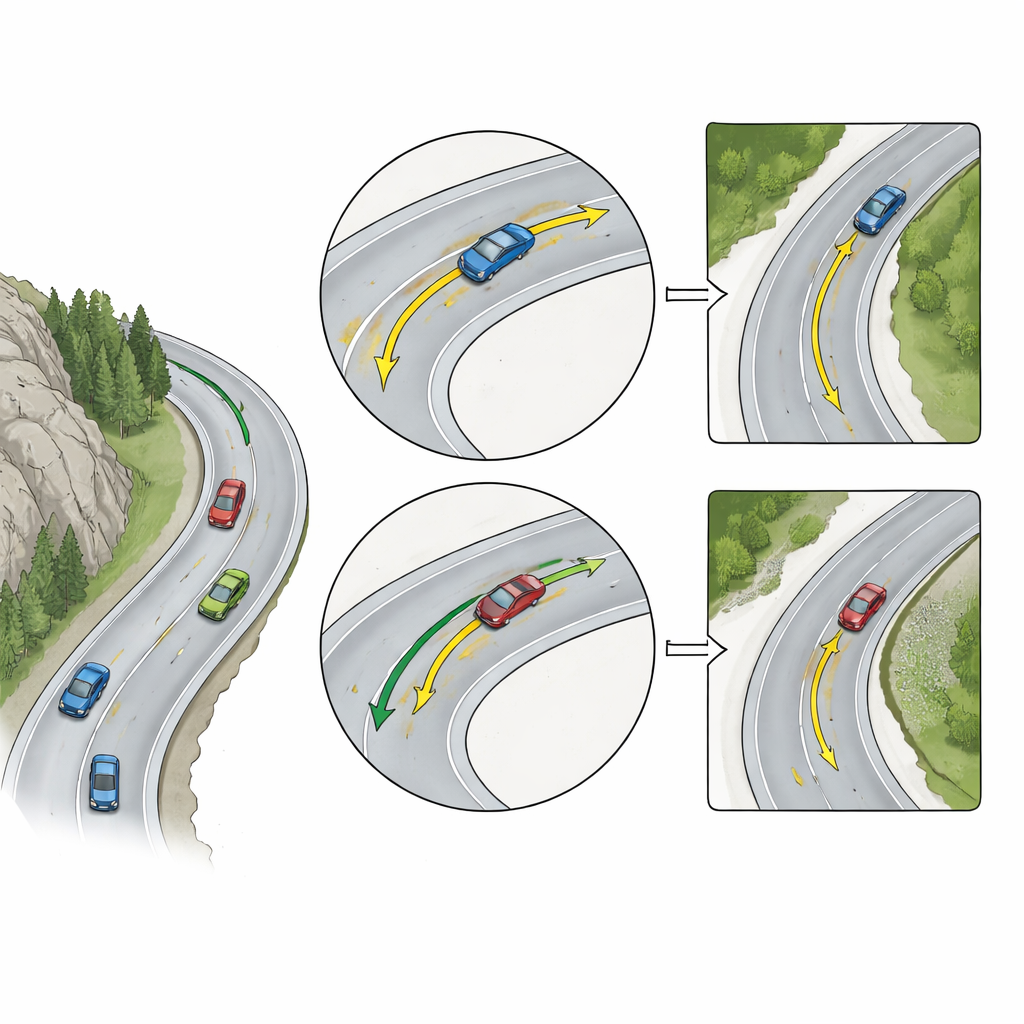
When a car takes a bend, the sideways pull that passengers feel pushes the vehicle outward. The team used this pull to sort lane departures into two families. In one, the car drifts in the same direction as this outward pull, sliding toward the outside of the curve. In the other, the car moves the opposite way, cutting inside the curve. They found that outward drifts tended to be wider and last longer along the road, meaning the car spent more distance outside its lane. Inward drifts, although sometimes sharp, usually covered a shorter distance before the driver corrected course.
Who is driving matters as much as where
To untangle how people, vehicles, and road shapes interact, 36 volunteers drove a realistic simulator that recreated a 24-kilometer mountain freeway. Their 948 lane departures were analyzed alongside detailed information about age, years behind the wheel, daily driving distance, and experience on mountain roads. Using a flexible statistical method, the researchers uncovered patterns that simple averages would miss. Drivers who spent more time on the road each day, those familiar with mountain freeways, and those with professional road-safety backgrounds did not behave uniformly “better” or “worse.” In some situations they steered more precisely, but in others their confidence led to bolder corrections and larger drifts.
Speed, timing, and the point of no return
The study revealed clear danger zones in both speed and how long a car remains outside its lane. On some downhill curves, once average speed climbed above roughly highway limits, the sideways drift increased sharply, especially when the car stayed out of position for a longer distance. On certain uphill and sag curves, smaller but sustained errors built up into serious departures. Across all curve types, the researchers identified a lower lane-departure distance at which a gentle warning could still help drivers nudge the wheel back, and a higher distance where more forceful automatic braking or steering might be needed to prevent a crash.
Turning science into safer cars and roads
By linking driver traits, road shapes, and real steering behavior, this work offers a practical recipe for safer driving technology and design. Advanced assistance systems can be tuned to react differently on dips, crests, and slopes, and to adapt warning strength based on how long a car has been drifting and how fast it is traveling. Training programs can target drivers who cover many kilometers each day or who drive often on mountain freeways, helping them recognize when confidence becomes risky. Road designers can use the identified thresholds to place markings, signs, or visual guides at just the points where drivers most need an extra cue. Together, these measures could sharply cut the number of crashes that start with a small, easily overlooked step over the line.
Citation: Wang, X., Zhang, Y., Li, Y. et al. Lane departure on combined curves: driver heterogeneity, centrifugal risk, and crash prevention. Sci Rep 16, 8586 (2026). https://doi.org/10.1038/s41598-026-37251-1
Keywords: lane departure, mountain highways, driver behavior, road safety, advanced driver assistance systems