Clear Sky Science · en
A novel low-tech lined bed cultivation enhances drought stress tolerance of cucumber in semi-arid conditions
Growing More Food with Less Water
In many dry regions, farmers struggle to grow enough vegetables because water is scarce and sandy soils lose moisture and fertilizer quickly. This study tested a simple, low-cost way to help: lining planting beds with plastic so that water stays where plant roots can use it. The research shows that this approach can keep cucumbers healthy and productive even when irrigation is cut in half, offering a practical tool for growers facing drought and rising water costs. 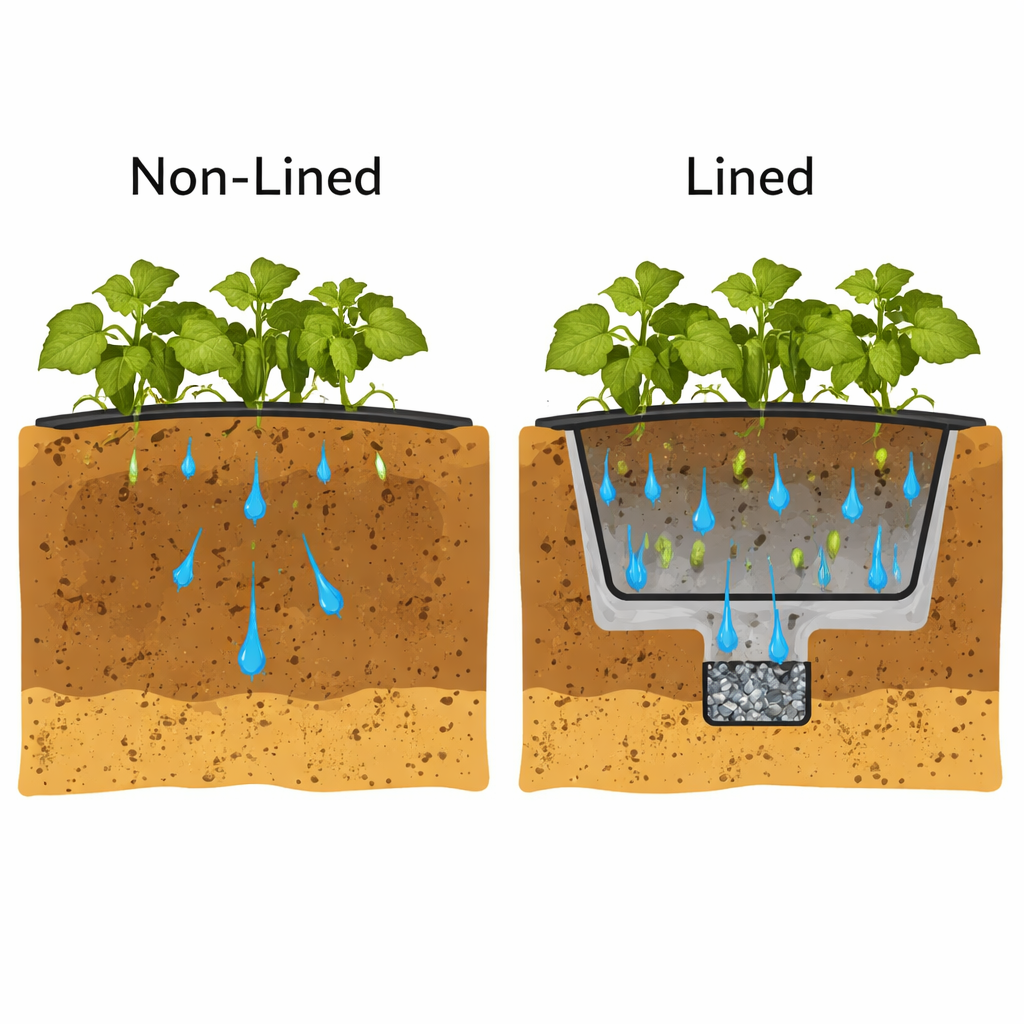
A Simple Twist on the Garden Bed
The idea behind the new system is straightforward. Instead of planting cucumbers in ordinary raised beds, the researcher dug narrow trenches in a sandy greenhouse soil and lined the bottom and sides with a sheet of polyethylene plastic. The trench was then refilled with the same soil to create a normal-looking bed, but with an invisible “basin” underneath that slows the downward escape of water and dissolved nutrients. Small gravel-filled sumps were added at intervals so that any extra water could drain away, preventing puddling around the roots. For comparison, other cucumber beds were left unlined and managed in the usual way.
Putting the Lined Beds to the Test
The experiment took place in a shade-net house in semi-arid Egypt during the hot summer, where crops face intense evaporation and poor water-holding soils. Cucumber plants in both lined and unlined beds received either full irrigation (100% of their estimated water needs) or half that amount (50%). All plants were grown under the same conditions, with drip irrigation and a carefully balanced nutrient solution. Researchers measured how tall the vines grew, how many leaves they produced, the size of their leaf area, and how much root and shoot biomass they accumulated. They also checked leaf nutrient levels, water content, and signs of stress inside the plant tissues.
Healthier Plants Under Thirsty Conditions
When water was plentiful, cucumbers in lined and unlined beds looked and yielded much the same. The real difference appeared when irrigation was cut in half. In the unlined beds, plants under reduced watering became smaller, with shorter vines, fewer and smaller leaves, and much lower levels of key nutrients like nitrogen, phosphorus, and potassium. Their leaves held less water and chlorophyll, and they produced more chemical markers of stress and cell damage. In contrast, cucumbers in the lined beds stayed almost as vigorous under half watering as they did under full watering. Their leaf nutrients dropped only slightly, leaf water content and greenness remained high, and stress indicators stayed low, suggesting that the roots were still sitting in a moist, nutrient-rich zone despite the reduced water supply. 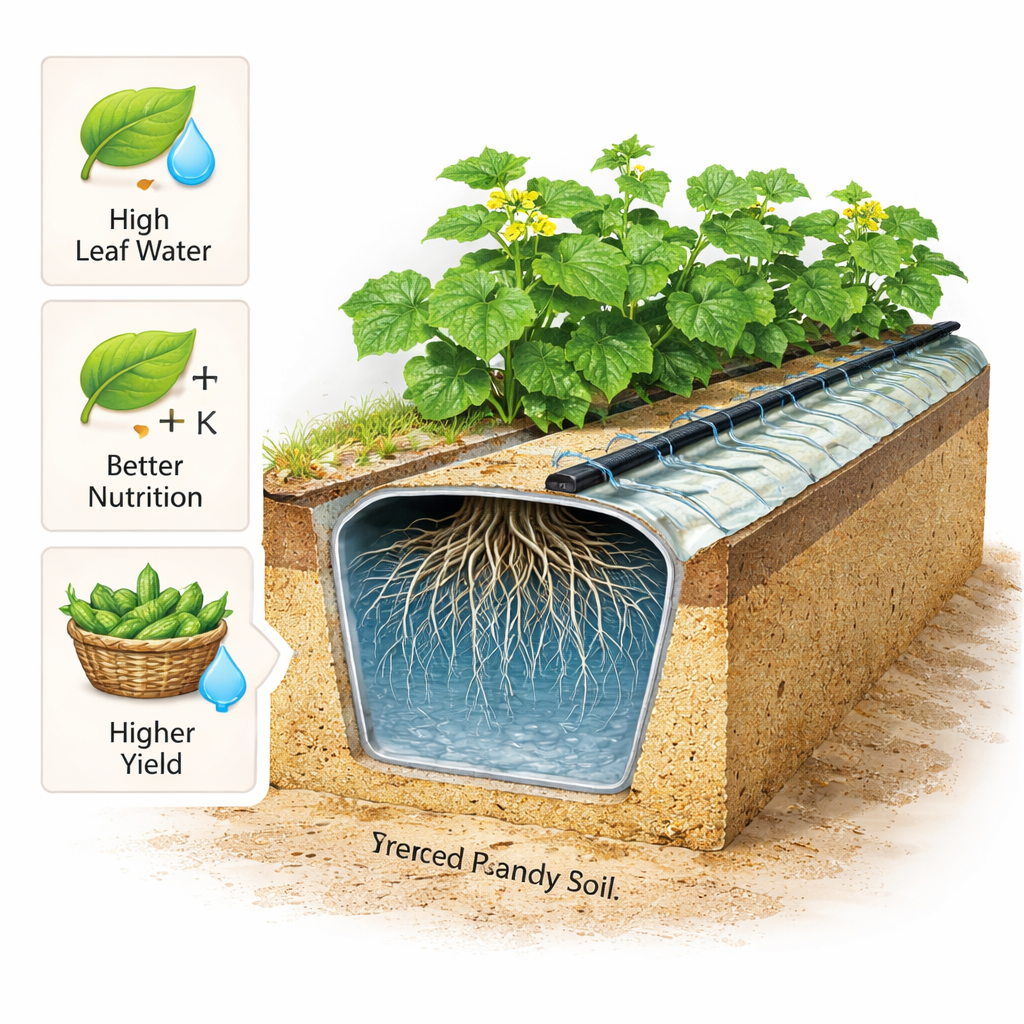
More Cucumbers per Drop of Water
These healthier plants translated into real gains at harvest. With full irrigation, lined and unlined beds produced similar yields and numbers of marketable cucumbers. Under half irrigation, however, the unlined beds lost nearly two-thirds of their yield and produced less than half as many fruits per plant. The lined beds, by contrast, saw only about a 14% drop in yield when water was cut by 50%, and fruit numbers remained close to the well-watered plants. Because the lined beds used so much less water while maintaining high yields, their water use efficiency—how many kilograms of cucumbers were produced per cubic meter of irrigation—more than doubled compared to the stressed, unlined beds.
What This Means for Dryland Farming
For growers working in sandy, water-limited soils, this study suggests that a simple plastic lining beneath planting beds can act like a hidden reservoir, keeping water and fertilizer in reach of roots instead of letting them drain away. The cucumbers grown this way stayed greener, suffered less internal stress, and produced almost as much fruit with half the irrigation. While questions remain about long-term plastic use and salt buildup, the lined trench-bed system offers a practical, low-tech option to stretch limited water supplies and stabilize vegetable production in the face of drought.
Citation: Abouelsaad, I.A. A novel low-tech lined bed cultivation enhances drought stress tolerance of cucumber in semi-arid conditions. Sci Rep 16, 6355 (2026). https://doi.org/10.1038/s41598-026-37245-z
Keywords: cucumber, drought, water use efficiency, sandy soil, lined beds