Clear Sky Science · en
The impact of exercise self-efficacy, self-esteem and physical activity on body fat percentage changes in adolescents during fat loss interventions
Why teen confidence matters for body fat
Adolescent obesity is rising worldwide, bringing higher risks of diabetes, heart disease, and emotional struggles later in life. Many programs tell teens to “eat less and move more,” but not all of them work equally well. This study asks a deeper question: when teenagers try to lose body fat, do their confidence in exercising and their overall self-worth actually change how well the program works? The answer could help schools and families design weight‑loss efforts that build minds as well as reshape bodies.
A closer look at a school-based program
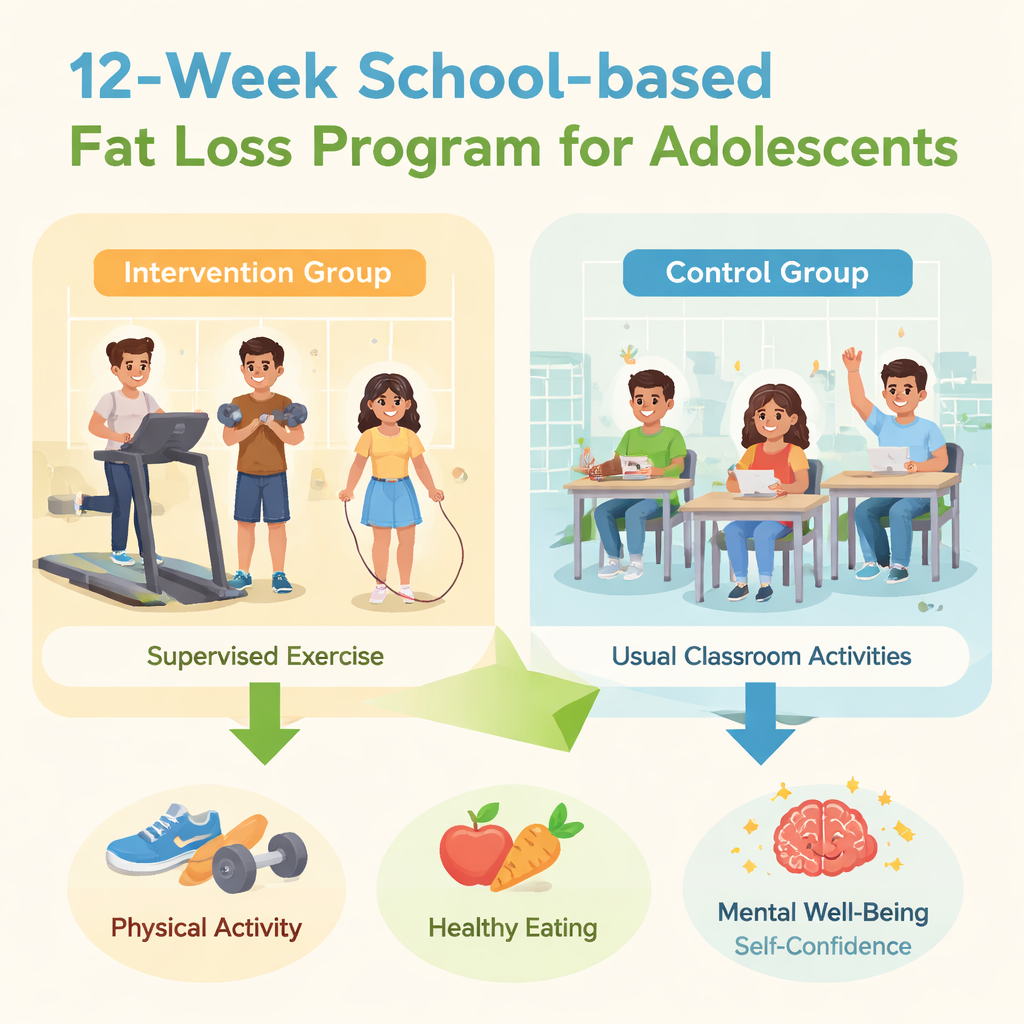
Researchers in Beijing recruited 100 middle school students, aged 13 to 15, and randomly assigned them to two groups. One was an intervention group that joined a 12‑week program combining supervised aerobic workouts, simple strength training, and calorie reduction. Sessions took place three afternoons a week for an hour, on top of normal school life. The other was a control group that continued their usual classes and activities without any special program. Before and after the 12 weeks, both groups were carefully measured for body fat, physical activity, and two psychological traits: exercise self‑efficacy (how confident they feel about doing exercise) and self‑esteem (how positively they view themselves overall).
Tracking fat, movement, and feelings
Body fat percentage was measured using a standard body composition device, while movement was tracked with wrist‑worn motion sensors that recorded how many minutes per day students spent in moderate‑to‑vigorous physical activity, like brisk walking, running, or sports. Exercise self‑efficacy and self‑esteem were assessed with well‑established questionnaires. This allowed the researchers not only to see whether body fat changed, but also to test whether shifts in confidence and self‑worth were tied to those physical changes. Importantly, they used statistical models that took starting body fat, age, and gender into account, so that any links they found were not simply due to heavier teens having more room to improve.
What changed for teens in the program
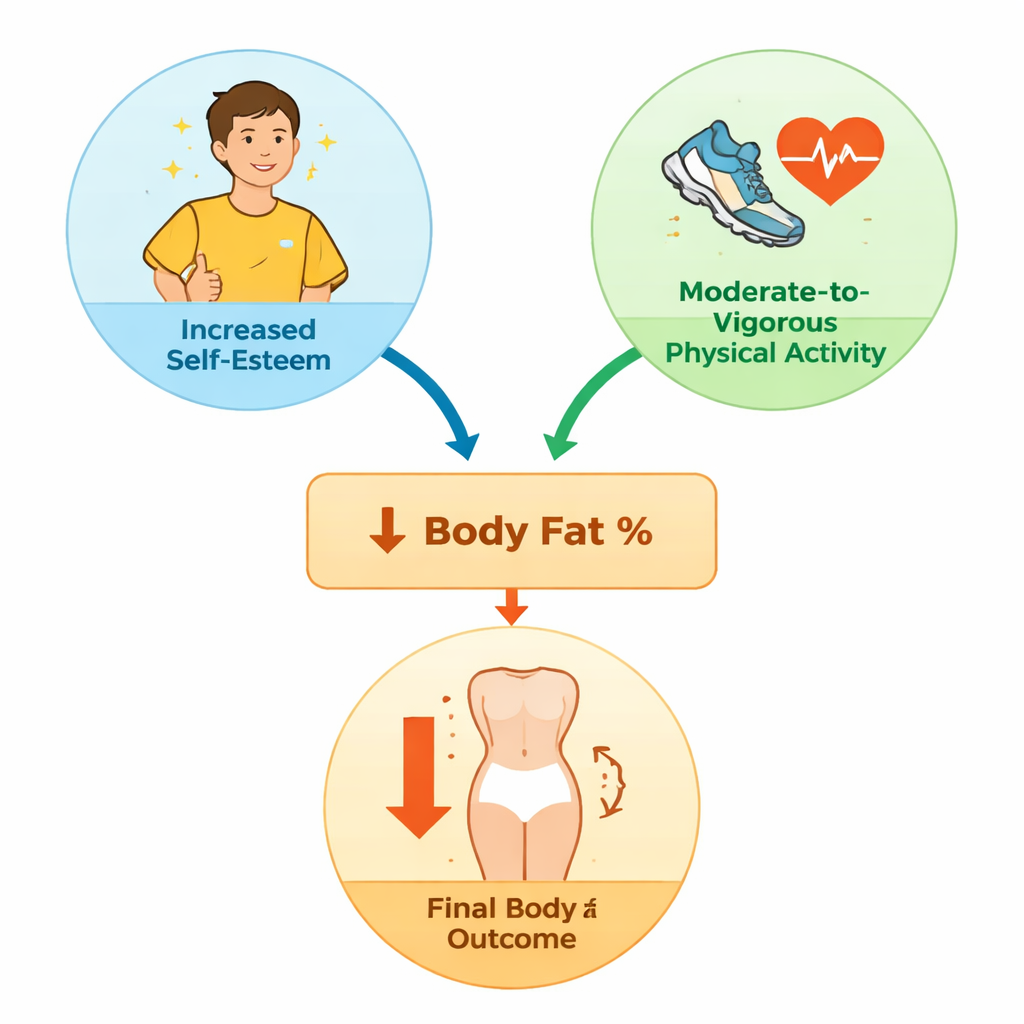
After 12 weeks, the intervention group showed clear benefits compared with the control group. On average, their body fat percentage dropped by about 2.75 points, while their confidence in exercising and their self‑esteem rose markedly. When the researchers dug deeper, they found that teens who gained more self‑esteem and who increased their moderate‑to‑vigorous activity tended to end the program with lower body fat, even after controlling for where they started. Surprisingly, the increase in exercise self‑efficacy alone did not predict fat loss once other factors were considered, suggesting that simply feeling more capable is not enough unless it is paired with actual sustained movement and broader improvements in how teens feel about themselves.
What stayed the same without support
In the control group, which kept to regular school routines, some students’ activity levels or feelings about themselves changed a little over time, as happens naturally during adolescence. But these shifts were not meaningfully linked to changes in body fat. Once initial body fat was accounted for, psychological changes in students who did not receive the structured intervention did not translate into measurable improvements in their body composition. This contrast suggests that a supportive, organized environment may be necessary to turn growing confidence and self‑esteem into real, sustained behavior changes that affect health.
Putting the findings into everyday language
For families, teachers, and health professionals, this study sends a clear message: successful teen weight‑loss programs are not just about workouts and meal plans. When a structured program helps teenagers feel better about themselves and keeps them moving at a moderate‑to‑vigorous pace, their body fat is more likely to fall. In other words, boosting self‑esteem and building enjoyable, regular activity into school life can make fat‑loss efforts more effective and more sustainable. Programs that combine physical training, sensible eating, and psychological support, and that are tailored to a teen’s starting body fat and mental state, may offer the best path to healthier bodies and healthier minds.
Citation: Pan, X., Jiang, L., Zhang, Y. et al. The impact of exercise self-efficacy, self-esteem and physical activity on body fat percentage changes in adolescents during fat loss interventions. Sci Rep 16, 6049 (2026). https://doi.org/10.1038/s41598-026-37238-y
Keywords: adolescent obesity, self-esteem, exercise programs, physical activity, weight loss interventions