Clear Sky Science · en
Sunscreen application substantially mitigates molecular perturbations induced by repetitive UV exposure and maintains healthy skin
Why Your Daily Sunscreen Matters More Than You Think
Many people reach for sunscreen to avoid sunburn or lower their risk of skin cancer. This study goes a step further and asks: what is happening deep inside our skin every time we step into the sun, and can sunscreen really keep those hidden changes at bay? By looking directly at our genes and chemical marks on our DNA, the researchers show that a common SPF 30 sunscreen does far more than prevent redness—it helps keep the skin’s internal machinery youthful and stable, even under repeated ultraviolet (UV) exposure.
How the Study Was Set Up
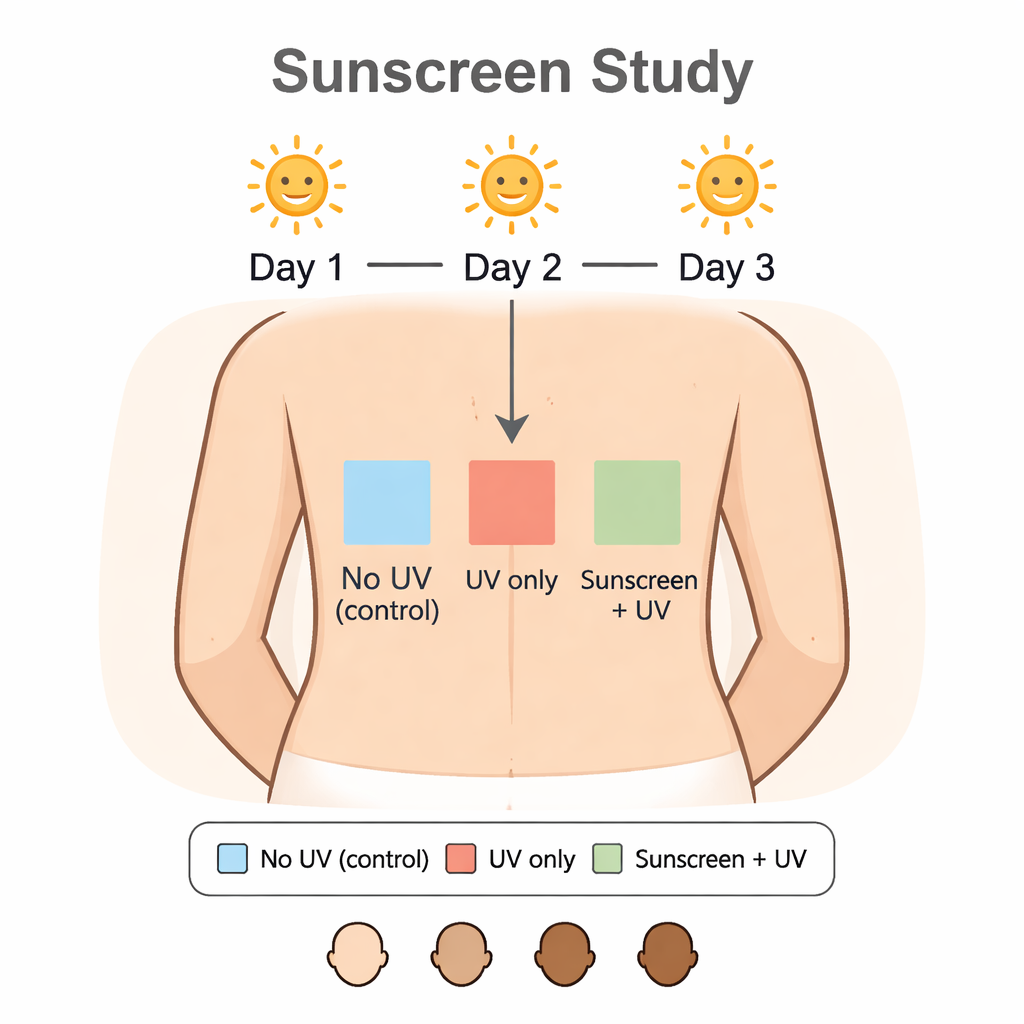
The researchers recruited 32 women with a range of natural skin tones, from very fair to darker beige-brown, all between 40 and 65 years old. On each volunteer’s lower back, they defined three small test areas: one that stayed shielded from UV as a control, one exposed to a moderate dose of UV light without protection, and one exposed to the same dose after applying a broad-spectrum SPF 30 sunscreen. This simulated three sunny days in a row, using carefully measured UV doses that are common in real life but do not always cause an obvious burn. After the final exposure, they collected tiny skin samples and used modern “omics” tools to read gene activity and chemical DNA tags in the outer skin layer.
What UV Light Really Does to Your Skin
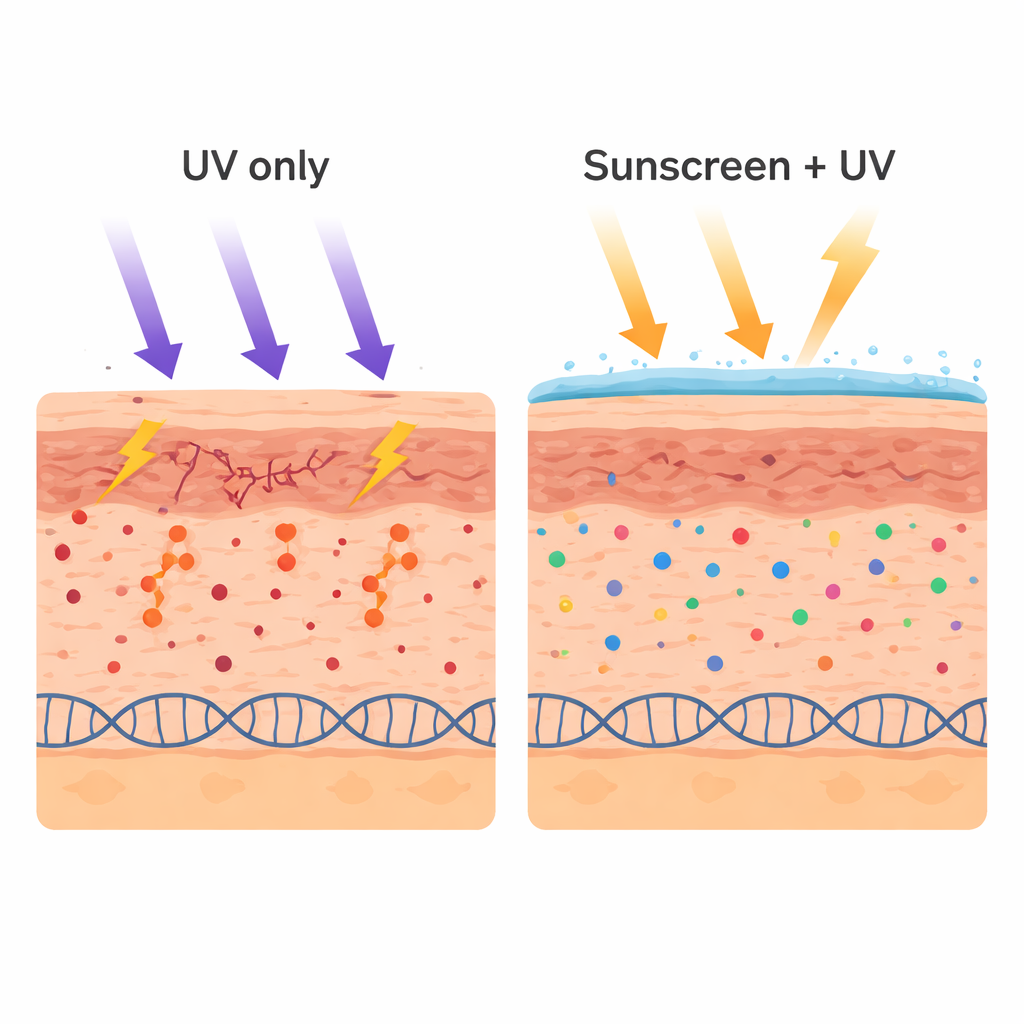
When unprotected skin was exposed to repeated UV, the changes were dramatic—both to the naked eye and at the molecular level. Fairer skin types showed clear reddening, while darker tones showed a mix of reddening and tanning. Inside the tissue, thousands of genes switched their activity up or down. Programs involved in cell division and building the outer barrier of the skin were cranked up, while those linked to collagen production and immune defense were dialed down. On top of that, the pattern of DNA methylation—tiny chemical tags that help control which genes are on or off—shifted at tens of thousands of sites. Many of these changes mirrored patterns seen in skin that has been chronically sun-exposed for years, hinting that even a few days of moderate UV can leave an early “memory” of damage.
How Sunscreen Changes the Picture
Applying SPF 30 before UV exposure almost completely changed this story. Protected skin showed no visible sun reaction at the same dose that reddened unprotected skin. At the molecular level, the number of genes whose activity changed dropped from over 3,600 in UV-only skin to just 150 with sunscreen. Similarly, altered DNA methylation sites plummeted from more than 83,000 to a few hundred. Key biological programs that had been strongly disturbed by UV—such as those governing cell repair, barrier strength, and immune balance—remained close to normal in sunscreen-treated skin. The team also used a DNA-based “aging clock” to estimate biological age in each sample. Unprotected UV made the skin appear older according to this clock, while sunscreen-treated skin stayed indistinguishable from unexposed control areas.
The Subtle Changes That Still Sneak Through
Even a good sunscreen is not a perfect shield: SPF 30 still lets a small fraction of UV light reach the skin. The study detected a faint leftover molecular “footprint” in sunscreen-protected skin, especially in flexible regulatory regions of DNA called enhancers. Compared with the strong disruption seen without protection, these shifts were small but measurable. They suggest that while sunscreen safeguards the core control systems of our genes, a thin outer layer of regulation remains slightly more vulnerable. These findings support simple but crucial advice from dermatologists: apply enough product, cover evenly, reapply regularly, and consider higher SPFs or added protective ingredients to further shrink this residual impact.
What This Means for Everyday Skin Health
For non-specialists, the main takeaway is straightforward: regular use of a well-formulated sunscreen does much more than stop sunburn. In this study, SPF 30 largely preserved the skin’s inner workings—its repair systems, barrier, immune defenses, and even markers of biological youth—during repeated sun exposure. While it cannot erase every last trace of UV impact, it dramatically lowers the “molecular wear and tear” that can add up over time to wrinkles, thinning skin, and higher cancer risk. In practical terms, consistent, correct sunscreen use is not just a cosmetic habit; it is a daily investment in the long-term health and resilience of your skin.
Citation: Bienkowska, A., Boedewadt, J., Elsbroek, L. et al. Sunscreen application substantially mitigates molecular perturbations induced by repetitive UV exposure and maintains healthy skin. Sci Rep 16, 4326 (2026). https://doi.org/10.1038/s41598-026-37232-4
Keywords: sunscreen, UV radiation, skin aging, epigenetics, photoprotection