Clear Sky Science · en
Determinants of congenital anomalies among newborns in public hospitals of Northern Ethiopia: case-control study design
Why Birth Defects Matter for Families and Communities
When a baby is born with a serious health problem, the impact reaches far beyond the delivery room. Families can face long-term medical, emotional, and financial challenges, and health systems in poorer regions often struggle to provide the care these children need. This study from post-war northern Ethiopia asks a hopeful question: in a setting of hardship and damaged health services, which everyday factors during pregnancy most strongly influence whether a baby is born healthy or with a congenital anomaly (a problem present at birth)? Understanding these influences can point to simple, practical steps that protect babies, even in very difficult circumstances.
A Closer Look at Newborns in Tigray
Researchers worked in four public hospitals in the Tigray region of northern Ethiopia, an area whose health system and food supplies were badly disrupted by a two‑year war. From April to July 2024, they enrolled 384 mothers who had recently given birth or had a pregnancy of at least 20 weeks. Seventy‑seven of these mothers had babies with a diagnosed congenital anomaly, such as brain and spine defects or cleft lip, while 307 had babies without such problems. By comparing these two groups, the team looked for patterns in medical history, diet, and lifestyle that might explain why some babies were affected and others were not.
Everyday Habits That Raise or Lower Risk
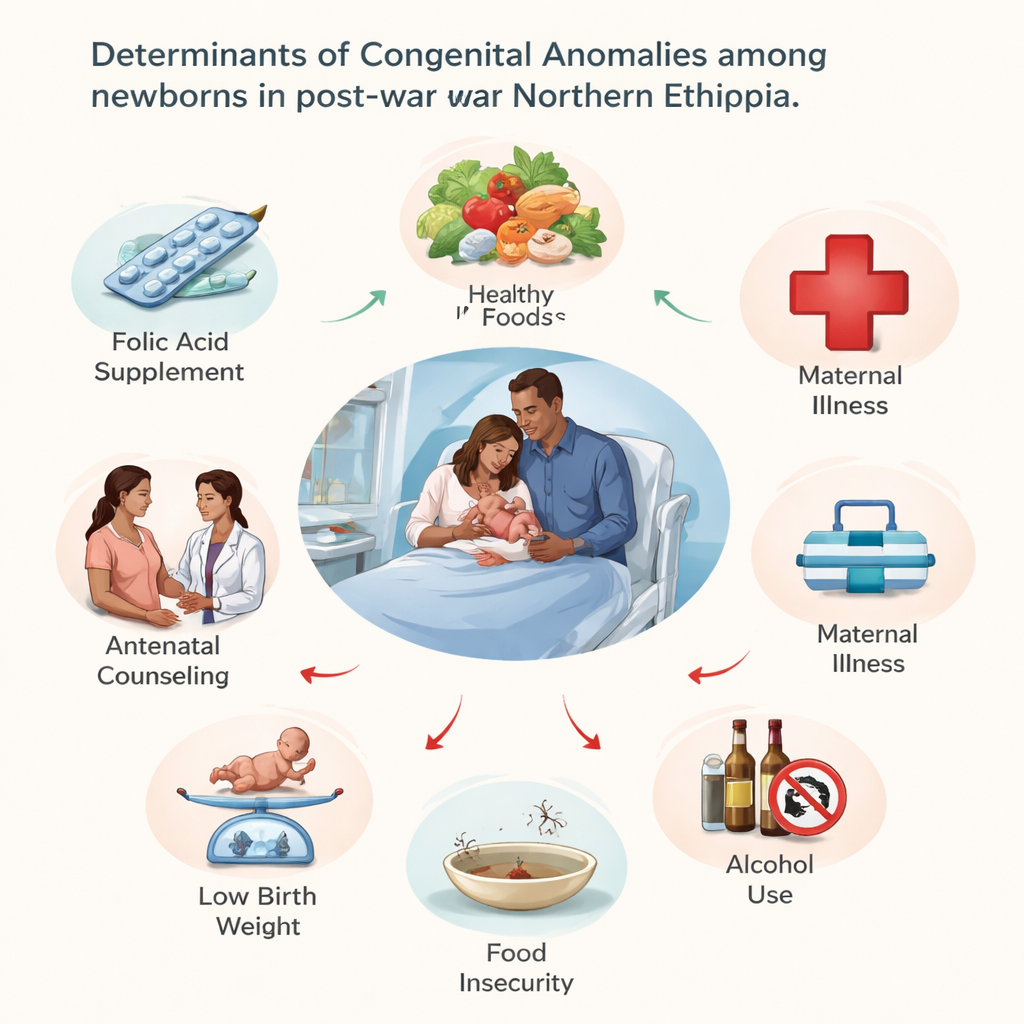
The study found that several common, and mostly changeable, factors were linked to birth defects. Mothers who took folic acid tablets before or during pregnancy were about 70 percent less likely to have an affected baby than those who did not. In contrast, babies who were born weighing less than 2.5 kilograms (about 5.5 pounds) were more than four times as likely to have a congenital anomaly, suggesting that something had already gone wrong during development in the womb. Mothers who reported being ill during pregnancy faced about six times the risk of having a baby with a defect, highlighting how important it is to detect and treat maternal health problems early.
The Hidden Power of Food and Advice
What mothers ate, and the guidance they received, also made a striking difference. The researchers used a standard “food consumption score” to describe how often families ate a range of food groups in the week before the interview. Women with very poor scores—reflecting food insecurity and limited diets—were roughly three times more likely to have a baby with a congenital anomaly than those with better scores. Mothers who did not receive any nutritional counseling during their prenatal visits had about triple the risk compared with women who were advised on healthy eating. Those who failed to add extra food during pregnancy, beyond their usual intake, had more than double the risk, suggesting that both diet quality and quantity matter for the baby’s development.
Alcohol and Other Pressures in a War‑Torn Region
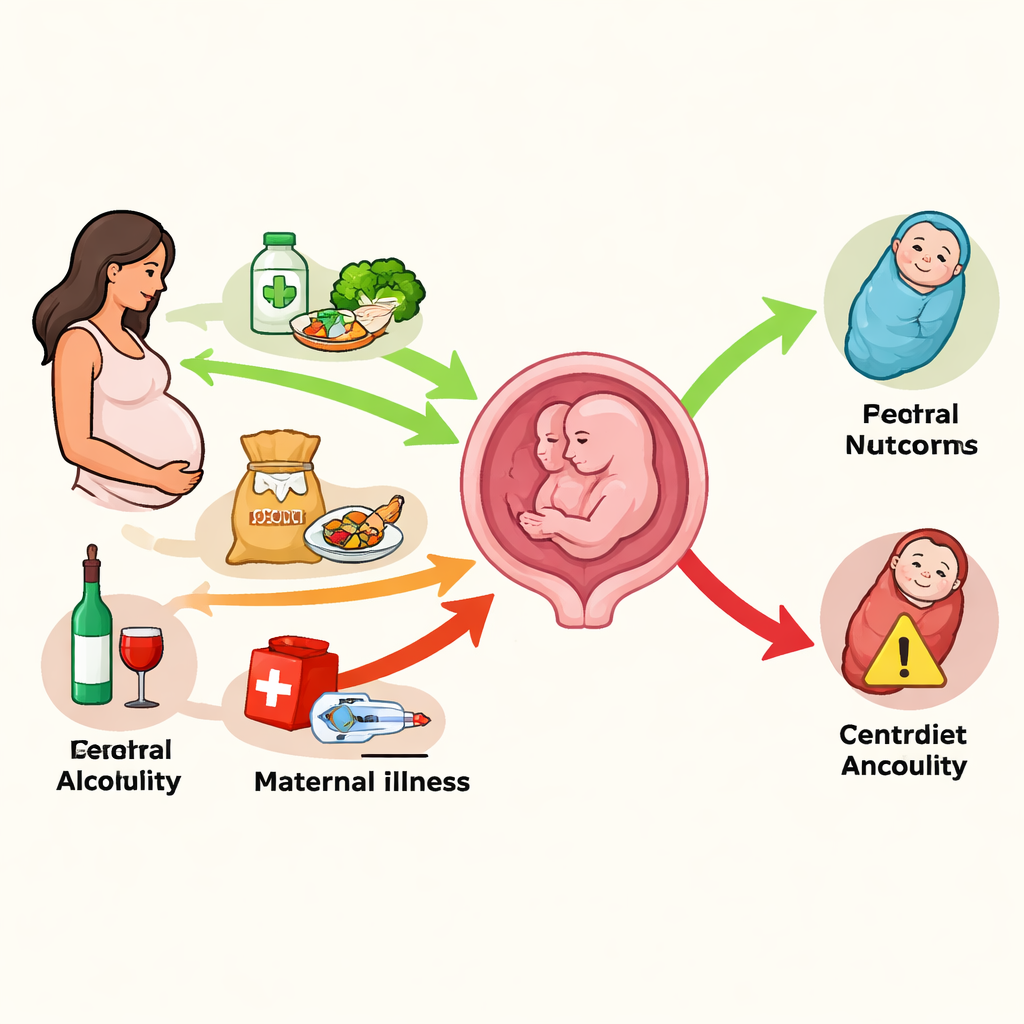
Alcohol use during pregnancy emerged as another important danger. Even at the level of “any drinking,” mothers who reported alcohol use had nearly three times the odds of having a baby with a birth defect compared with non‑drinkers. Although the study also examined other possible influences—such as exposure to pesticides or cigarette smoke—these did not remain clearly linked to anomalies once all factors were analyzed together. The picture that emerges is one where conflict‑driven shortages, damaged clinics, and untreated illnesses combine with individual habits to shape a baby’s chances of being born healthy.
What This Means for Protecting Babies
For non‑specialists, the message is straightforward: simple, low‑cost measures can dramatically change the odds for newborns, even in places recovering from war. Ensuring that women have access to folic acid tablets, reliable and timely prenatal care, and clear advice on diet can prevent many serious birth defects. Helping pregnant women eat enough, and eat a variety of foods, while avoiding alcohol, further protects the developing baby. The authors argue that rebuilding health services in Tigray and similar settings should prioritize these basics—nutrition support, counseling, and early treatment of maternal illnesses—because they offer powerful, practical ways to give children a healthier start in life.
Citation: Girmay, G., Fisshatsion, F., Negash, B.M. et al. Determinants of congenital anomalies among newborns in public hospitals of Northern Ethiopia: case-control study design. Sci Rep 16, 6484 (2026). https://doi.org/10.1038/s41598-026-37213-7
Keywords: congenital anomalies, maternal nutrition, folic acid, Tigray Ethiopia, pregnancy health