Clear Sky Science · en
Effect of the biologically synthesized rGO NPs and Fe2O3/rGO NCs on phytochemical assay, toxicity, and metabolism of Achillea millefolium plant
Why tiny particles and medicinal plants matter
Many beloved medicinal plants make their health‑giving ingredients only in small amounts, and growers must wait years for mature crops. This study explores a promising shortcut: using ultra‑small, plant‑friendly particles made from carbon and iron to gently “nudge” a well‑known healing herb, Achillea millefolium (yarrow), into producing more of its valuable aromatic compounds while growing in glass jars under controlled lab conditions.
From kitchen garden herb to lab‑grown medicine
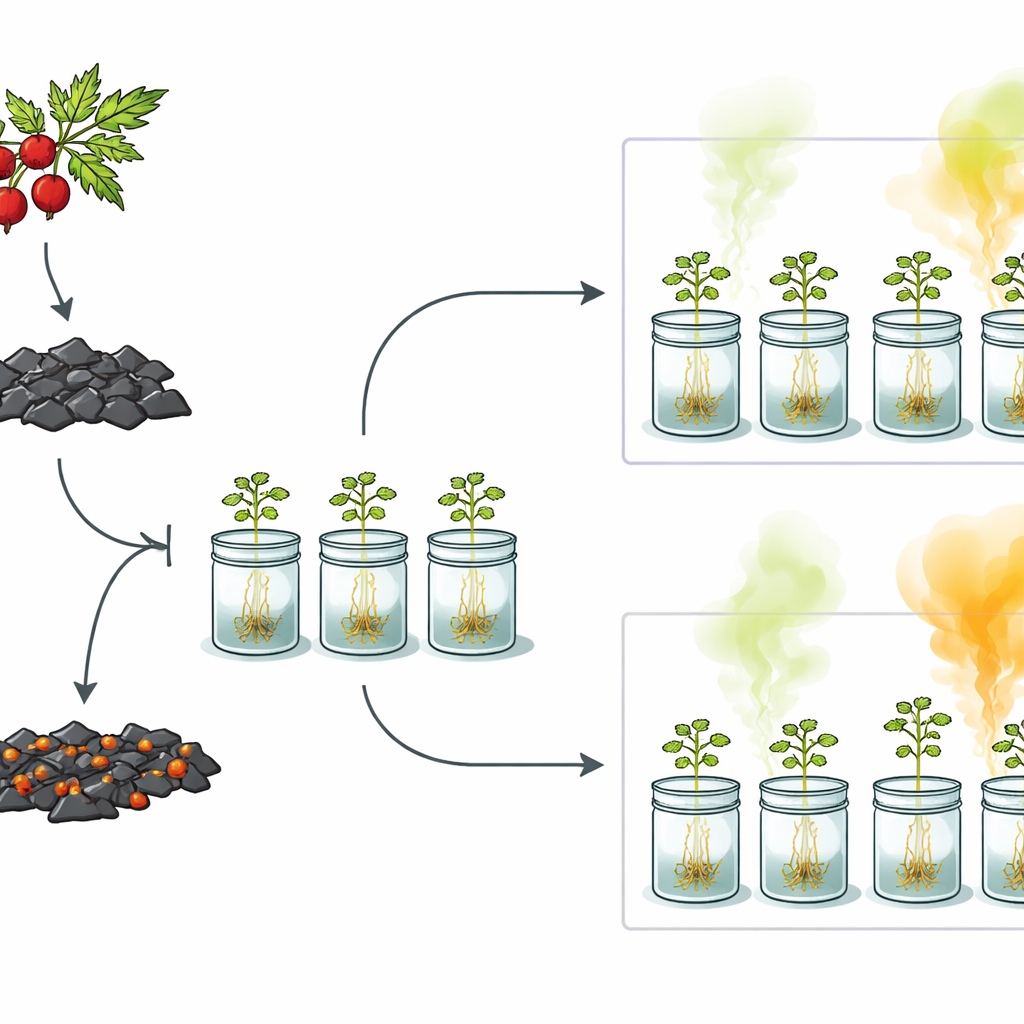
Yarrow has been used for centuries for its soothing, antimicrobial, and anti‑inflammatory effects, thanks to a rich mix of natural chemicals, especially fragrant oils and related molecules. Instead of cultivating whole fields, scientists can grow tiny yarrow shoots in sterile culture tubes, where light, nutrients, and temperature are carefully managed. In this controlled world, the researchers tested two types of nano‑sized materials made by “green” methods using rosehip fruit extract: flat, sheet‑like reduced graphene oxide particles, and similar sheets decorated with iron oxide, forming a combined material called a nanocomposite. These were mixed into the growth medium at several doses to see how the plantlets would respond.
Growth and color: what the eye can see
The team first looked at simple growth traits: how many shoots and leaves formed, how heavy the plants became, and how long the roots and stems were. Across most treatments, these basic measures barely changed, suggesting that neither type of particle dramatically stunted or boosted overall growth. One exception stood out: at a modest dose, the iron‑graphene nanocomposite clearly encouraged longer roots, hinting that the attached iron helped the plants cope with any stress from the particles themselves. At the same time, all treated plants showed some loss of green pigments and yellow‑orange carotenoids, the molecules that help capture light for photosynthesis. This drop in color is a classic sign that the plants sensed the nanoparticles as a mild stress.
Hidden aromas: what the instruments can see
Beneath these subtle outward changes, the chemistry inside the yarrow shoots shifted dramatically. Using sensitive gas chromatography–mass spectrometry, the researchers compared the “scent profile” of untreated shoots to those grown with the different nano‑additives. They found 37 distinct volatile compounds, with treated plants showing many more of certain fragrant families, especially monoterpenes and sesquiterpenes. These include molecules often linked to antimicrobial and anti‑inflammatory activity. The iron‑graphene nanocomposite was especially effective: at a particular concentration, it led to the highest build‑up of these desirable volatiles, while also introducing some compounds not detectable in control plants. In contrast, some alkaloids present in untreated shoots disappeared after treatment, showing that the overall chemical balance was being reshaped.
How mild stress can be turned into an advantage
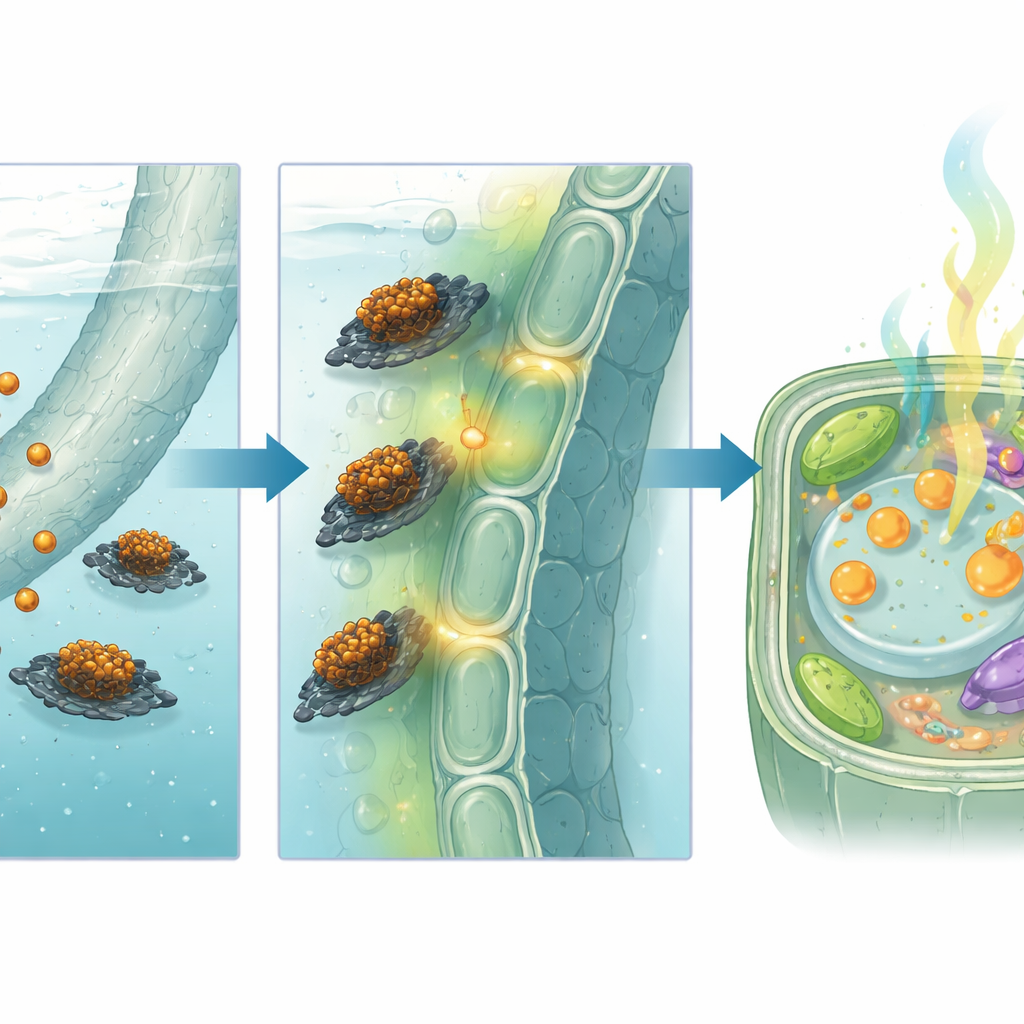
The results fit a broader pattern seen in plant science: gentle stress, such as exposure to tiny particles, can trigger defense systems that divert energy into making protective secondary metabolites. The nano‑materials appear to set off reactive oxygen signals and hormone‑like messages inside cells, which in turn switch on the plant’s “chemical shield” pathways. By anchoring iron oxide on graphene sheets and creating the nanocomposite, the researchers may have combined two useful effects: the signaling and surface interaction of graphene with the nutritional and signaling roles of iron. At low doses, this combination seems to push yarrow toward producing more beneficial aromatic compounds without seriously harming growth.
What this means for future plant‑based remedies
To a non‑specialist, the key takeaway is that carefully designed, plant‑friendly nanoparticles can act as tiny prompts that help medicinal herbs like yarrow make more of their valuable natural ingredients in a shorter time and smaller space. While these treatments slightly weaken leaf color, they greatly strengthen the plant’s internal store of fragrant, bioactive molecules. With more work to confirm safety, fine‑tune doses, and test other species, such green‑made iron‑graphene particles could become tools for sustainable production of plant‑based medicines, fragrances, and natural preservatives without relying solely on large farm fields and long growing seasons.
Citation: Jafarirad, S., Fathollahi, R., Rezaei, Z. et al. Effect of the biologically synthesized rGO NPs and Fe2O3/rGO NCs on phytochemical assay, toxicity, and metabolism of Achillea millefolium plant. Sci Rep 16, 9113 (2026). https://doi.org/10.1038/s41598-026-37200-y
Keywords: nanotechnology in medicinal plants, Achillea millefolium, green-synthesized nanoparticles, secondary metabolites, plant tissue culture