Clear Sky Science · en
The metabolic consequences of evoked spreading depolarization in brain slices
Why brain energy waves matter
Many brain disorders, from stroke and head injury to migraine aura, involve sudden waves of electrical silence that sweep across brain tissue. These events, called spreading depolarizations, temporarily shut down normal activity and place intense strain on the brain’s energy supply. This study asks a simple but crucial question: what happens to the brain’s fuel systems during one of these waves, and can a common supplement, coenzyme Q10, help struggling tissue bounce back?
A traveling storm across brain tissue
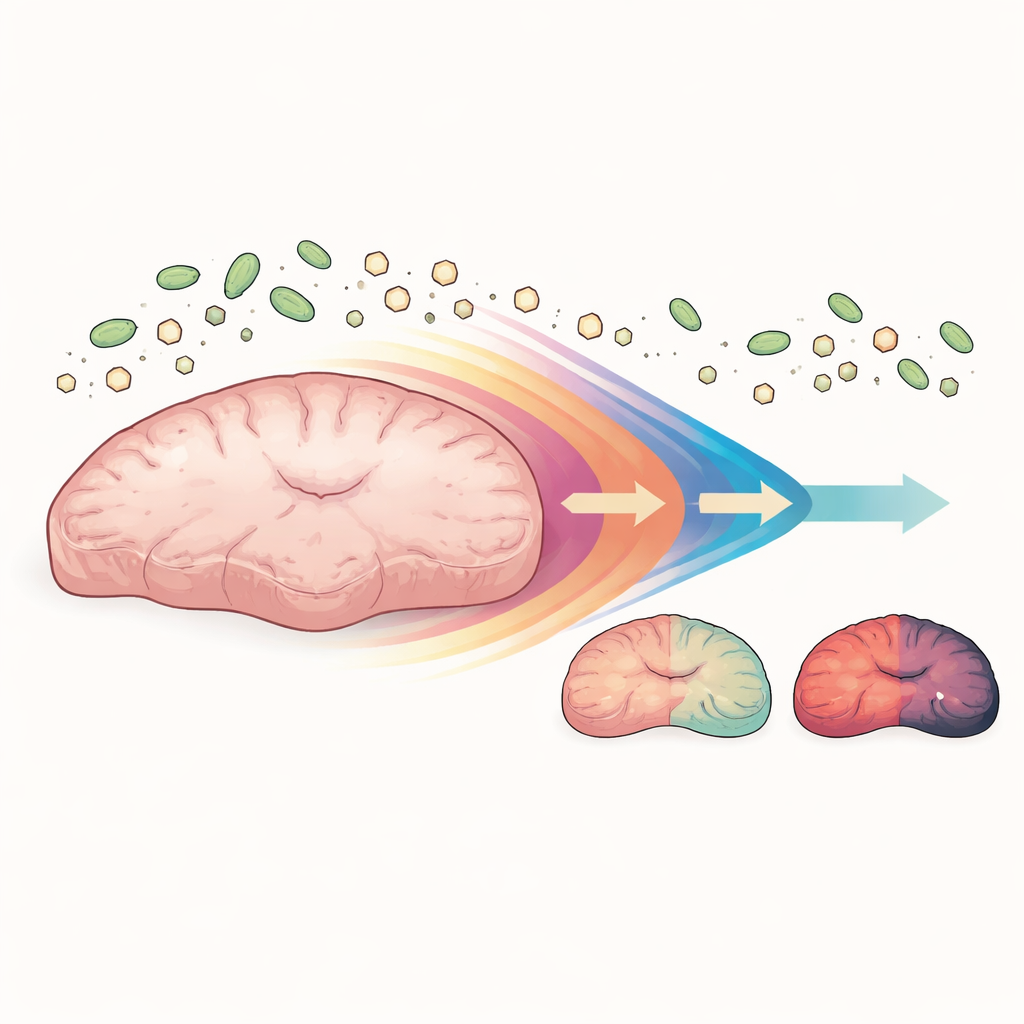
Spreading depolarization is like a slow-moving electrical storm. Nerve and support cells briefly lose their usual charge difference across the cell membrane, triggering large shifts of ions such as sodium, potassium, calcium and chloride. The authors used thin slices of mouse brain kept alive in a dish to trigger these waves in a controlled way, by applying a high-potassium solution. With a grid of tiny electrodes, they recorded how the wave moved across the tissue, how long it took to start, and how quickly the cells recovered their normal state.
How cells scramble for energy
To see what this storm does inside cells, the team monitored bursts of calcium, a key internal signal, and tracked the activity of mitochondria, the cell’s powerhouses. Under normal sugar supply, the wave caused a marked rise in calcium signals and a strong increase in mitochondrial activity, showing that cells rapidly ramped up energy production. Chemical analysis of the tissue revealed higher levels of pyruvate and lactate, molecules linked to sugar breakdown, and malate, tied to deeper energy pathways. Together, these changes suggest that during a spreading depolarization, brain cells burn fuel harder and shift partly toward less efficient, more anaerobic energy use to meet the sudden demand.
When fuel is scarce, recovery falters
The researchers then mimicked a crisis, such as stroke or severe injury, by removing glucose, the brain’s main fuel, from the fluid bathing the slices. In this low-fuel state, cells actually slipped into spreading depolarization faster, but took much longer to recover. Calcium surges were larger and rose more quickly, hinting at stressed, overexcitable cells. Crucially, mitochondria no longer boosted their activity in response to the wave. The chemical fingerprint of the tissue also changed: markers of routine sugar burning and the central energy cycle fell, while others associated with stress and impaired energy flow, like succinate and certain amino acids, rose. This pattern points to stalled core metabolism, mounting oxidative stress, and a forced switch to less efficient backup pathways.
A helping hand from coenzyme Q10
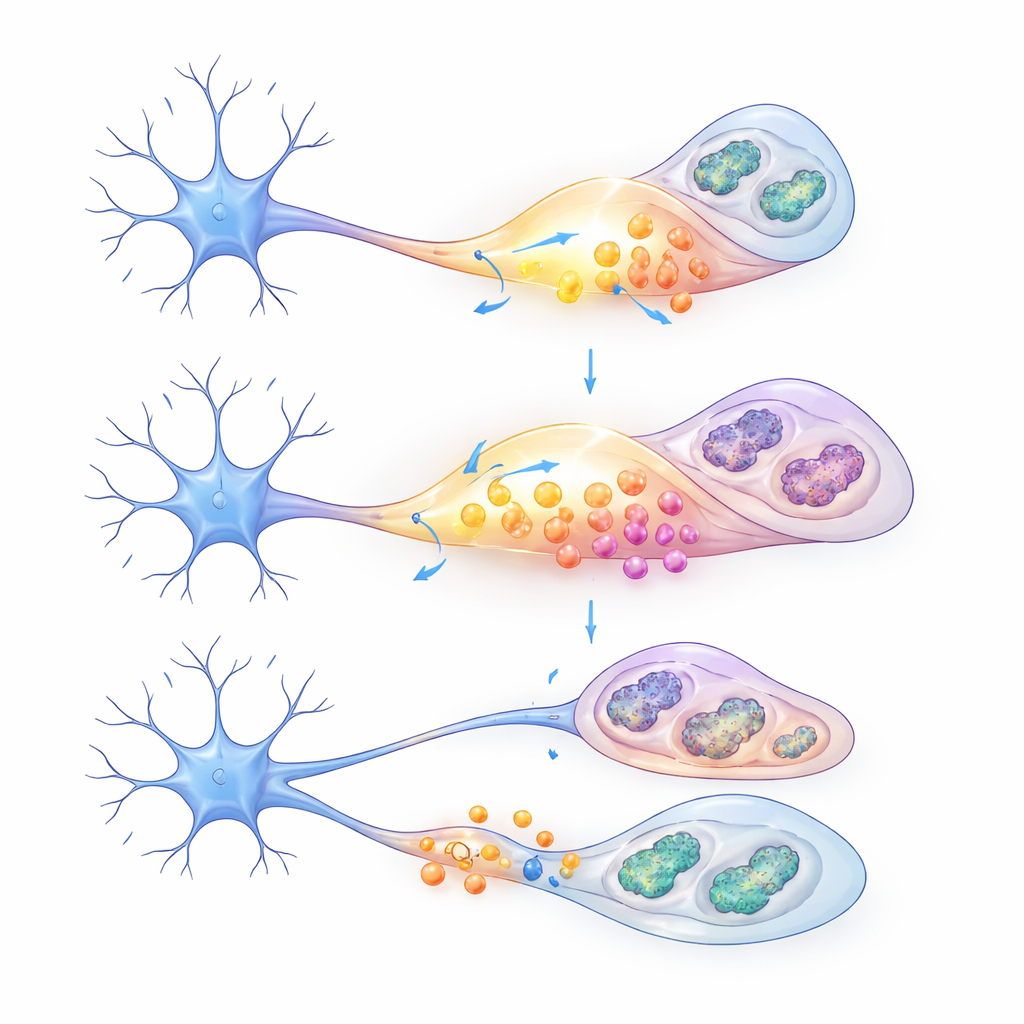
Because the mitochondria appeared to be a weak link under energy stress, the team tested coenzyme Q10, a molecule that ferries electrons inside mitochondria and also acts as an antioxidant. Brain slices kept without glucose but supplemented with coenzyme Q10 still developed spreading depolarizations, and the time until the wave began did not change. However, the slices regained their normal electrical state much more quickly. Both the main event and the recovery phase were shortened, implying that coenzyme Q10 helped the damaged energy machinery clear the ionic chaos and restore balance more efficiently.
What this means for brain health
For a general reader, the message is that each spreading depolarization is not just an electrical glitch; it is also a serious metabolic challenge. In healthy, well-fueled tissue, the brain can muster extra energy and ride out the storm. But when glucose is scarce, as in stroke, traumatic brain injury or prolonged seizures, these waves arrive sooner, last longer and leave cells metabolically exhausted. The study shows that supporting mitochondria, for example with coenzyme Q10, can improve how quickly brain tissue recovers from such events, even when fuel is limited. While this work was done in isolated brain slices rather than patients, it strengthens the idea that therapies aimed at preserving or boosting the brain’s energy systems could reduce damage in a wide range of acute neurological conditions.
Citation: Grech, O., Mugo, C., Hill, L.J. et al. The metabolic consequences of evoked spreading depolarization in brain slices. Sci Rep 16, 8389 (2026). https://doi.org/10.1038/s41598-026-37175-w
Keywords: spreading depolarization, brain energy metabolism, mitochondria, glucose deprivation, coenzyme Q10