Clear Sky Science · en
A network analysis of the associations between COVID-19-related variables and health across sex, age and educational levels among Ghanaian youths
Why this study matters beyond the pandemic
Even as daily life moves on from lockdowns and case counts, the emotional fallout of COVID-19 has not simply vanished—especially for young people. This study looks at how different pandemic-related experiences, such as stress, fear, stigma, and views on vaccination, are tangled together with physical and mental health in teenagers and young adults in Ghana. By mapping these links, the researchers highlight which feelings and beliefs matter most, and how they differ for boys and girls, younger and older youth, and students at different school levels.
The young people behind the numbers
The research team surveyed 1,326 students aged 12 to 28 from junior and senior high schools and a major university in Ghana. Between June and August 2022, these young people answered questions—using well-tested questionnaires—about their fear of COVID-19, stress related to the pandemic, feelings of being judged or judging themselves because of COVID-19, how much they trusted COVID-19 information, whether they accepted vaccination, how often they followed preventive measures like masking or staying home when sick, and their overall physical and mental quality of life. Instead of looking at each factor separately, the scientists used a “network” approach, treating each factor as a point on a map and drawing connections wherever two points tended to move together.
A web of stress, fear, and well-being
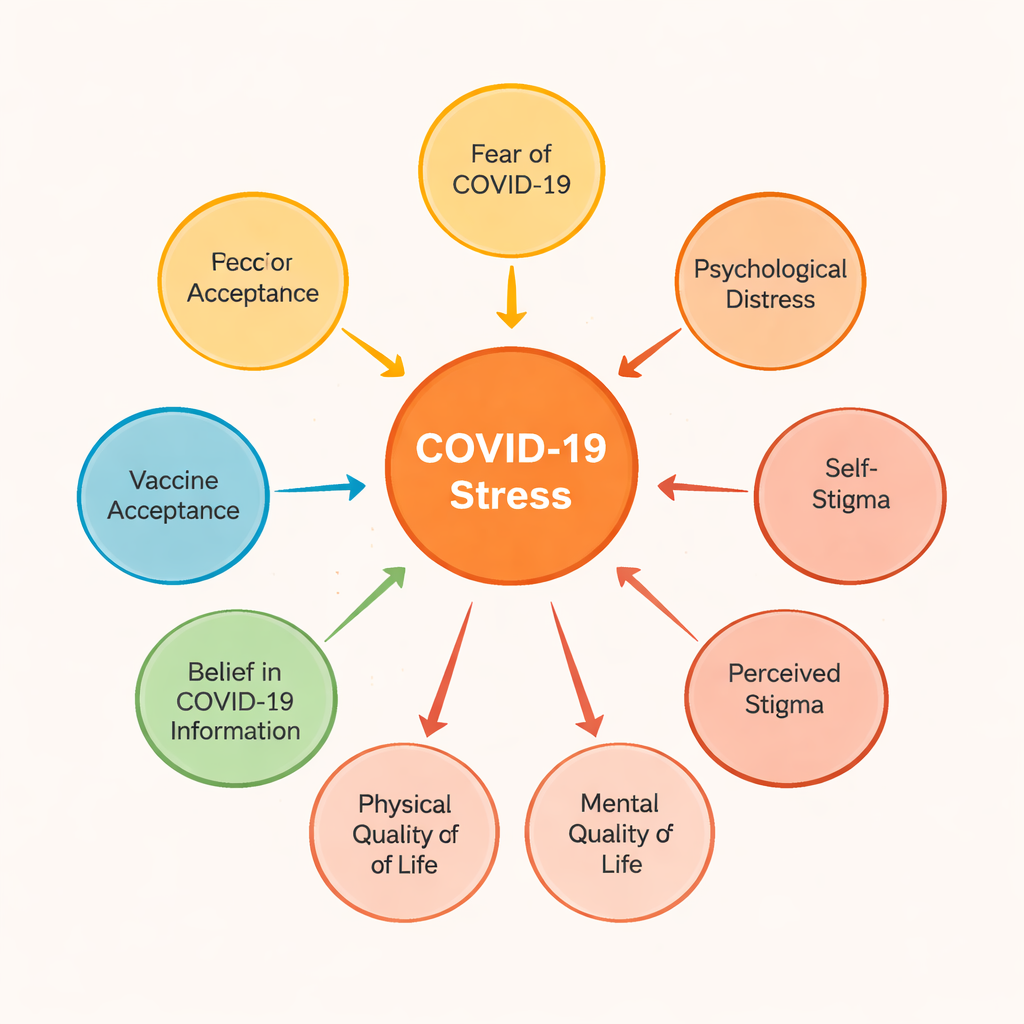
When the researchers drew this map for the whole group, one factor stood out at the center: COVID-19-related stress. This kind of stress captured worries about catching the virus, financial problems, social conflict, and uncertainty about the future. It was strongly linked to fear of COVID-19, psychological distress (symptoms of depression, anxiety, and stress), and self-stigma—self-blame or shame connected to COVID-19. Fear of COVID-19 itself was tied to more frequent preventive actions, stronger belief in COVID-19 information, and higher self-stigma. Psychological distress connected this emotional turmoil to health: higher distress went along with poorer physical and mental quality of life. Physical health was also worse among those who felt more socially stigmatized because of COVID-19 and, interestingly, among those who were more accepting of COVID-19 vaccines.
Differences by gender, age, and schooling
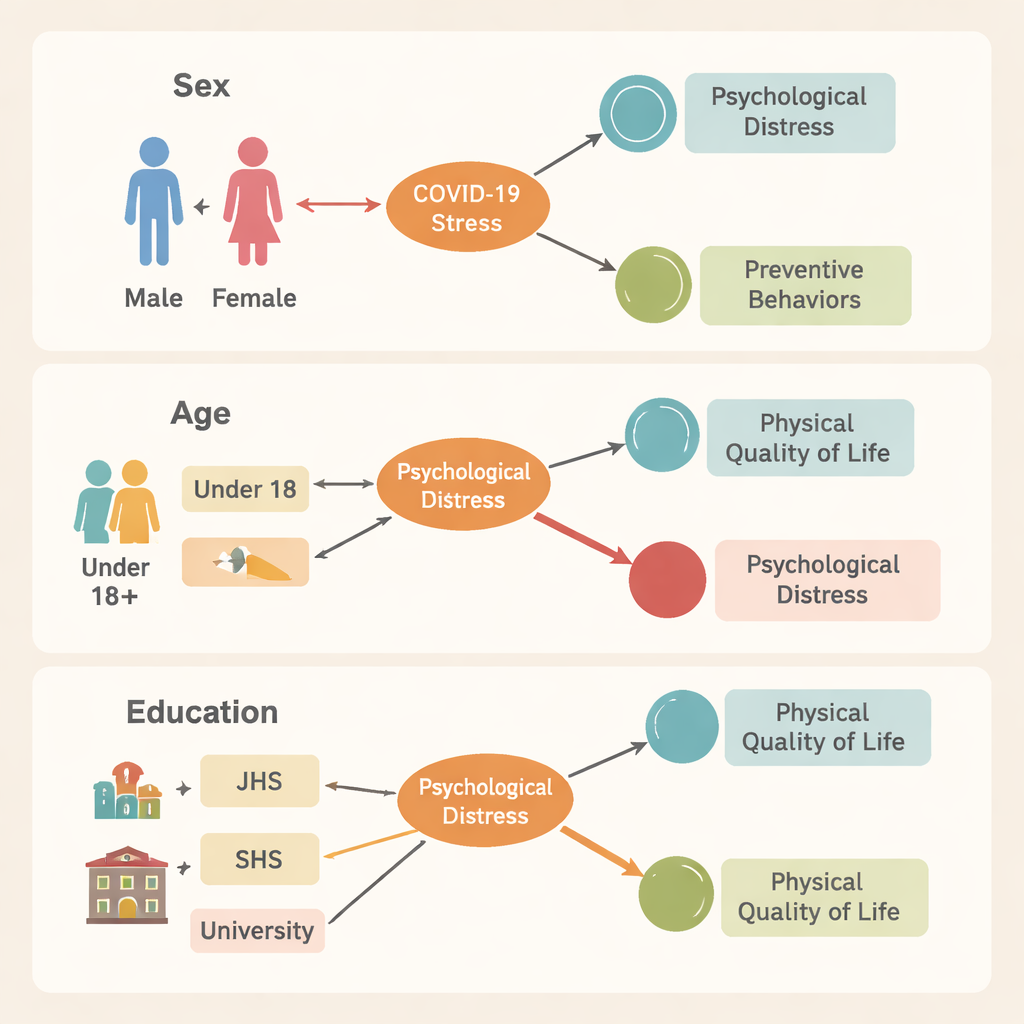
Looking at subgroups revealed both shared patterns and important twists. For both males and females, COVID-19 stress remained the central hub, feeding into fear, distress, and self-stigma. Yet some links differed in strength: for example, in males the tie between stress and self-stigma, and between stress and preventive behaviors, appeared stronger. Comparing younger teens with those 18 and older, stress and fear were again tightly linked, but older youth showed a clearer pattern in which psychological distress and perceived stigma were more closely tied to declines in physical quality of life. Among younger teens, stigma sometimes moved in the opposite direction, showing weaker or even negative links with other pandemic feelings. Educational level told a similar story: while the overall web of connections looked alike for junior high, senior high, and university students, university students showed a particularly strong link between psychological distress and poorer physical health, hinting at heavier academic and life pressures.
What stands out as most important
Across all these comparisons, one message kept resurfacing: pandemic-related stress—not stigma—was the most central piece of the puzzle. Prior work often focused on stigma as the main driver of mental health problems. In this Ghanaian youth sample, however, day-to-day worries about infection, finances, school disruption, and an uncertain future played a more immediate role. These findings suggest that, to protect both mind and body, support efforts should tackle stress directly—through counseling, peer support, clear and trustworthy information, and practical help with school and family challenges. At the same time, the varying patterns by sex, age, and education level show that one-size-fits-all programs are unlikely to work equally well for everyone.
What this means going forward
For a lay reader, the study’s takeaway is clear: the mental strain of COVID-19 among young people is less about being labeled or blamed and more about living under prolonged, wide-ranging stress. That stress ripples outward, fueling fear and self-judgment and eroding both emotional balance and physical well-being. Because boys and girls, younger and older youth, and students at different school levels experience these links somewhat differently, mental health and public health efforts need to be tailored to their specific situations. Although this research offers only a snapshot in time, it points the way toward future, long-term studies and toward stress-focused, age- and context-sensitive interventions that can help young people weather both this pandemic’s aftermath and future health crises.
Citation: Ye, J., Chen, IH., Huang, PC. et al. A network analysis of the associations between COVID-19-related variables and health across sex, age and educational levels among Ghanaian youths. Sci Rep 16, 7337 (2026). https://doi.org/10.1038/s41598-026-37166-x
Keywords: COVID-19 stress, youth mental health, Ghana students, pandemic stigma, vaccine attitudes