Clear Sky Science · en
Efficacy of radial and focused shockwave therapy for tendinopathy: a systematic review and meta-analysis
Why sore tendons matter to everyday life
Tendinopathy—persistent pain and stiffness in tendons—is not just a problem for elite athletes. It affects runners, factory workers, parents lifting children, and anyone whose job or hobby involves repeated movements. When tendons hurt, simple tasks like climbing stairs, opening a jar, or playing a sport can become discouragingly difficult. This article examines whether two modern, non-surgical treatments that use sound waves to stimulate healing work differently, and which might be the better choice for easing pain and restoring strength.
Two ways to deliver healing shockwaves
Shockwave therapy sends short, high-energy pulses through the skin into the tissues underneath. Doctors use it to treat stubborn tendon problems in the shoulder, elbow, knee, and heel. There are two main versions. Focused shockwave therapy concentrates its energy at a precise point deep inside the body, like a magnifying glass focusing sunlight. Radial shockwave therapy spreads its energy over a broader, more shallow area, more like ripples from a stone dropped in a pond. Both aim to nudge the body into repairing damaged tissue and calming chronic pain, but they differ in how and where the energy is delivered. 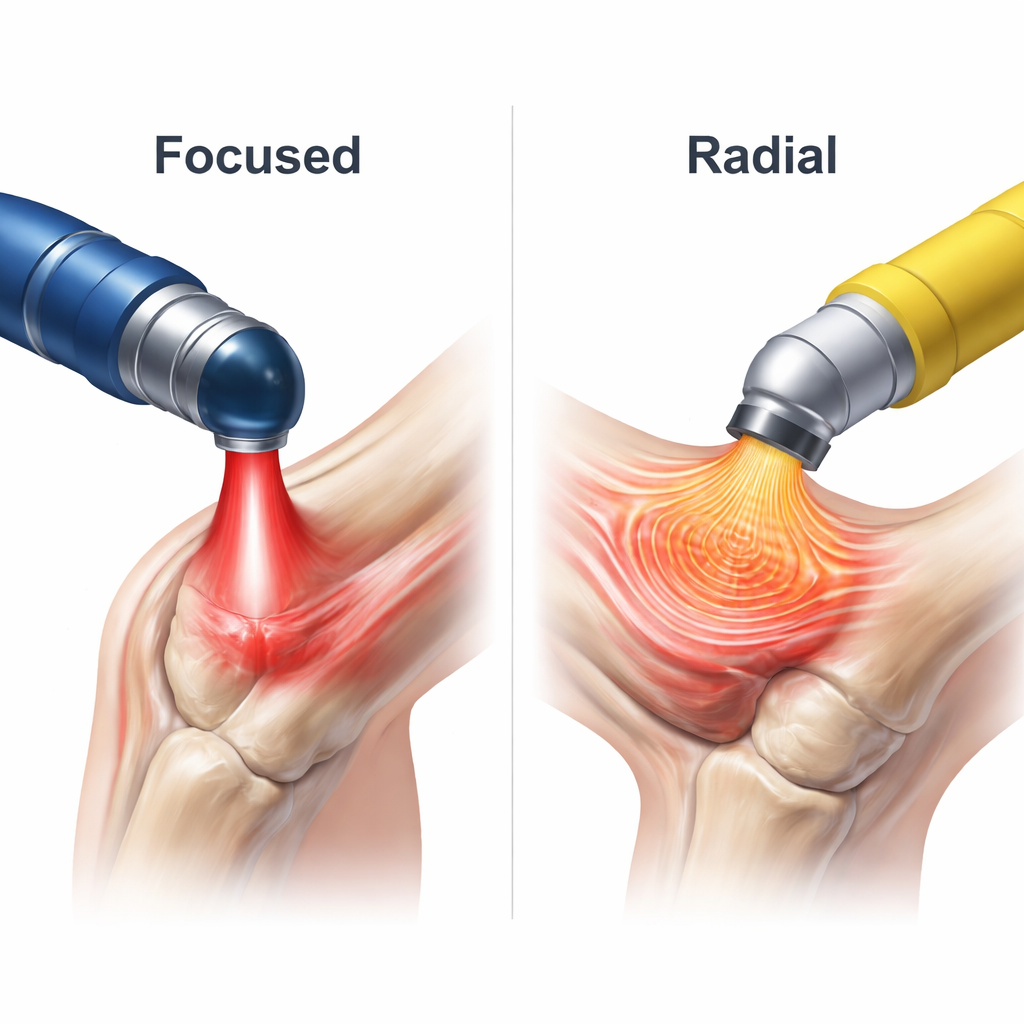
How the researchers weighed the evidence
The authors carried out a systematic review and meta-analysis, which means they searched medical databases for all good-quality randomized trials that directly compared radial and focused shockwave therapy in adults with tendinopathy. They found nine such studies, covering 530 patients with painful tendons in the elbow, shoulder, and knee. Some trials tested the therapies on their own, while others combined them with exercise programs or other standard treatments. The team pooled the results to examine effects on pain, day-to-day function, muscle strength, and side effects, and then rated how reliable the evidence was using established grading systems.
What the numbers say about pain and function
Across the studies, both types of shockwave therapy reduced tendon pain and helped patients move more easily. When the treatments were used alone, focused therapy showed a modest edge over radial therapy for pain relief, especially a few months after treatment. However, this advantage was based on data the authors judged to be of low certainty, meaning that future research could easily change the picture. When the therapies were paired with other approaches, such as strengthening exercises, the differences in pain relief largely disappeared. Measures of knee function in people with jumper’s knee sometimes favored focused therapy, but again, the supporting data were limited and inconsistent.
Strength gains, safety, and what they might mean
The story was more nuanced for strength. In people with tennis elbow, radial therapy appeared to improve the strength of the wrist extensor muscles more than focused therapy did, while overall grip strength was similar with both. This finding rested on a small number of studies but was supported by moderately reliable evidence. On the safety side, the news was reassuring: patients in both groups reported similar levels of temporary discomfort during treatment and similar rates of short-lived side effects, such as skin redness or mild bruising. No serious complications were reported. Taken together, the data suggest that both approaches are reasonably safe and can be useful tools in managing stubborn tendon pain. 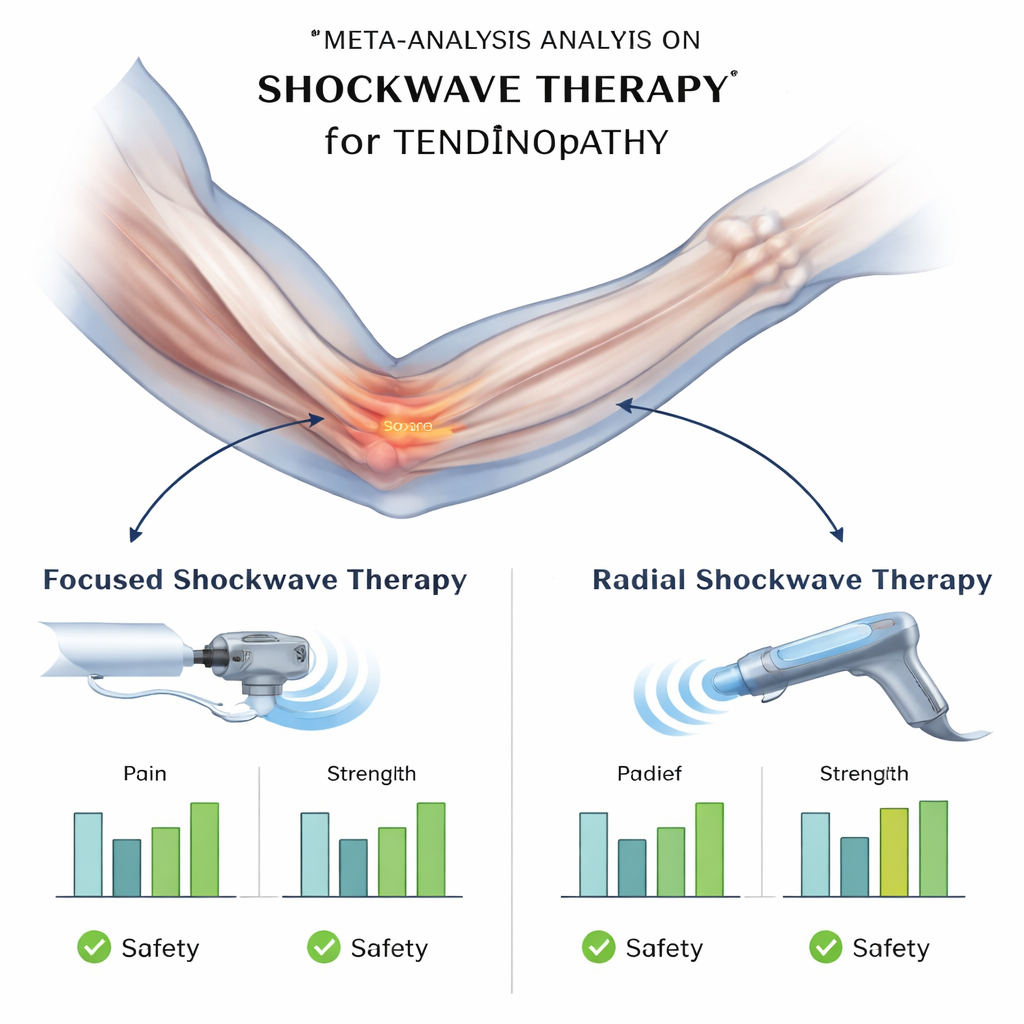
What this means if your tendon hurts
For someone living with chronic tendon pain, this review suggests that the choice between radial and focused shockwave therapy is not clear-cut. Neither method was a clear overall winner for pain relief or everyday function, and the hint that radial therapy may build certain muscle strength better comes from only a few studies. In practical terms, that means factors such as cost, device availability, therapist experience, and how deep or widespread the sore area is may matter more than the label on the machine. Both options appear to be reasonably safe and may offer relief when rest, pills, and basic exercises have not been enough, but better-designed studies are still needed before doctors can say with confidence which approach is best for which patients.
Citation: Stania, M., Pawłowski, M., Benduch, M. et al. Efficacy of radial and focused shockwave therapy for tendinopathy: a systematic review and meta-analysis. Sci Rep 16, 7632 (2026). https://doi.org/10.1038/s41598-026-37160-3
Keywords: tendinopathy, shockwave therapy, tennis elbow, patellar tendon, non-surgical treatment