Clear Sky Science · en
A prospective study of intravenous iron effectiveness on quality of life and functional outcomes in patients with cancer
Why tiredness in cancer care matters
Many people living with cancer struggle with exhaustion, breathlessness, and low mood that make everyday tasks surprisingly hard. Often, these problems are linked not only to the cancer or its treatment, but also to a lack of iron in the body’s blood and muscles. This study asked a simple, practical question: if doctors treat that iron shortage with a modern intravenous iron drug, can patients quickly feel and function better in real life—not just look better on a lab report?
Hidden shortage behind cancer fatigue
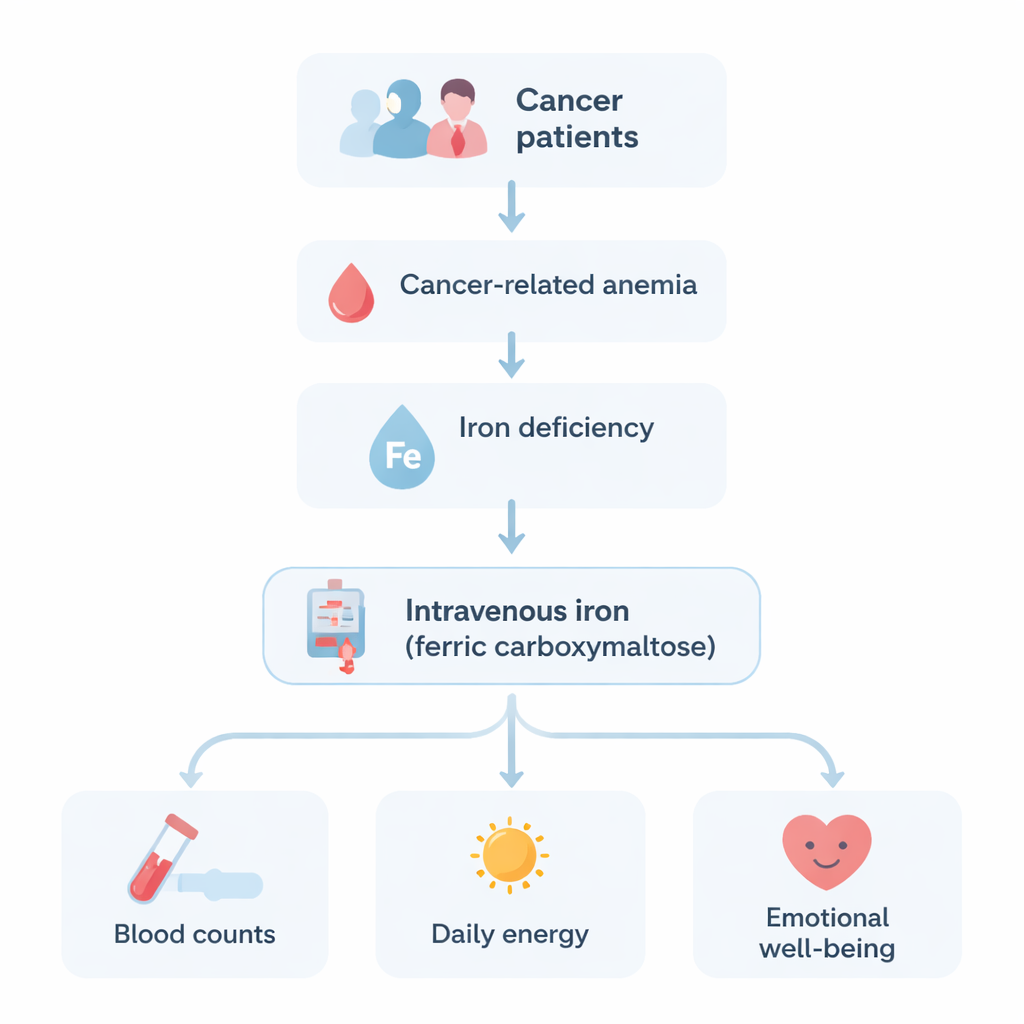
Anemia, a shortage of healthy red blood cells, is extremely common in people with cancer. It can appear at diagnosis and often worsens during chemotherapy. One major, and fixable, cause is iron deficiency: there is not enough usable iron available for the body to make hemoglobin, the oxygen-carrying protein in blood. Even without full-blown anemia, iron deficiency can sap energy, weaken muscles, and slow thinking. Because cancer and its treatments create ongoing inflammation, standard blood markers can sometimes miss this “functional” iron shortage, so patients may go under-treated.
Testing a modern iron drip
Researchers in Turkey followed 30 adults with various solid tumors—most commonly colon and breast cancer—who had clear evidence of iron deficiency and cancer-related anemia. Instead of taking iron pills, which are slow and often poorly tolerated, these patients received ferric carboxymaltose, an intravenous (IV) iron formulation that can deliver large doses in one or two infusions. The study was observational: doctors treated patients as they normally would, while the research team measured changes before and about 4–6 weeks after iron treatment. They tracked blood values and used two practical tests of well-being: the SF‑36 quality‑of‑life questionnaire and the six‑minute walk test, which records how far a person can walk in six minutes.
Blood counts up, everyday life feels better
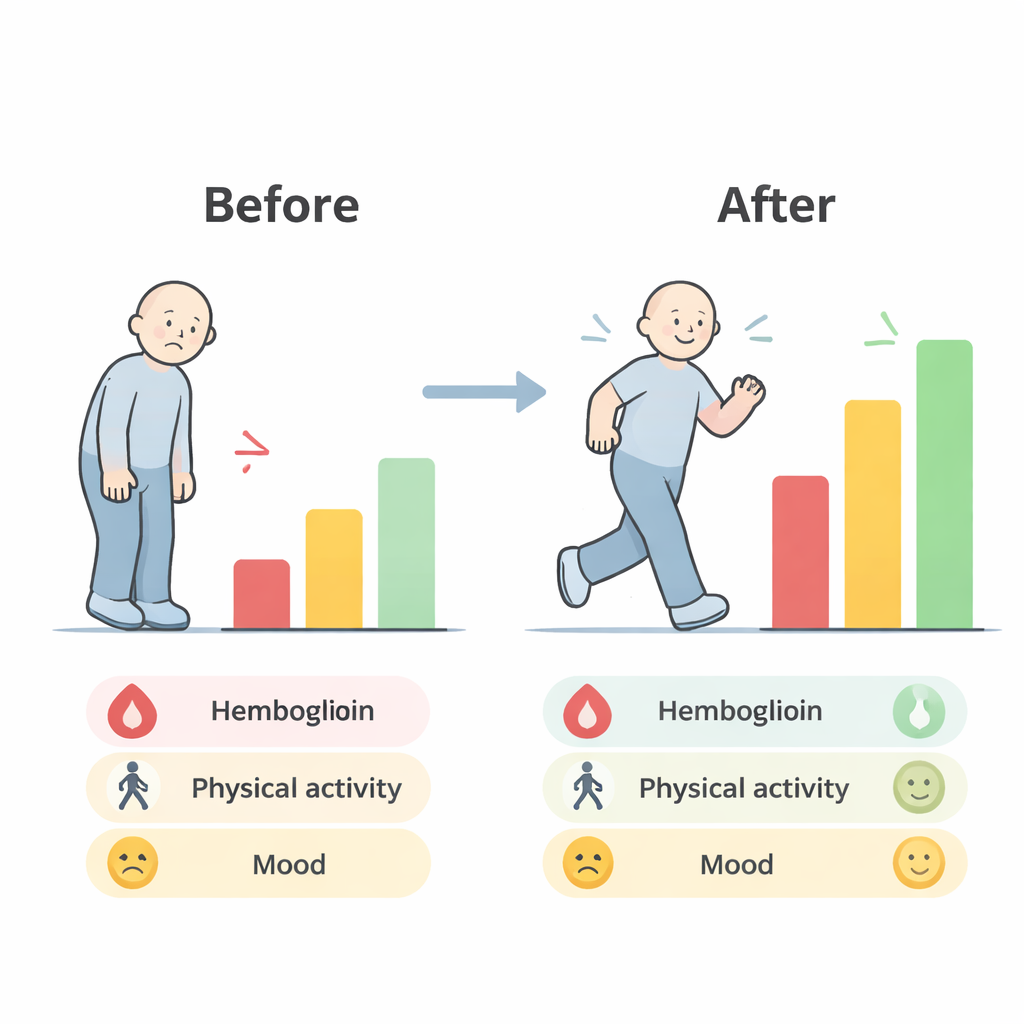
Within a few weeks, patients’ blood results improved strikingly. Average hemoglobin rose from the mild-to-moderate anemia range to near-normal, and iron stores and iron availability all increased. More importantly from the patients’ point of view, several dimensions of quality of life improved. People reported better physical functioning—being more able to climb stairs, walk, or carry groceries—along with greater energy and less fatigue. Emotional well-being scores also rose, suggesting that correcting iron shortage lightened mental strain as well as physical symptoms. These changes were large enough to exceed widely accepted thresholds for what patients actually notice in daily life.
Fitness test: small steps, not a big leap
The six‑minute walk distance, an objective measure of how far people could walk, increased only slightly and not enough to be statistically certain. On average, patients walked about 15 meters farther after treatment. The authors suggest that quality‑of‑life questionnaires may be more sensitive than short exercise tests in the first month after therapy, especially when people are still coping with chemotherapy, surgery, or other demanding treatments. In other words, patients may feel less drained and more hopeful before those changes clearly show up as longer walking distances.
What this means for patients and clinicians
This study supports a straightforward message: for people with cancer, checking iron status carefully—and treating iron deficiency with IV iron when needed—can quickly improve how they feel and function, not just their lab numbers. While the research was small and did not include a comparison group that received no iron, the consistent improvements in energy, physical abilities, mood, and blood counts suggest that iron replacement is a valuable part of supportive cancer care. Larger, longer studies are needed, but for now, patients struggling with unexplained fatigue should know that a hidden iron shortage is common, testable, and often treatable.
Citation: Köseoğlu, F.D., Tuğral, A. & Akyol, M. A prospective study of intravenous iron effectiveness on quality of life and functional outcomes in patients with cancer. Sci Rep 16, 6030 (2026). https://doi.org/10.1038/s41598-026-37154-1
Keywords: cancer-related anemia, intravenous iron, quality of life, fatigue in cancer, ferric carboxymaltose