Clear Sky Science · en
Co-inoculation of Stenotrophomonas maltophilia and Rhizobium leguminosarum phaseoli improves salinity tolerance in common bean cultivars
Beans on the front line of salty soils
As farmland around the world becomes saltier from irrigation and climate change, many food crops struggle to survive. Common bean, an important source of protein in many countries, is especially sensitive to salt in the soil, which stunts growth and slashes yields. This study explores an emerging, low-cost idea: using naturally occurring “helper” bacteria on bean roots and leaves to toughen plants against salty conditions instead of relying only on fertilizers or breeding new varieties.
How salt quietly harms crop plants
Salty soils challenge plants in several ways at once. Excess salt makes it harder for roots to pull in water, even when the soil looks moist. At the same time, sodium and chloride ions crowd out essential nutrients such as potassium, magnesium, and iron, upsetting the plant’s internal balance. Inside the leaves, this imbalance sparks chemical stress that damages membranes, proteins, and even DNA, while key growth hormones drop and stress hormones rise. In common beans, these changes show up as paler leaves, weaker root systems, and fewer, lighter seeds.
Recruiting friendly microbes as bodyguards
Instead of fighting salt with more chemicals, the researchers tested whether carefully chosen beneficial bacteria could act as tiny bodyguards for the plant. They focused on two types: Stenotrophomonas maltophilia, which normally lives on leaf surfaces, and Rhizobium leguminosarum bv. phaseoli, a classic root partner of beans that forms nitrogen-fixing nodules. In greenhouse pots, two Iranian bean varieties, Almas and Pak, were grown under four levels of salt, from near-fresh to strongly saline water. Plants received different bacterial treatments: none, each strain alone, or combinations. One mix in particular, the leaf bacterium plus the root bacterium together, stood out for how much it boosted plant health under salty conditions. 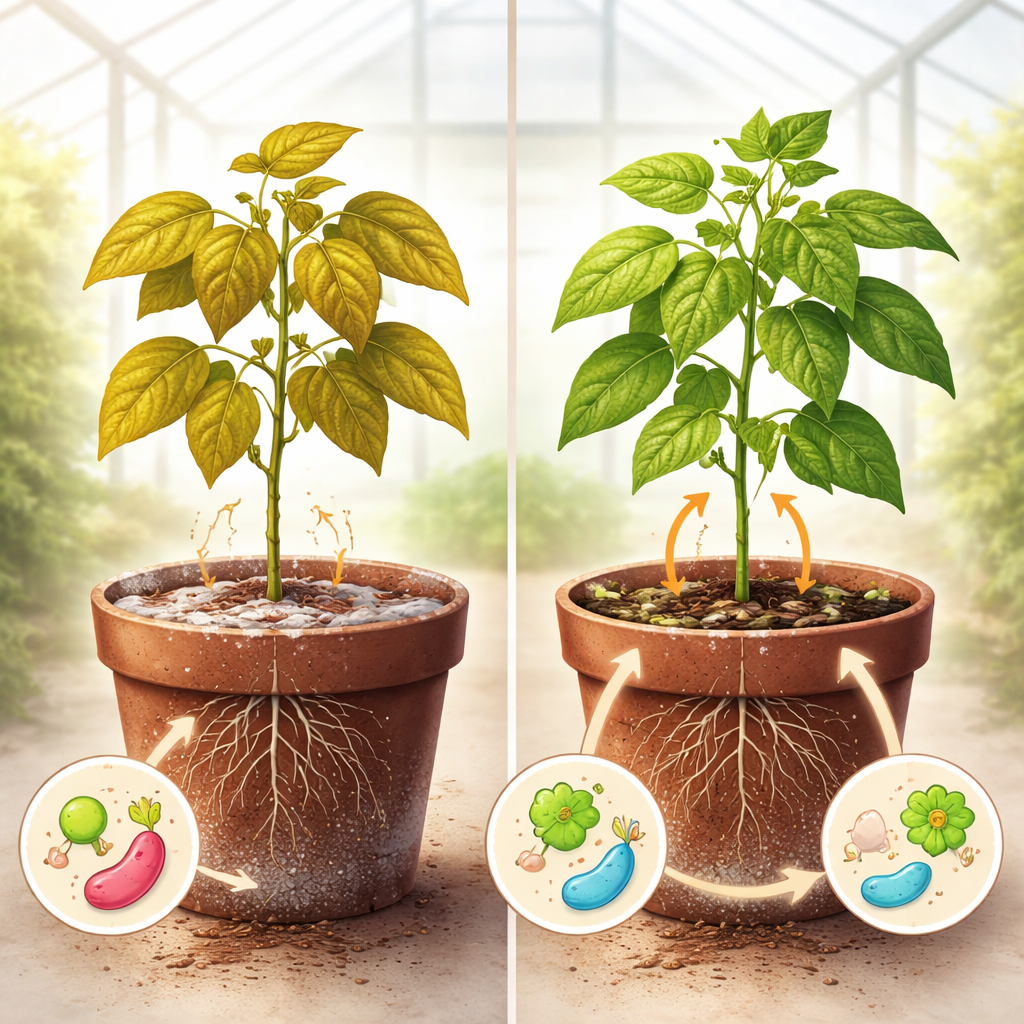
Keeping leaves green and cells intact
Salt usually robs bean leaves of chlorophyll and protective pigments, dulling their green color and weakening photosynthesis. Here, plants treated with the two-bacteria mix kept more chlorophyll and carotenoids across all salt levels, especially in the Almas variety. Their leaves also leaked fewer electrolytes, a sign that cell membranes stayed intact rather than tearing under stress. Inside the plant, the usual emergency signals of severe stress—very high levels of the amino acid proline and hyperactive antioxidant enzymes—were toned down. This suggests that the bacteria prevented much of the damage before it happened, so plants did not have to run their internal defenses at full throttle.
Resetting hormones and nutrition
The microbial partners also helped rebalance the plant’s chemistry. Under salt stress, bean plants normally lose growth-promoting hormones like indole-3-acetic acid (IAA) and accumulate more of the stress hormone abscisic acid (ABA), which closes leaf pores and slows growth. Co-inoculated plants showed the opposite pattern: higher IAA and lower ABA than uninoculated plants at the same salt level. At the same time, these plants held on to more beneficial nutrients such as potassium, magnesium, and iron, while taking up less sodium and chloride. Soluble sugars rose, helping with internal water balance, but proteins and grain nitrogen were also better preserved, showing that overall metabolism remained more robust. 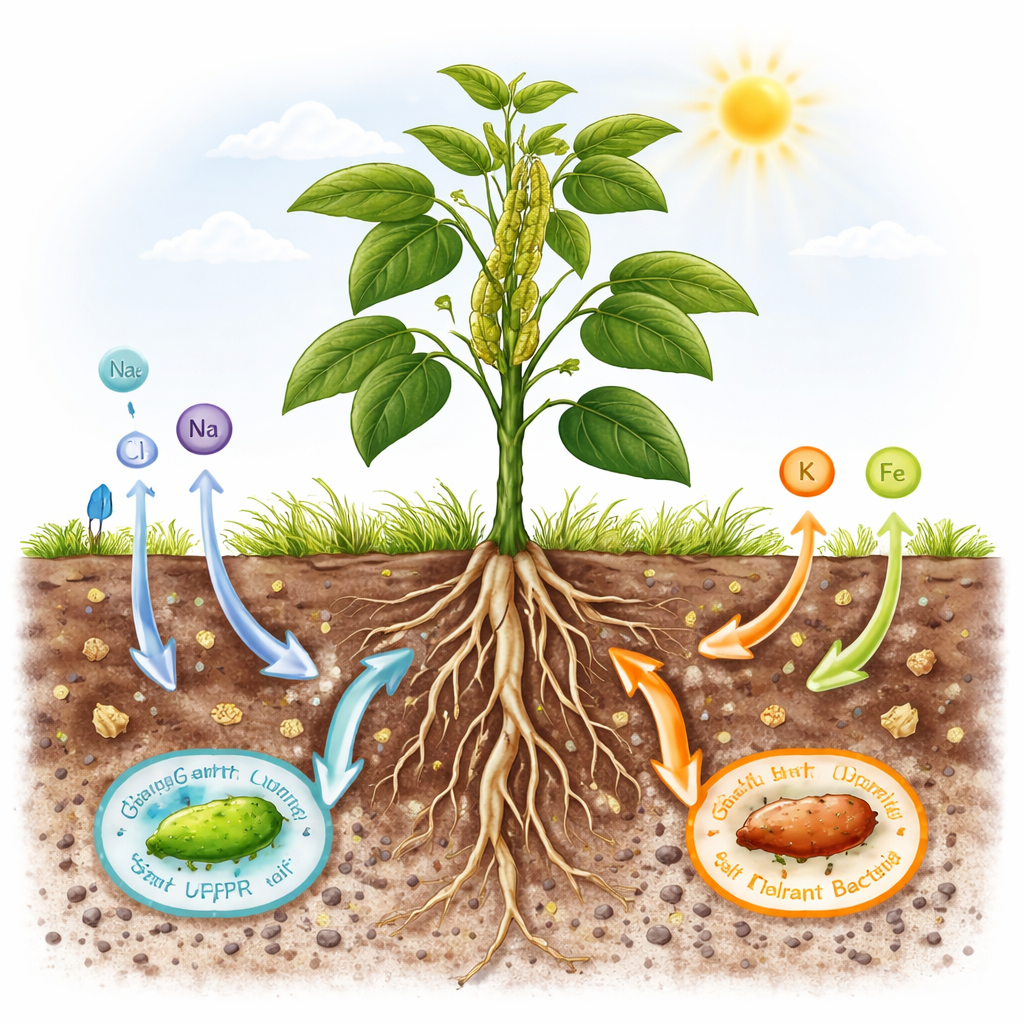
More seeds even when water is salty
Ultimately, what matters to farmers is yield. In this study, rising salt sharply reduced grain weight and grain nitrogen in both bean varieties. Yet plants given the combined bacterial treatment produced far more seeds than untreated plants at every salt level—often several times higher—and those seeds were richer in nitrogen, meaning better protein quality. The protective effect was particularly strong in the Almas variety, which responded with better membrane stability and nutrient status, while Pak showed strong improvements in sugar-based stress adjustment. Together, these results show that pairing a leaf-dwelling bacterium with a root-dwelling one creates a powerful, multi-layer shield against salty conditions. For growers facing creeping soil salinity, such bacterial inoculants could offer an eco-friendly, affordable way to keep common beans productive and nutritious where conventional approaches fall short.
Citation: Ansari, S., Kazemeini, S.A., Alinia, M. et al. Co-inoculation of Stenotrophomonas maltophilia and Rhizobium leguminosarum phaseoli improves salinity tolerance in common bean cultivars. Sci Rep 16, 6120 (2026). https://doi.org/10.1038/s41598-026-37145-2
Keywords: salinity tolerance, common bean, beneficial bacteria, soil salinity, sustainable agriculture