Clear Sky Science · en
Impact of symptomatic comorbidities on heatstroke outcomes: A retrospective nationwide cohort study
Why heat and existing illness matter
As summers grow hotter with climate change, heatstroke is becoming a serious threat, especially for older people and those already living with chronic diseases. Yet doctors and public health officials still struggle to pinpoint which health problems make heatstroke most deadly. This nationwide Japanese study followed more than two thousand adults hospitalized with heat-related illness to ask a simple but crucial question: when heatstroke strikes, which pre-existing illnesses most strongly influence who lives and who dies? 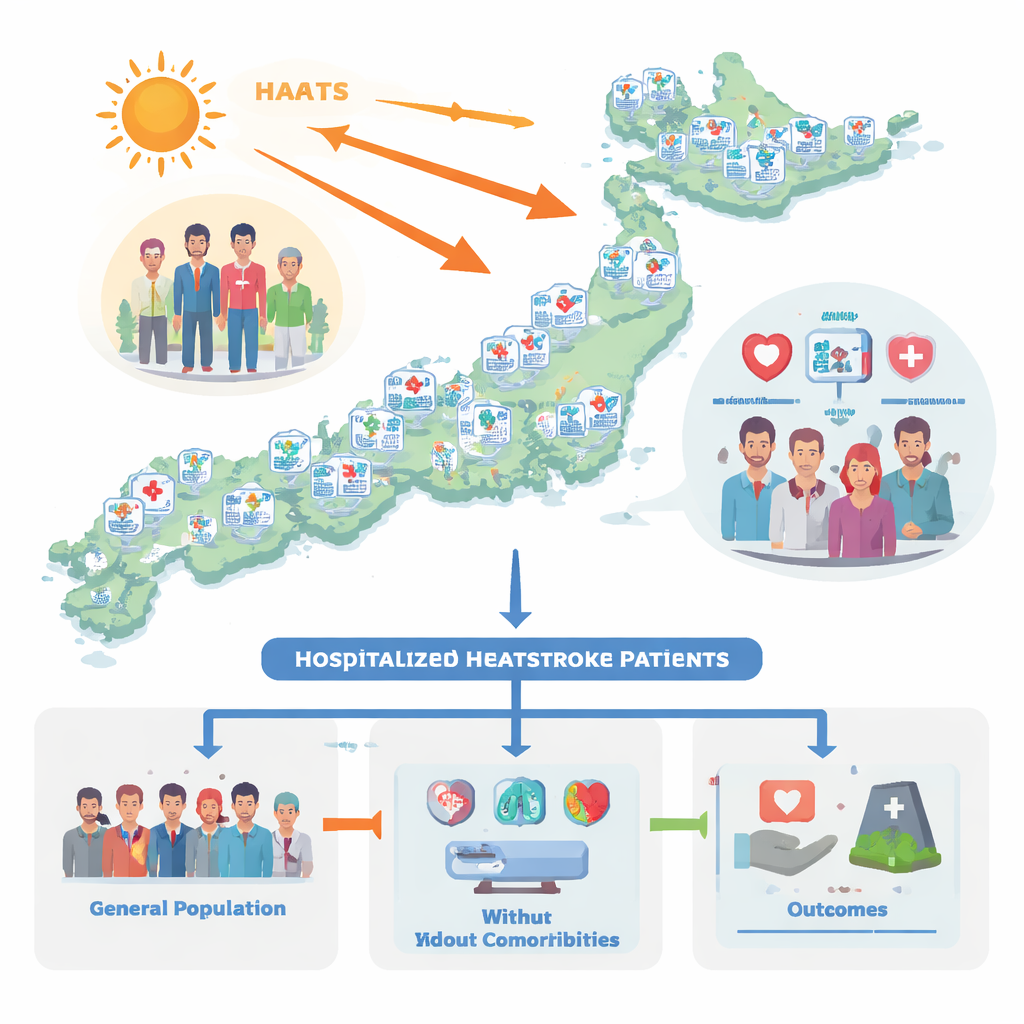
Looking across Japan’s hospitals
The researchers analyzed medical records from 2,373 adults admitted with heat-related illness to 165 hospitals across Japan between 2017 and 2021. Japan is an ideal place to study this issue: it has some of the world’s hottest, most humid summers and one of the oldest populations. The team focused on “symptomatic” chronic conditions serious enough to be causing problems at the time of admission—such as heart disease with ongoing shortness of breath, advanced lung disease, dialysis-requiring kidney failure, diabetes with organ damage, significant liver disease, immune disorders, and mental illness. They then compared patients with at least one such illness to those without, tracking who survived their hospital stay and who did not.
Who was most at risk in the hospital?
Roughly one in four patients had at least one serious ongoing health problem. These patients tended to be older, arrived with higher body temperatures and faster heart and breathing rates, and more often collapsed outdoors. They stayed in the hospital longer and died more often than those without such illnesses: 15.3% versus 10.9% died before discharge. Patients burdened with several illnesses at once showed a trend toward even higher death rates, hinting that overall frailty matters, although that pattern did not reach strict statistical certainty. Still, when the researchers treated the number of illnesses as a score, each additional condition raised the odds of dying in the hospital by about one third.
The special danger of lung disease
When the team examined each illness separately—while taking into account age, sex, body size, admission temperature, and blood pressure—one condition clearly stood out. Patients with serious respiratory disease, such as chronic obstructive lung disease or advanced scarring of the lungs, were nearly three times as likely to die in the hospital after heatstroke as patients without lung disease. Other problems, including heart disease, diabetes, liver disease, kidney failure, immune disorders, or mental illness, did not show statistically clear links to in-hospital death in this dataset, even though some, like mental illness, have been tied to heat risk in other studies. Survival curves told the same story: people with lung disease had the steepest decline in survival over the first weeks of hospitalization, even after carefully matching them to similar patients without chronic illness. 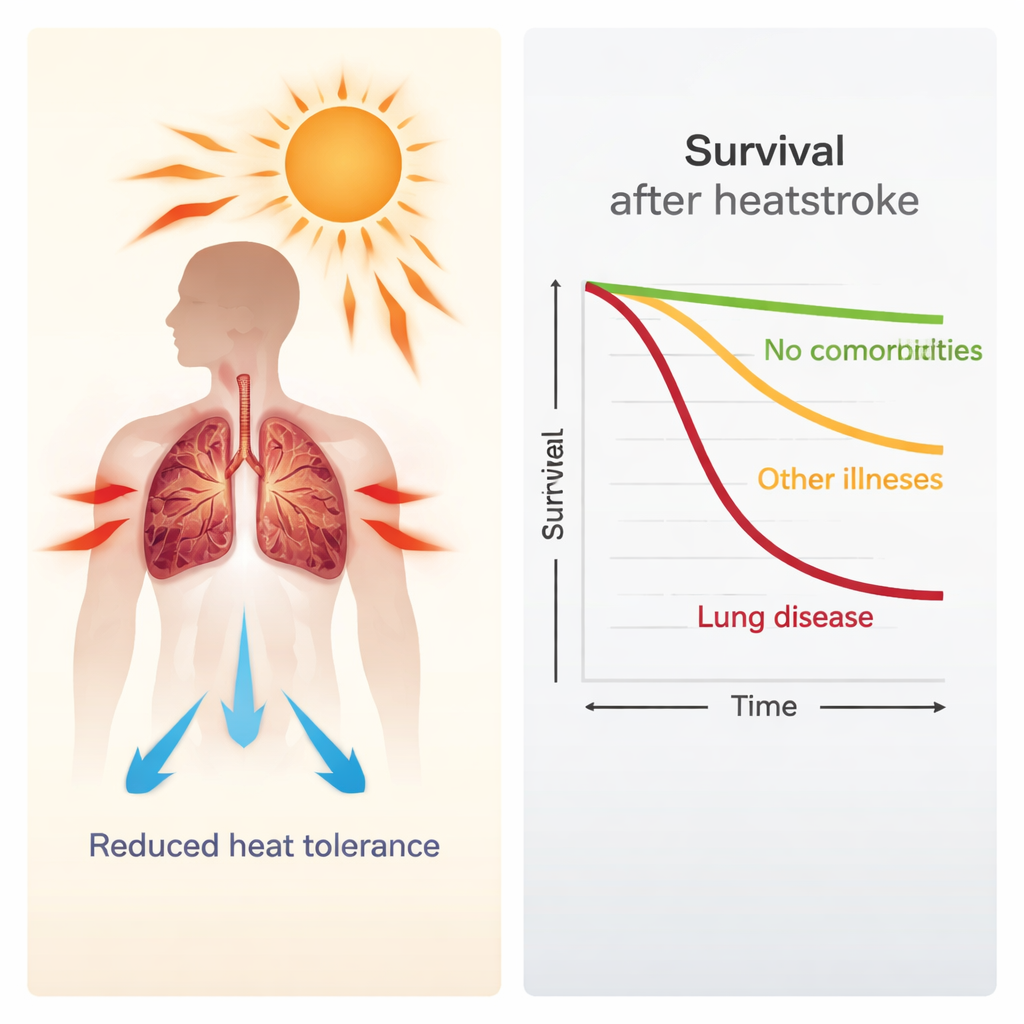
Why damaged lungs may fail in extreme heat
To explore why lung disease was so dangerous, the researchers tested whether the severity of the acute episode—captured by blood markers like lactate, kidney function, platelet counts, and level of consciousness at admission—could explain the excess deaths. These indicators reflect how badly the organs are suffering at the moment patients reach the hospital. Surprisingly, they accounted for almost none of the extra risk. This suggests that long-standing damage to the lungs, and the reduced ability of the heart–lung system to move blood and air, may leave these patients unable to shed heat or recover once organs begin to fail. In essence, chronic breathing problems may quietly erode the body’s “reserve,” so that when a severe heat event hits, there is little capacity left to cope.
What this means for everyday life
For non-specialists, the message is straightforward: not all chronic illnesses pose the same danger during extreme heat. Among hospitalized heatstroke patients in this large Japanese study, serious lung disease was the clearest red flag for death, and having more than one major illness also raised risk. That means families, caregivers, and health systems should treat people with chronic breathing problems as a top priority during heat waves—checking on them frequently, ensuring cool environments and adequate fluids, and acting quickly at the first sign of confusion, rapid breathing, or unusually high body temperature. As global temperatures climb and populations age, tailoring heat warnings and prevention programs to those with fragile lungs and multiple illnesses could save many lives.
Citation: Inukai, K., Narikawa, R., Kishitani, S. et al. Impact of symptomatic comorbidities on heatstroke outcomes: A retrospective nationwide cohort study. Sci Rep 16, 6244 (2026). https://doi.org/10.1038/s41598-026-37133-6
Keywords: heatstroke, chronic disease, respiratory illness, climate change and health, elderly patients