Clear Sky Science · en
Psychological and cognitive-emotional moderators of suicidal ideation and self-harm in young adults
Why This Matters for Students and Families
Suicidal thoughts and self-harm are far more common among university students than many people realize. This study looks beyond simple checklists of symptoms to ask a deeper question: which inner attitudes and habits of mind might quietly push young adults toward self-harm, and which might protect them? By examining mindfulness, self-compassion, and automatic thoughts about death, the researchers explore how everyday ways of relating to one’s own mind and emotions can shape suicide risk.
From Feeling Beaten Down to Feeling Trapped
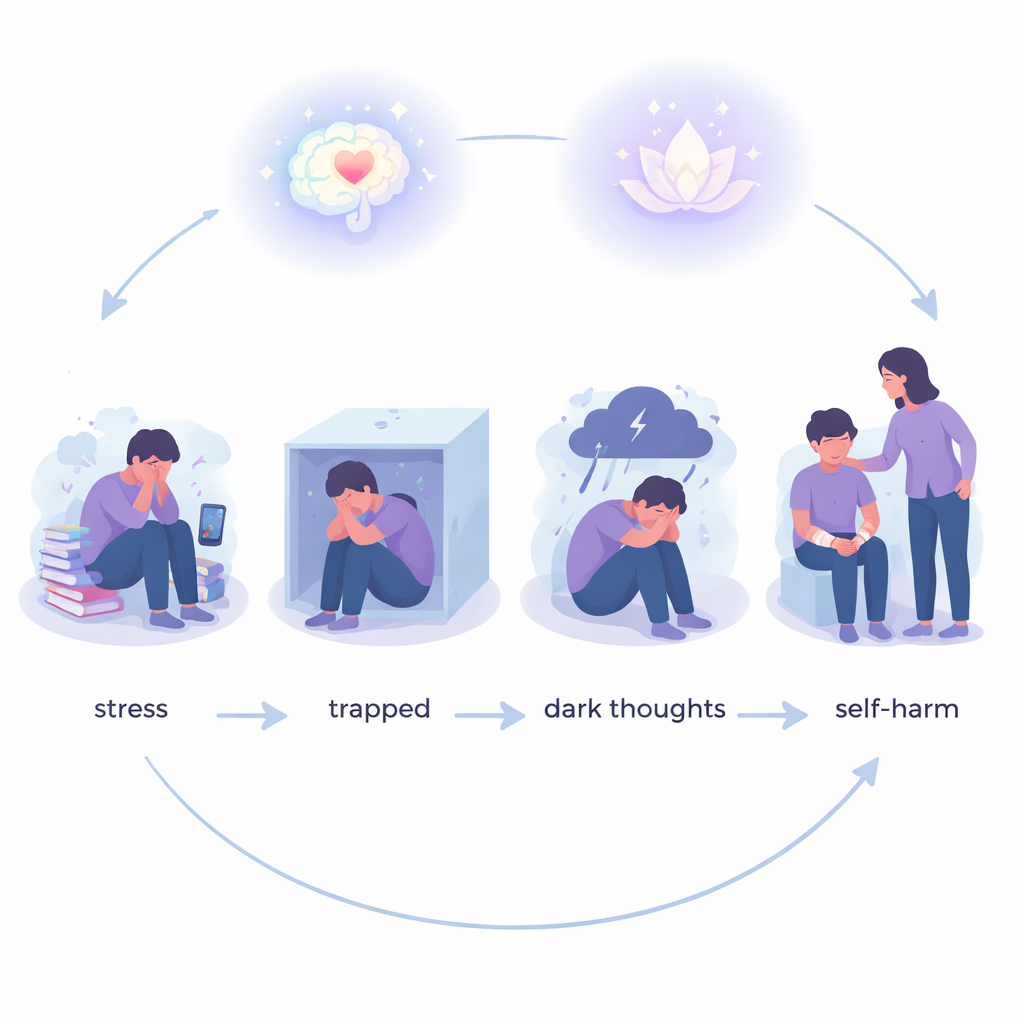
Modern suicide research often describes a gradual path rather than a sudden leap. On this path, young people may first feel “defeated” by problems at school, relationships, or mental health. Those feelings can harden into “entrapment,” a sense that there is no way out. From there, some develop suicidal thoughts, and a smaller group move on to self-harm or attempts. In this study, 94 university students in the Netherlands completed detailed questionnaires about suicidal thoughts, self-harm, depression, hopelessness, and feelings of defeat and entrapment. They also reported how mindful and self-compassionate they generally are, and completed a computerized test that measures how strongly they automatically link themselves with ideas of death or suicide.
Inner Kindness and Present-Moment Awareness
The researchers focused on two skills often taught in mental health programs: mindfulness (paying attention to thoughts and feelings in the present, without harsh judgment) and self-compassion (responding to one’s own struggles with warmth instead of criticism). They asked whether lower levels of these skills, and stronger automatic links between “me” and “death,” were tied to suicidal thinking and self-harm. They also tested whether these factors might change, or “moderate,” how strongly feeling trapped leads to suicidal thoughts.
What the Study Found About Risk and Protection
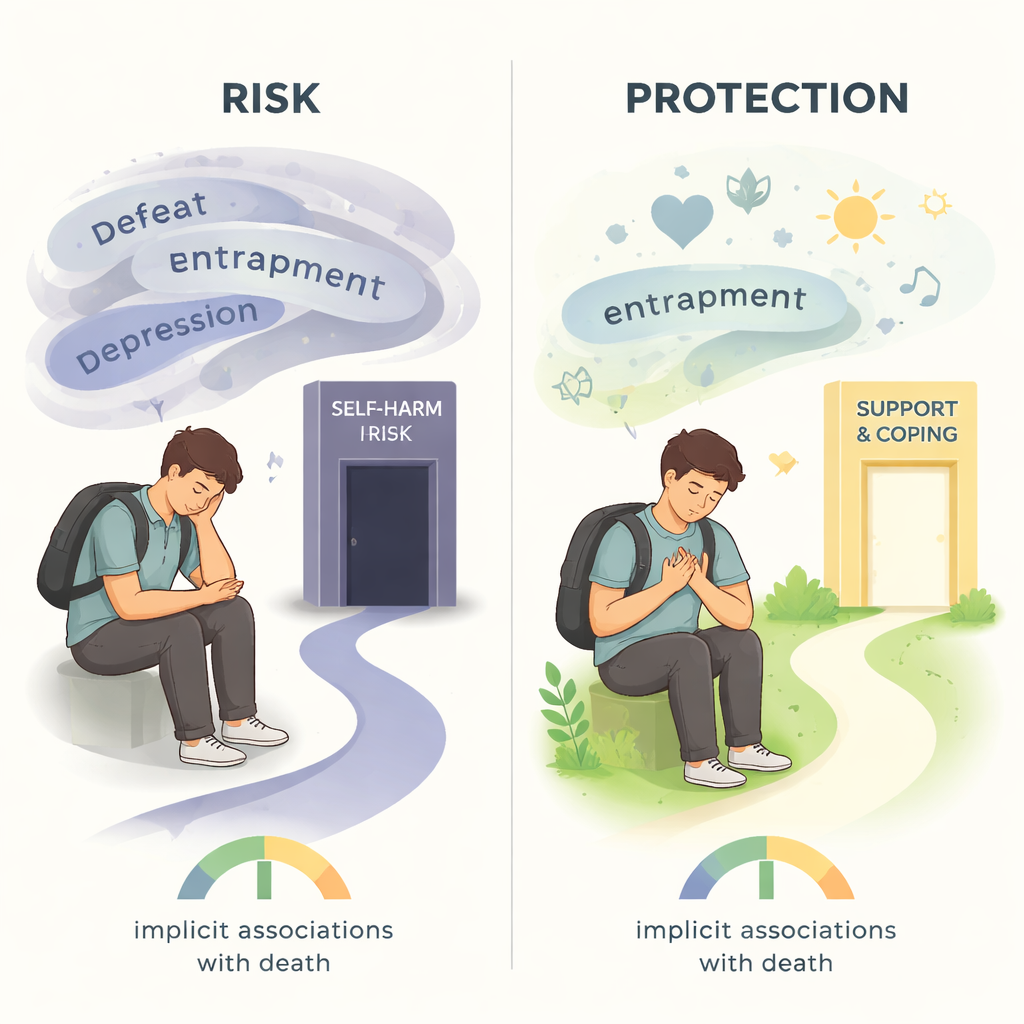
About one in three students in this sample reported suicidal thoughts, and a similar number reported having self-harmed at least once. As expected, suicidal thoughts and self-harm were strongly connected to depression, hopelessness, and feeling defeated and trapped. Students who were less mindful and less self-compassionate tended to report more of these painful states. But when the researchers looked more closely, clear patterns emerged. After taking depression into account, self-compassion—not mindfulness—was directly linked to whether someone had ever self-harmed: students who were kinder to themselves were less likely to report self-harm. Mindfulness, in contrast, was most closely tied to feeling trapped. Students with higher mindfulness scores felt less entrapment, even when they were depressed.
Surprising Clues from Automatic Thoughts About Death
The computer test of automatic associations with death and suicide produced an unexpected result. Rather than showing stronger “death = me” links in students who self-harmed, the study found that those who reported self-harm actually showed weaker automatic ties between themselves and death. One possible explanation is that many students were engaging in self-injury not to die, but to regulate overwhelming emotions—something more like a coping attempt than a wish to end life. For these students, self-harm may serve as a way to avoid, rather than embrace, thoughts of death. At the same time, the test did not clearly distinguish students with and without suicidal thoughts, echoing other mixed findings about its usefulness as a simple suicide risk marker.
What This Means for Prevention and Support
For a non-specialist, the take-home message is that how students treat themselves on the inside matters. Feeling trapped and hopeless is dangerous, but becoming more mindful may help ease that trapped feeling before it turns into suicidal thoughts. Meanwhile, cultivating self-compassion—learning to respond to personal failure and emotional pain with care instead of self-attack—may directly reduce the urge to harm one’s own body. The study was small and cross-sectional, so it cannot prove cause and effect, but it points to practical targets for prevention programs on campuses: teaching young adults to notice their thoughts with less judgment and to extend to themselves the same kindness they would offer a friend in distress.
Citation: Dickhoff, J., Deng, W., Aleman, A. et al. Psychological and cognitive-emotional moderators of suicidal ideation and self-harm in young adults. Sci Rep 16, 6625 (2026). https://doi.org/10.1038/s41598-026-37127-4
Keywords: suicide risk, self-harm, mindfulness, self-compassion, university students