Clear Sky Science · en
Effects of film mulching on cotton yield and water use efficiency in China: a meta-analysis
Why plastic on farm fields matters to all of us
Across much of the world, farmers stretch thin plastic sheets over their fields to trap warmth and water in the soil, a practice known as film mulching. For China’s cotton belt—vital to the clothes we wear and the livelihoods of millions—this simple technique can mean the difference between a good harvest and a disappointing one, especially as water becomes scarcer and the climate more erratic. This study pulls together results from dozens of experiments to ask a basic question with big implications: when and where does plastic film on cotton fields truly pay off?
Taking a bird’s-eye view of cotton fields
Instead of relying on a single experiment in one place, the researchers performed a meta-analysis, a kind of “study of studies.” They gathered 222 yield measurements and 55 measurements of water use efficiency from 68 field trials conducted across China between 2000 and 2024. Each trial compared cotton grown with plastic film mulch to cotton grown on bare soil, under real farm conditions and with multiple plot replications. By combining these independent results with statistical tools, the team could estimate the overall impact of film mulching and test how it changes with climate, soil type, fertilizer use, and planting methods. 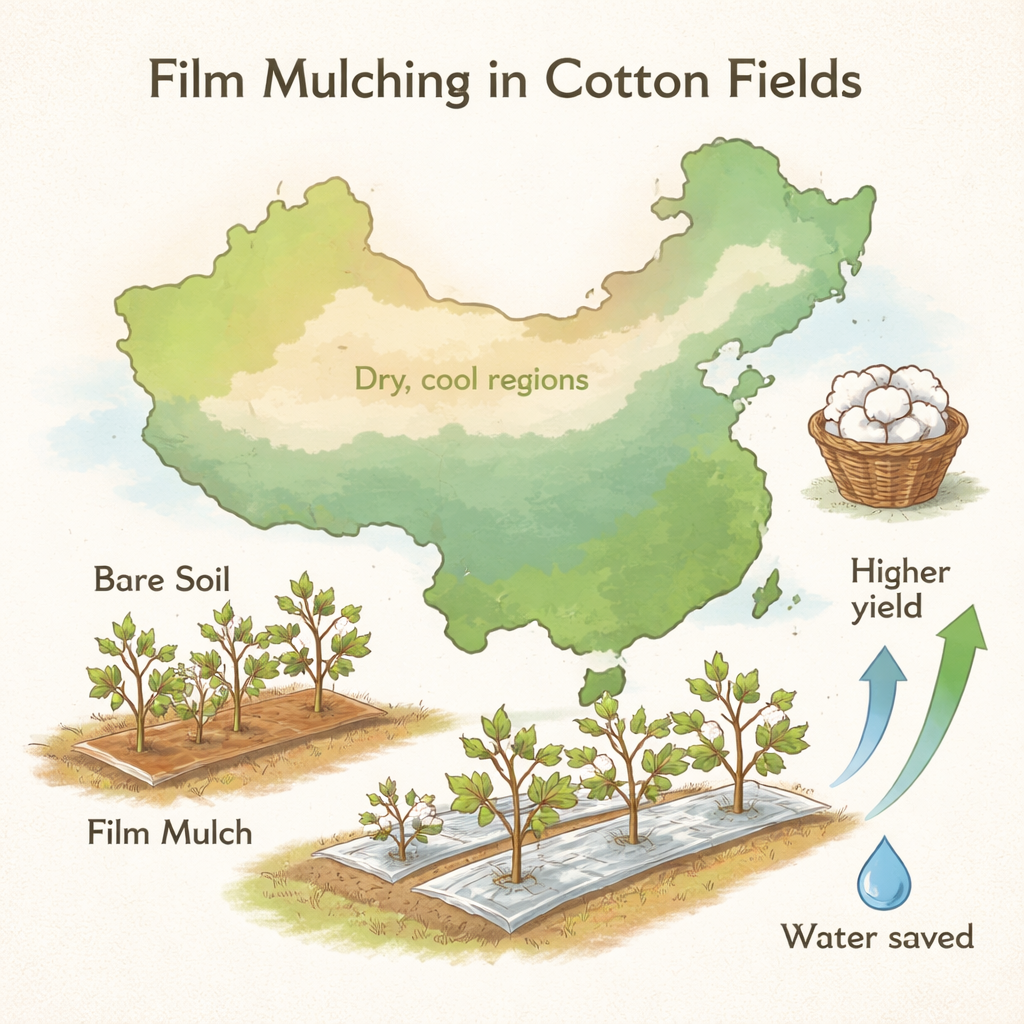
More cotton from less water
The combined data showed a clear pattern: plastic film mulch boosted cotton yields by about 30 percent and improved water use efficiency by roughly 40 percent compared with bare soil. Water use efficiency here means how much cotton is produced per unit of water consumed through evaporation and plant use. In other words, under film mulch farmers harvested more fiber without needing more rain or irrigation. The dataset appeared statistically consistent, and tests suggested that the results were not driven by a handful of unusually positive studies but reflected a broad trend across many different locations.
Where climate and soil tip the balance
Film mulching did not work equally well everywhere. The biggest benefits appeared in regions that are both dry and relatively cool—areas with less than 200 millimeters of annual rainfall and average temperatures below 12 degrees Celsius. In those conditions, the plastic acts like a blanket, trapping heat in the soil and cutting water loss to the air, which strongly supports cotton growth. In wetter or warmer regions, the gains in yield and water savings were smaller, and in some years heavy rainfall could even reduce the advantages by limiting how well water soaks into mulched soil. Soil properties mattered too. Fields with finer-textured soils, looser structure (lower bulk density), and relatively low organic matter and nitrogen showed the largest jumps in yield and water efficiency, suggesting that film mulch is especially helpful where soils are less fertile or hold water poorly.
Farming choices that make plastic work harder
Agronomic decisions on the ground—how much fertilizer to apply, how to irrigate, and how to arrange the rows—also shaped the payoff from film mulching. Moderate fertilizer rates, rather than very high ones, tended to give the best mix of yield and water savings under the plastic, hinting that the improved soil environment makes heavy fertilization unnecessary and potentially wasteful. Cotton benefited most when irrigation amounts were kept below about 400 millimeters, highlighting film mulching’s role as a water-saving tool rather than a substitute for good management. Among different layouts, equal row spacing combined with flat planting under film generally favored better yields and water use, although ridge-based systems also improved performance in many studies. A separate machine-learning analysis confirmed that rainfall, temperature, nitrogen and potassium application, and soil nitrogen levels were among the strongest drivers of how well film mulching worked. 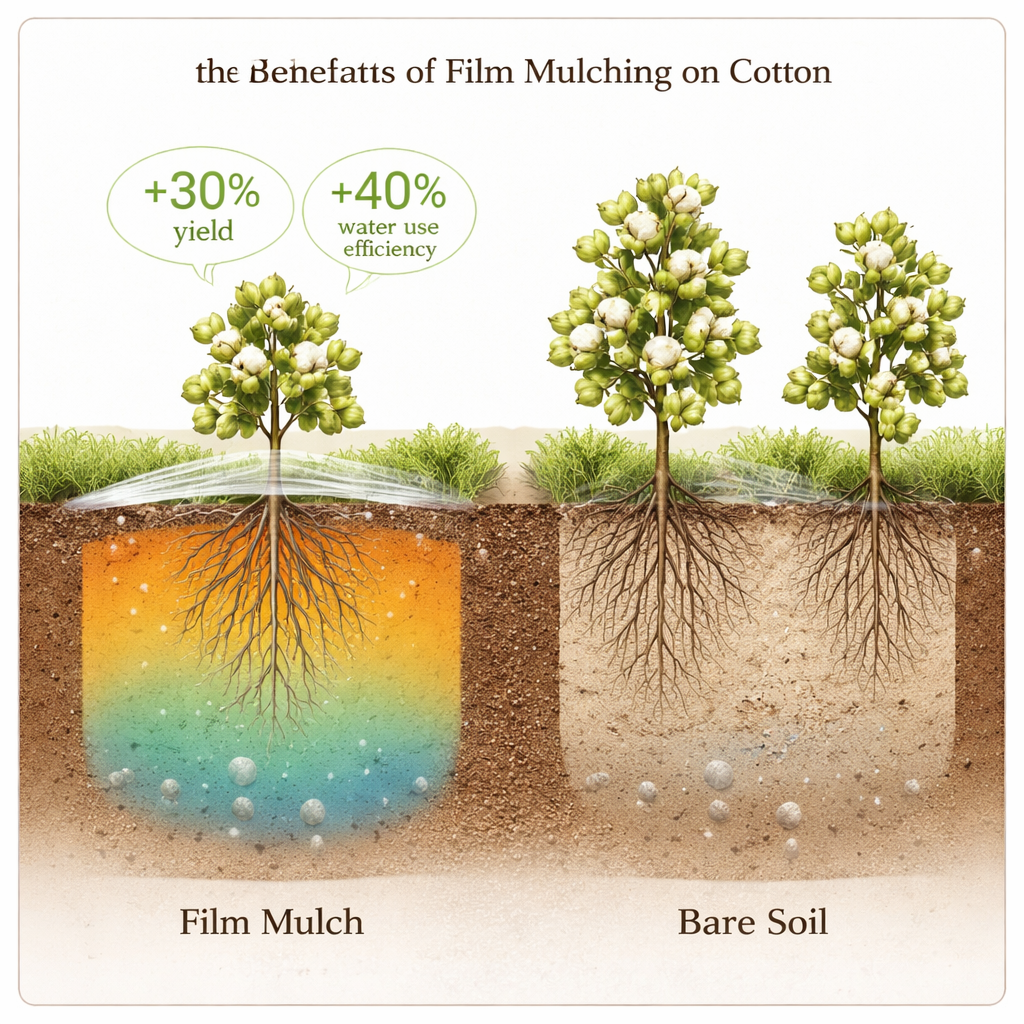
What this means for cotton and the environment
For non-specialists, the takeaway is straightforward: when used in the right places and managed carefully, thin plastic films can help farmers in dry, cool parts of China grow about one-third more cotton while getting more value out of every drop of water. The study also shows that this is not a one-size-fits-all technology. Its benefits depend on local climate, soil, and farm practices, and long-term environmental concerns about plastic residues remain. By mapping out where and how film mulching delivers the greatest returns, this research offers a roadmap for targeting its use—supporting cotton production and water conservation while encouraging smarter fertilizer use and more sustainable field management.
Citation: Yang, Z., Hu, Y., Zhao, Y. et al. Effects of film mulching on cotton yield and water use efficiency in China: a meta-analysis. Sci Rep 16, 7801 (2026). https://doi.org/10.1038/s41598-026-37124-7
Keywords: film mulching, cotton, water use efficiency, dryland farming, China agriculture