Clear Sky Science · en
Effect of the BOPPPS-based blended teaching model in undergraduate nursing education: a quasi-experimental study
Why this matters for future nurses
Nursing students are expected to master both complex knowledge and hands-on skills, yet many still sit through long lectures that leave them passive and unsure of themselves. This study from a Chinese university tested a different way of teaching a core nursing course, one that blends online learning with carefully structured, interactive classroom activities. The researchers wanted to know whether this newer approach could help students learn more, feel more confident, and stay more engaged than in traditional lecture-based classes.
A new way to organize a class
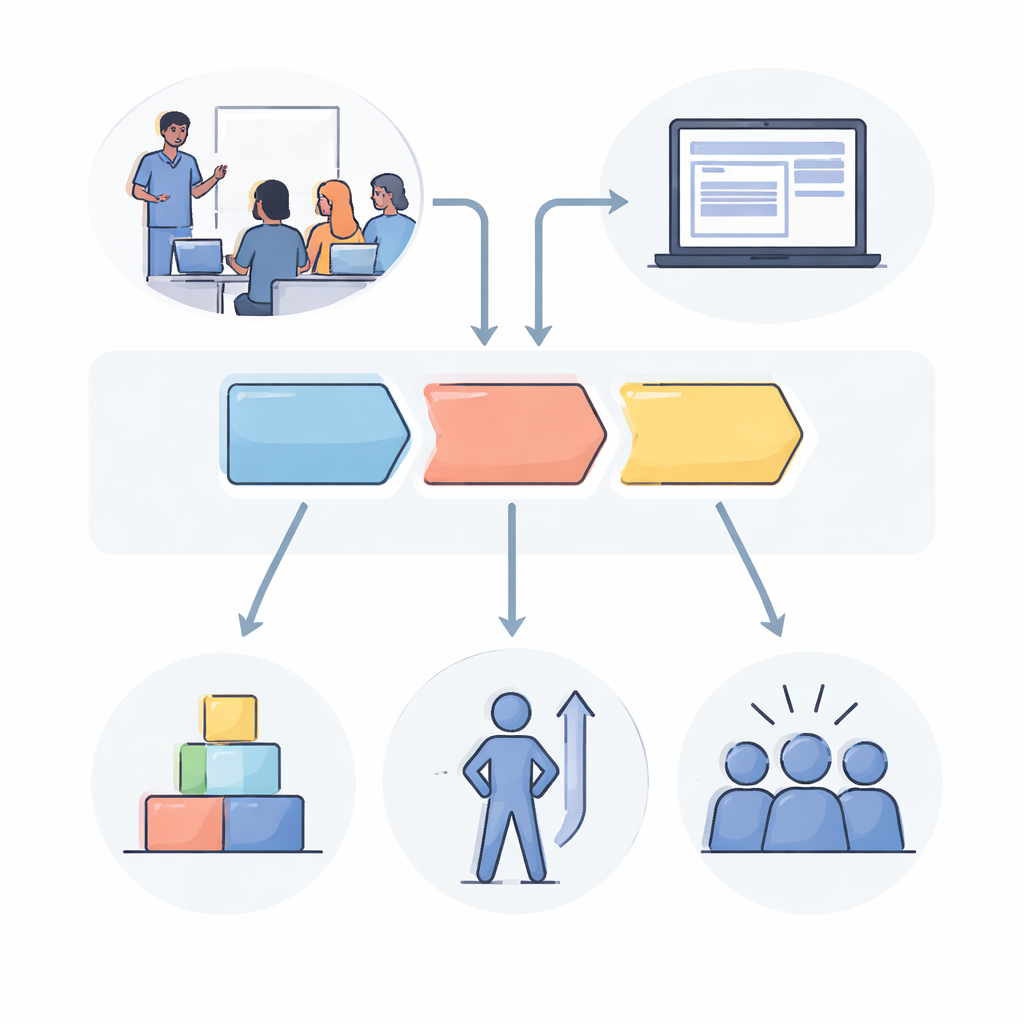
The teaching method at the heart of this work is called the BOPPPS model, a six-step structure that guides a lesson from start to finish: first attracting interest, then clarifying goals, checking what students already know, involving them actively, checking learning again, and finally summarizing the key points. In this study, the model was combined with a digital system called the Chaoxing Learning Platform. Before class, students watched short videos and completed online tasks. During class, they joined in case discussions, role-play, and rapid-response activities. After class, they used online quizzes and virtual simulations to review and practice. The idea was to turn nursing students from note-takers into active problem-solvers.
How the study was set up
The researchers followed 193 undergraduate nursing students taking a Fundamentals of Nursing course over one semester. Two class groups were taught in the traditional way, mainly through lectures with occasional questions and homework. Two other class groups used the BOPPPS-based blended model with the same course content, textbook, and overall schedule. All students were of similar age and prior academic level, and they agreed not to share course materials across groups. At the end of the semester, the team compared their overall course results, as well as survey scores that captured how confident students felt about their ability to study and how energetically they engaged with learning.
What changed for the students
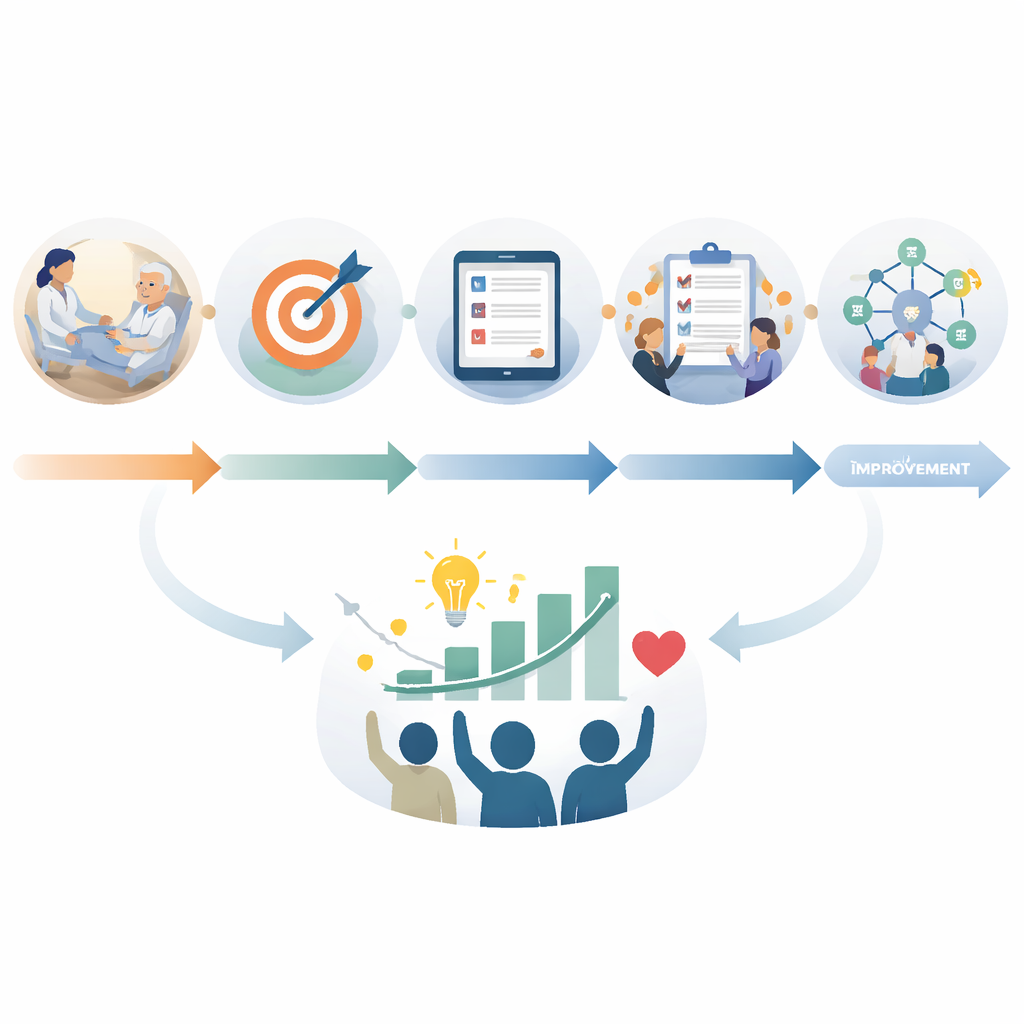
Students in the BOPPPS-based blended group clearly outperformed their peers in lecture-based classes. Their total semester scores were higher, driven by better final exam results and richer classroom performance; attendance was already very high in both groups, so that did not change. More strikingly, these students reported stronger academic self-belief: they felt more capable of understanding material and managing their own study behavior. They also showed greater learning engagement, scoring higher on vigor (energy and persistence), dedication (sense of meaning and enthusiasm), and concentration (ability to stay absorbed in tasks). These shifts are important because self-confidence and engagement are known to support long-term learning and clinical readiness.
Why this approach works
The authors interpret these gains through a well-known psychological lens: people build confidence when they succeed at tasks, watch peers succeed, receive supportive feedback, and feel less anxious. The BOPPPS blended structure is designed to create exactly those experiences. Online preparation and clear goals help students arrive in class ready to succeed. In-class role-play, case analysis, and group activities give them repeated chances to practice and see classmates handle real-world scenarios. Quick checks of understanding and feedback from instructors reinforce progress. Together, these elements make learning more active and social, which in turn drives motivation and deeper understanding. At the same time, the unified digital platform helps connect before-class, in-class, and after-class work into one continuous learning cycle.
Limits and what comes next
The study does have boundaries. It took place at a single university, focused on one course, and used intact class groups rather than randomly assigning individual students. Everyone knew which teaching model they were receiving, which might have influenced their effort. The approach also demands considerable preparation time from teachers and relies on technology that can sometimes fail or frustrate users. The authors call for future multi-school, randomized studies and closer tracking of technical issues to see whether the benefits hold up across different settings and over longer periods, including real clinical performance.
What this means for nursing education
In clear terms, this research suggests that thoughtfully blended, highly structured teaching can help nursing students learn more, feel more capable, and stay more invested in their studies than traditional lectures alone. By combining short digital lessons with interactive, case-based classroom work and targeted follow-up, educators can better prepare future nurses for the demands of modern healthcare. While the approach requires strong technical support and teacher training, the evidence points to a promising path away from passive note-taking and toward active, confident, and engaged learning in foundational nursing courses.
Citation: Dai, Y., He, Q. & Lei, L. Effect of the BOPPPS-based blended teaching model in undergraduate nursing education: a quasi-experimental study. Sci Rep 16, 8580 (2026). https://doi.org/10.1038/s41598-026-37120-x
Keywords: nursing education, blended learning, active learning, self-efficacy, student engagement