Clear Sky Science · en
Hemp seed extract exerts cytostatic effects through metabolic stress and autophagy modulation in malignant cells
Everyday Seeds with Unexpected Power
Hemp seeds are better known for topping salads than fighting cancer, but inside their oil lies a cocktail of natural substances that quietly nudge cells’ inner machinery. This study explores whether a purified, non-psychoactive fraction of cold-pressed hemp seed oil can slow the growth of cancer cells by stressing their metabolism rather than poisoning them. For readers interested in food-based prevention, gentler cancer therapies, or the science behind “functional” plant foods, the work offers a look at how common crops might contribute to future treatment strategies.
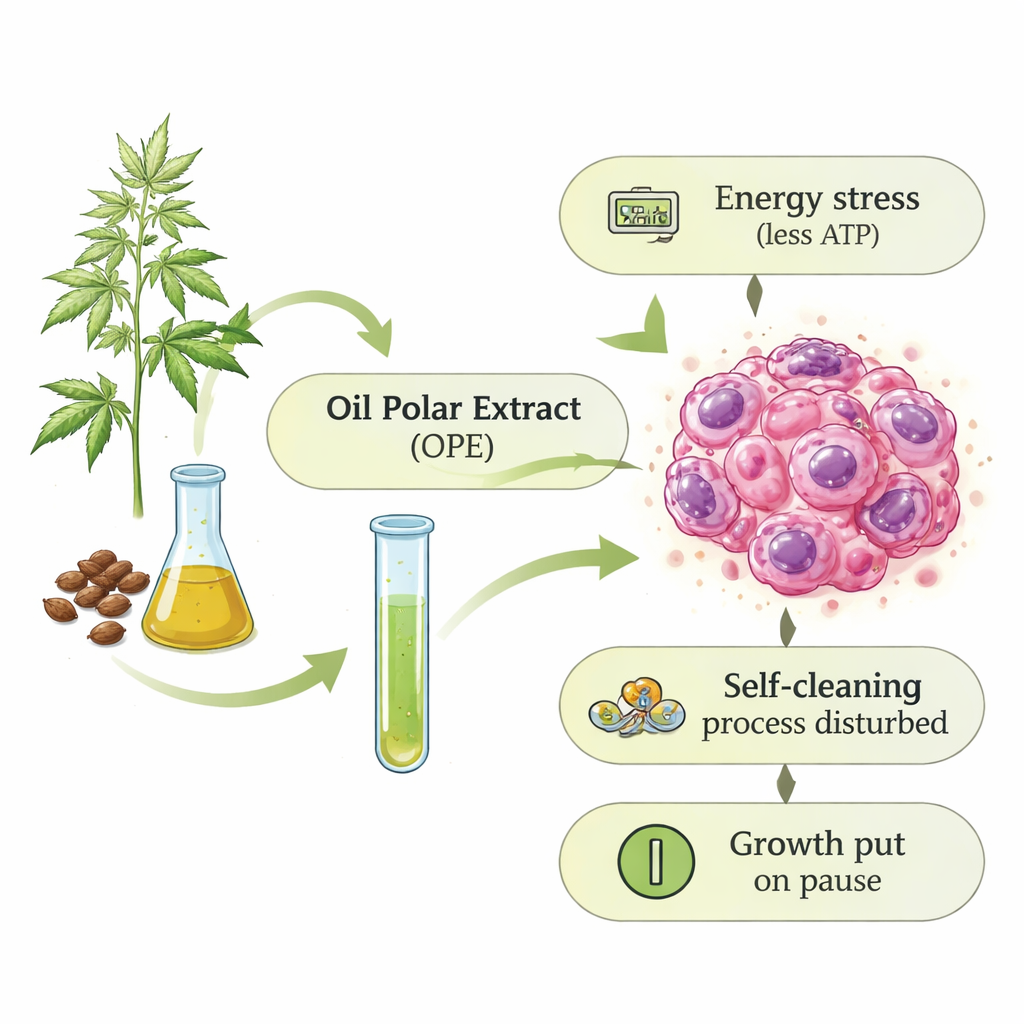
What Scientists Found Inside Hemp Seed Oil
The researchers focused on a special portion of hemp seed oil called the Oil Polar Extract (OPE), obtained from an industrial hemp variety that contains virtually no THC, the mind-altering compound in cannabis. Using advanced chemical analysis, they found that OPE is rich in a mix of plant molecules: phenylamides, flavonoids such as cannflavins, and acidic forms of cannabinoids like cannabidiolic acid (CBDA), but no detectable THC. Rather than testing a single purified ingredient, they studied this natural blend as a whole, reflecting how people are more likely to encounter it in foods or nutraceuticals.
Putting the Extract to the Test on Cancer Cells
The team tested OPE on several human cancer cell lines, including colorectal, bone, and leukemia cells grown in the lab. When exposed to the extract, cells showed a clear, dose-dependent drop in viability: the more OPE they received, the fewer cells remained active and multiplying. In long-term colony-formation tests, where single cells are allowed to grow into visible clusters, OPE sharply reduced the number of colonies, meaning fewer cells retained the ability to keep dividing over time. Interestingly, at carefully chosen “sublethal” doses, the extract did not simply kill the cells outright; instead, it slowed their growth and reproductive capacity, especially in colorectal cancer cells.
Starving Cancer Cells of Energy and Recycling Power
To understand how this slowdown happens, the researchers looked inside the cells’ energy and recycling systems. After treatment with OPE, colorectal cancer cells had about 40% less ATP, the molecule cells use as their basic energy currency. This drop activated AMPK, a sensor protein that switches on when energy is low. At the same time, signs of the cells’ self-cleaning process—autophagy—were altered. Cells accumulated structures linked to autophagy, but further tests showed that the recycling “conveyor belt” was actually jammed rather than smoothly running faster. In other words, OPE pushed the cells into energy stress and a dysfunctional clean-up state, a combination that undermines their ability to thrive.
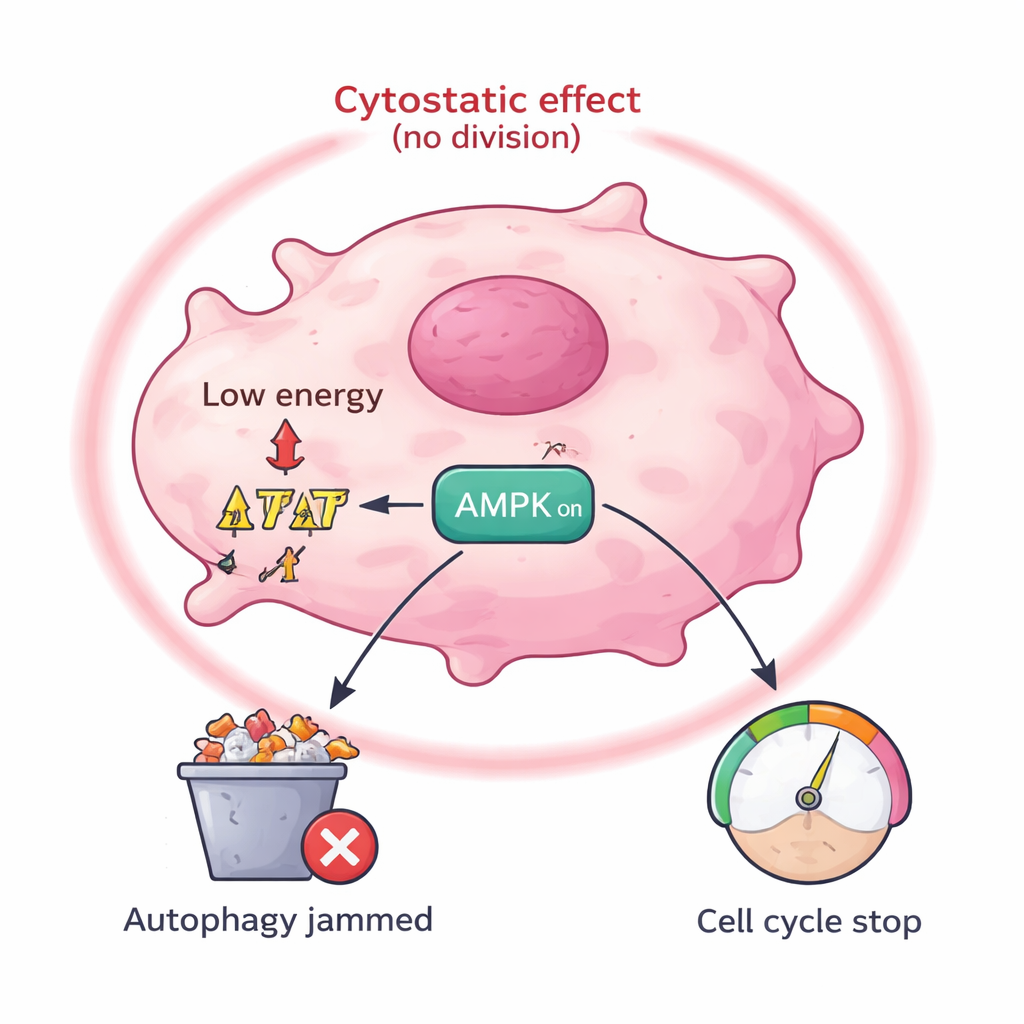
Forcing Tumor Cells into a Growth Pause
Instead of triggering classic programmed cell death, OPE mainly pushed colorectal cancer cells into a standstill. The cells built up in the resting G1 phase of the cell cycle, before DNA is copied, and levels of p27, a protein that acts like a brake on cell division, tended to rise. Over days, this translated into a strong cytostatic effect: cells stayed alive but stopped dividing efficiently and showed markers of senescence, a kind of permanent retirement. When the researchers blocked autophagy with the drug chloroquine, the growth-inhibiting effect of OPE became even stronger, implying that the partial recycling response was actually helping the cells cope. Shutting down this escape route made the energy stress imposed by OPE more damaging.
What This Could Mean for Future Treatments
For non-specialists, the main message is that a non-psychoactive hemp seed extract can put cancer cells under enough metabolic pressure to slow or halt their growth, without necessarily relying on harsh, cell-killing mechanisms. By lowering cellular energy, switching on AMPK, and disrupting the cells’ internal recycling and division cycles, OPE acts more like a brake than a hammer. On its own, that brake may not be strong enough to eradicate tumors, but the work suggests OPE could serve as a natural “stress primer” that makes cancer cells more vulnerable to drugs targeting autophagy or related survival pathways. While this research is still confined to cells in dishes and not ready for clinical use, it adds to the growing view that complex mixtures from familiar foods, such as hemp seeds, may eventually complement conventional cancer therapies in carefully designed combinations.
Citation: Moccia, S., Russo, M., Cervellera, C. et al. Hemp seed extract exerts cytostatic effects through metabolic stress and autophagy modulation in malignant cells. Sci Rep 16, 6829 (2026). https://doi.org/10.1038/s41598-026-37119-4
Keywords: hemp seed extract, colorectal cancer, autophagy, cell cycle arrest, metabolic stress