Clear Sky Science · en
Self-control and social support in the link between academic pressure anxiety depression and social media addiction in college students
Why this matters for everyday students
For many college students, social media is both a lifeline and a distraction. This study asks a question that will resonate with students, parents, and educators alike: when school stress and emotional struggles pile up, why do some young people slide into social media addiction while others keep their online habits in check? By tracking how pressure, anxiety, depression, self-control, and social support interact, the researchers show how everyday academic life can quietly reshape digital behavior and mental health.
School stress in the age of endless scrolling
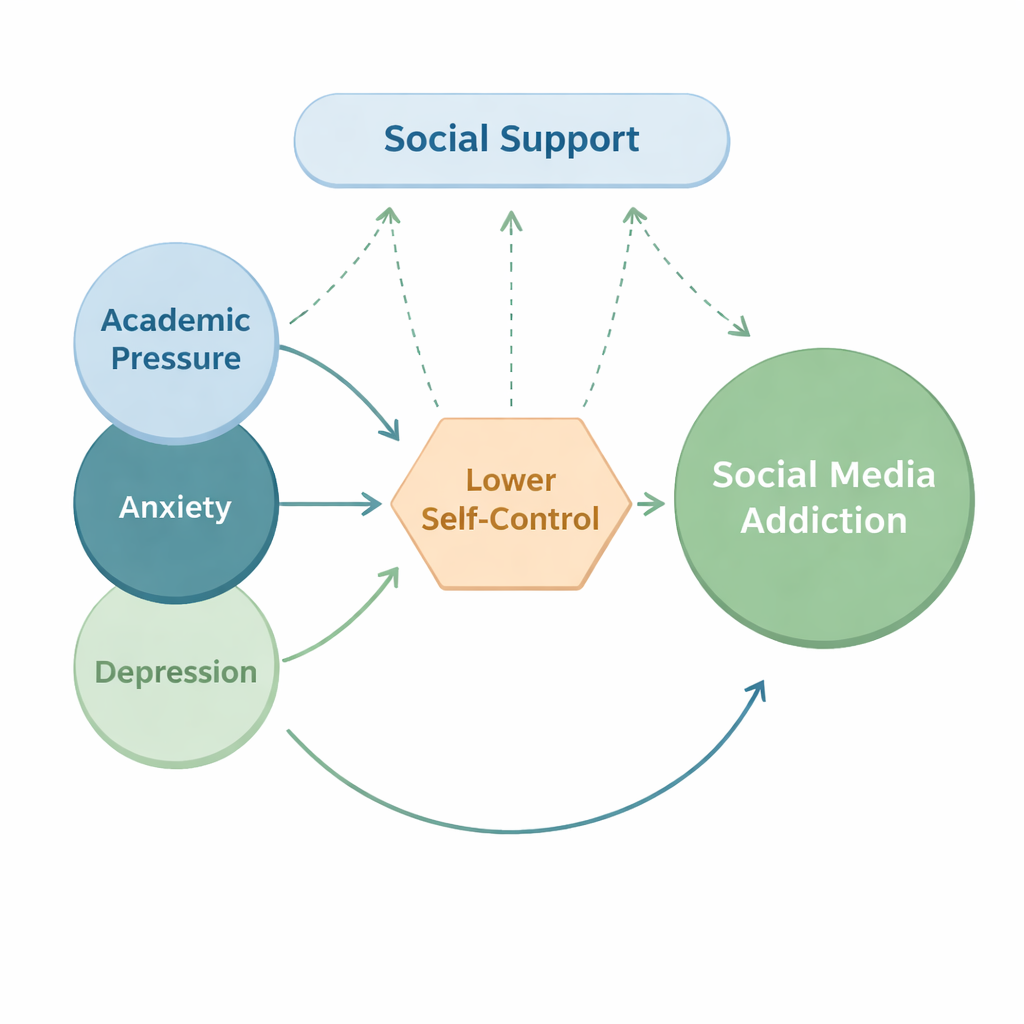
The researchers surveyed 900 undergraduates from several Chinese universities to map out the link between academic pressure and social media addiction. They define social media addiction as a pattern of use so strong that it disrupts sleep, study, and real-world relationships. Their data confirm what many students already feel: heavier academic demands go hand in hand with more compulsive social media use. When coursework, deadlines, and grade worries feel overwhelming, social platforms become an easy escape valve, offering quick entertainment and emotional relief that can turn into a habit.
Negative moods that feed the online loop
Beyond school stress, the study shows that anxiety and depression are closely tied to addictive social media behavior. Students who report more frequent worry, tension, or persistent low mood are more likely to lose control over their time online. Short videos, likes, and messages offer brief comfort, but they also reinforce a cycle: the worse students feel, the more they turn to their phones; the more time they spend online, the less they sleep and study, which can deepen their emotional struggles. This looping pattern helps explain why social media addiction and poor mental health so often appear together on campus.
The quiet power of self-control
A central finding of the study is the role of self-control—the everyday ability to resist impulses and stay focused on long-term goals. Students with lower self-control were much more likely to show signs of social media addiction. Crucially, academic pressure, anxiety, and depression all appeared to weaken self-control, which then made it harder for students to limit their scrolling. In other words, stress and negative emotions do not just push students toward social media directly; they also drain the inner resources needed to say “enough for today” and return to homework, sleep, or in-person conversations.
Supportive people as a protective shield
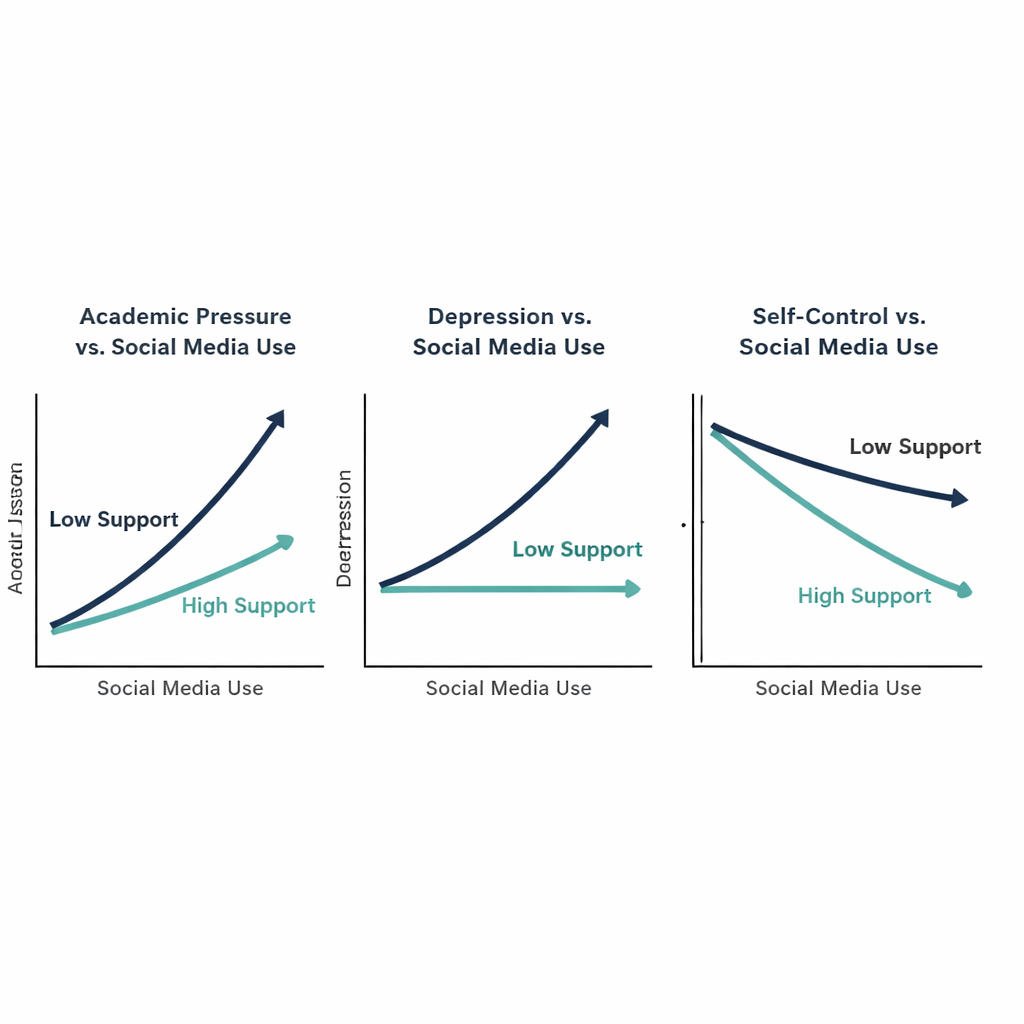
The study also highlights the importance of social support—the sense that family, friends, and mentors are available, caring, and helpful. Strong support partly broke the connection between academic pressure and social media addiction, and even more strikingly, between depression and addictive use. When students felt well supported, the link between depression and social media addiction nearly disappeared. Support also strengthened the benefits of self-control: students who both had good self-control and felt backed by others were by far the least likely to fall into addiction-like patterns. However, social support did not significantly soften the link between anxiety and social media addiction, suggesting that worry and fear may be harder to offset with general encouragement alone.
What this means in plain language
Taken together, the findings suggest that social media addiction among college students is not simply a matter of “too much phone time” or weak willpower. Instead, it reflects a web of pressures and emotions that gradually erode self-control. When students are under heavy academic strain or feel depressed, they are more likely to lean on social media for short-term comfort. If, at the same time, they lack strong support from family, friends, or teachers, it becomes even harder to pull back. The authors argue that tackling social media addiction should involve three fronts: easing excessive academic stress where possible, offering practical help for anxiety and depression, and building campus cultures that strengthen both self-control skills and warm, dependable support networks.
Citation: Ma, W., Zhen, R., Tan, X. et al. Self-control and social support in the link between academic pressure anxiety depression and social media addiction in college students. Sci Rep 16, 7444 (2026). https://doi.org/10.1038/s41598-026-37112-x
Keywords: college students, social media addiction, academic stress, self-control, social support