Clear Sky Science · en
Unveiling the bioherbicidal potential of Eupatorium capillifolium (Lam.) Small for selective management of agricultural weeds
Why This Weedy Plant Matters to Farmers
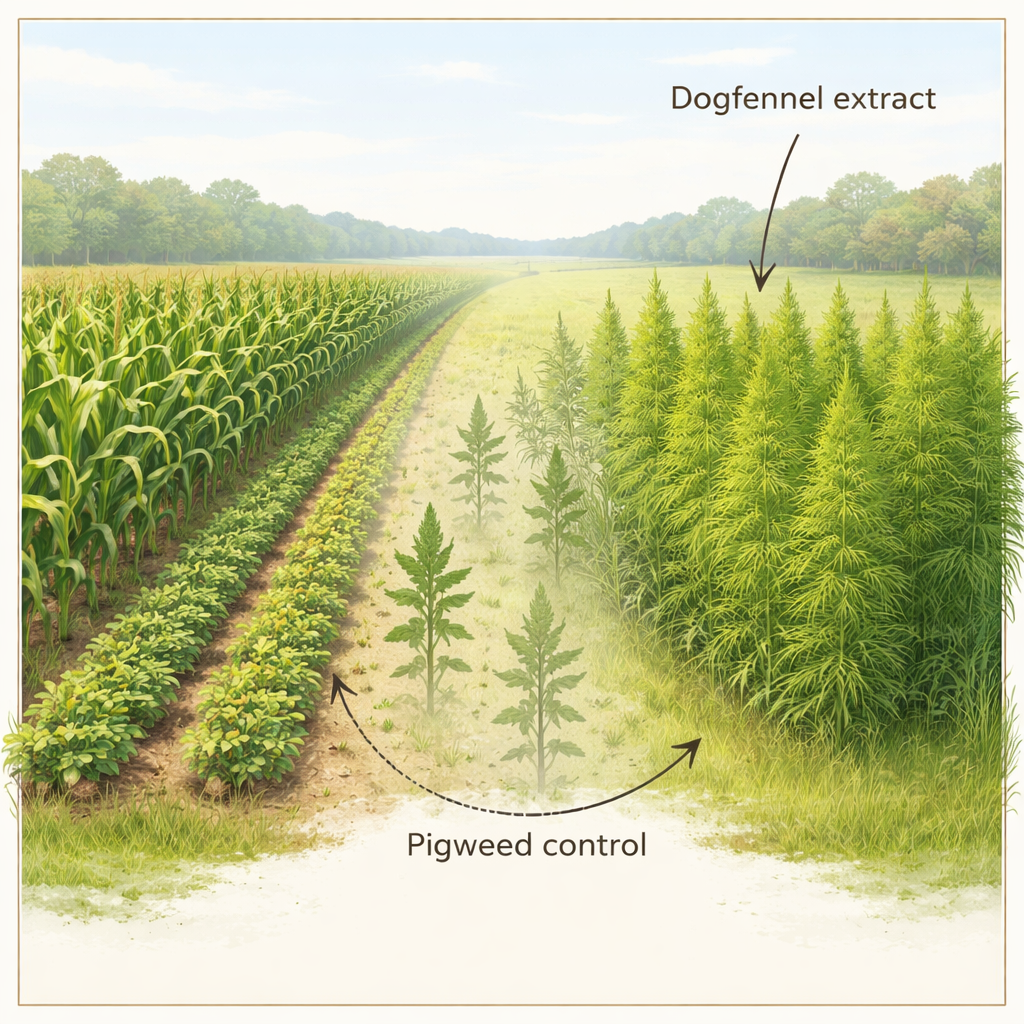
Modern farming relies heavily on chemical sprays to control weeds, but many weeds are evolving resistance, making them harder and more expensive to kill. This study explores an unexpected ally in that battle: dogfennel, a common invasive plant in the Southeastern United States. By testing a simple water-based extract made from dogfennel leaves, the researchers asked whether a troublesome weed could actually be turned into a natural, selective herbicide that controls other problem weeds while sparing major crops.
Turning a Pasture Pest into a Helpful Tool
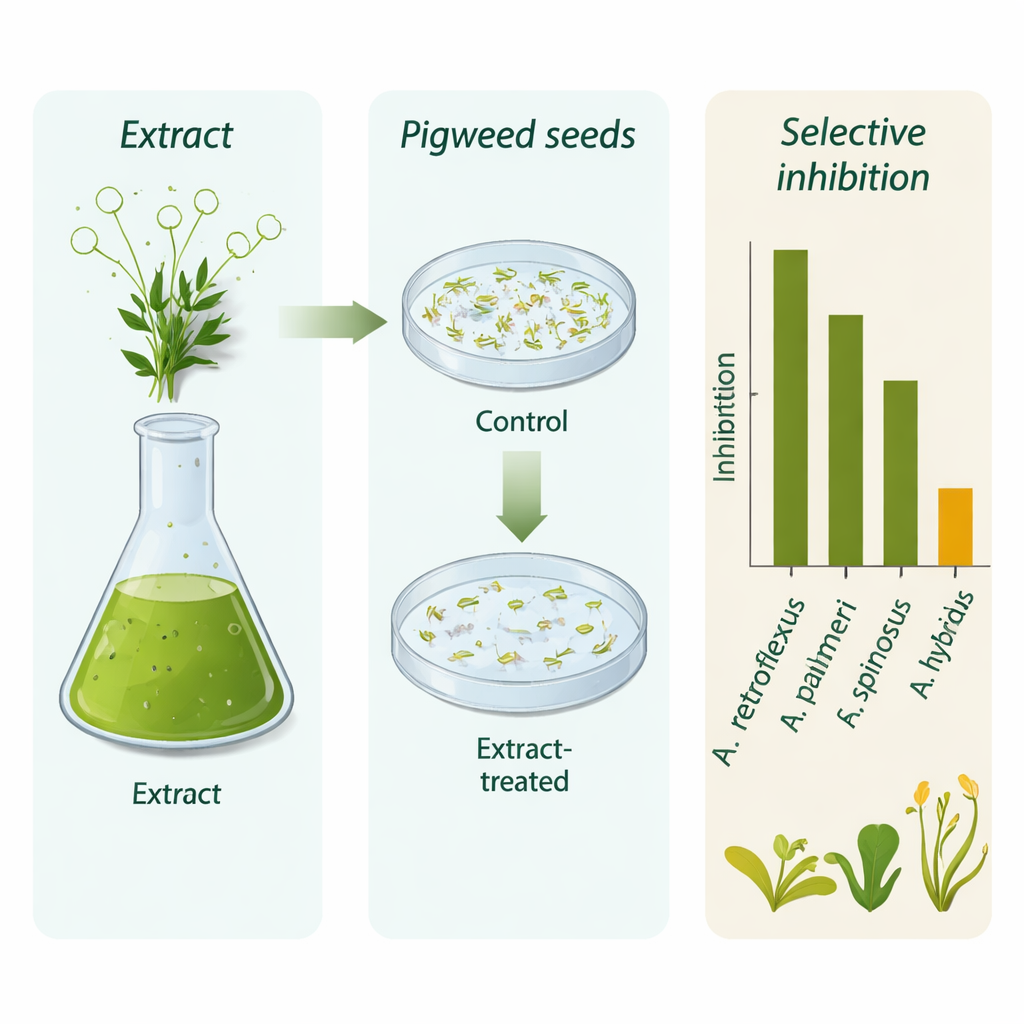
Dogfennel (scientific name Eupatorium capillifolium) is a tall, feathery plant that ranchers usually dislike because livestock avoid eating it and it can overrun pastures. Yet plants like dogfennel often make potent natural chemicals to compete with neighbors. The team collected dogfennel from Alabama pastures and prepared an aqueous, or water-based, extract from its leaves—essentially a strong “leaf tea.” They then tested this extract on seeds of thirteen common agricultural weeds and four major crops—corn, peanut, soybean, and cotton—to see how it affected seed germination and the growth of young seedlings.
Hitting Problem Weeds Hard, Sparing Key Crops
The results showed that dogfennel extract was especially powerful against pigweeds, a group of Amaranthus species that are among the most troublesome, herbicide-resistant weeds in U.S. row crops. At relatively low extract concentrations, seed germination of four pigweed species dropped by about 93–100%, and the few seeds that did sprout had severely stunted roots and shoots. In contrast, germination of corn and peanut seeds was barely affected, even at higher extract levels, while cotton and soybean were only moderately slowed. This pattern suggests a useful level of selectivity: the extract strongly suppresses some of the worst broadleaf weeds while causing limited harm to important crops.
Measuring Sensitivity Across Different Weeds
To better understand how sensitive each pigweed species was, the researchers exposed seeds to a range of extract strengths and calculated the concentration needed to cut germination in half. One species, Amaranthus hybridus, was extremely sensitive, needing less than 0.3% extract for 50% inhibition, followed by A. retroflexus, A. palmeri, and A. tuberculatus, which required progressively stronger doses. Other weeds, including some grassy species with larger, tougher seeds, were much less affected. Statistical analyses confirmed that the main impact of the dogfennel extract was to block seeds from germinating in the first place, rather than simply slowing growth after they sprouted.
What Is in the Extract Doing the Work?
Using advanced chemical analysis (LC–MS), the team identified at least 36 different natural compounds in the dogfennel extract. Several are well-known plant defense chemicals, including gallic acid, hydroxy-1,4-benzoquinone, caffeic acid, and the flavonoid quercetin. These types of molecules have been shown in other species to damage roots, disrupt cell division, generate harmful reactive oxygen species, and interfere with key metabolic pathways in neighboring plants. The study suggests that it is the combined, overlapping effects of many such compounds—not a single ingredient—that likely cause the strong, targeted inhibition of pigweed seeds.
From Lab Bench to Field: A Promising Green Herbicide
Overall, this work is the first to show that a simple water extract from dogfennel leaves can act as a powerful, selective bioherbicide against pigweeds, with minimal impact on corn and peanut and only moderate effects on cotton and soybean. For a layperson, that means a common weedy plant could be developed into a more environmentally friendly weed control tool, helping reduce dependence on synthetic herbicides and slow the spread of herbicide resistance. The findings so far come from controlled laboratory tests; the next step is to see how well dogfennel-based treatments perform, and how safe they are, in real farm fields. If successful, dogfennel might move from being an unwanted pasture invader to a source of greener weed management in modern agriculture.
Citation: Ghosh, R.K., Price, A.J., Boersma, M. et al. Unveiling the bioherbicidal potential of Eupatorium capillifolium (Lam.) Small for selective management of agricultural weeds. Sci Rep 16, 6094 (2026). https://doi.org/10.1038/s41598-026-37110-z
Keywords: bioherbicide, dogfennel, pigweed, natural weed control, allelopathy