Clear Sky Science · en
Nationwide cross-sectional study results on long-term care and SARS-CoV-2 infection among older adults in Germany during the COVID-19 pandemic
Why this matters for families and communities
Older people were among the hardest hit during the COVID-19 pandemic, yet most headlines focused on hospitals and nursing homes. This study turns the spotlight on seniors living at home across Germany, asking a simple but crucial question: which everyday circumstances made them more likely to catch the coronavirus? The answers help families, caregivers, and policymakers find a balance between protection from infection and the social contact older adults need to stay well.
A national look at life and health after vaccines arrived
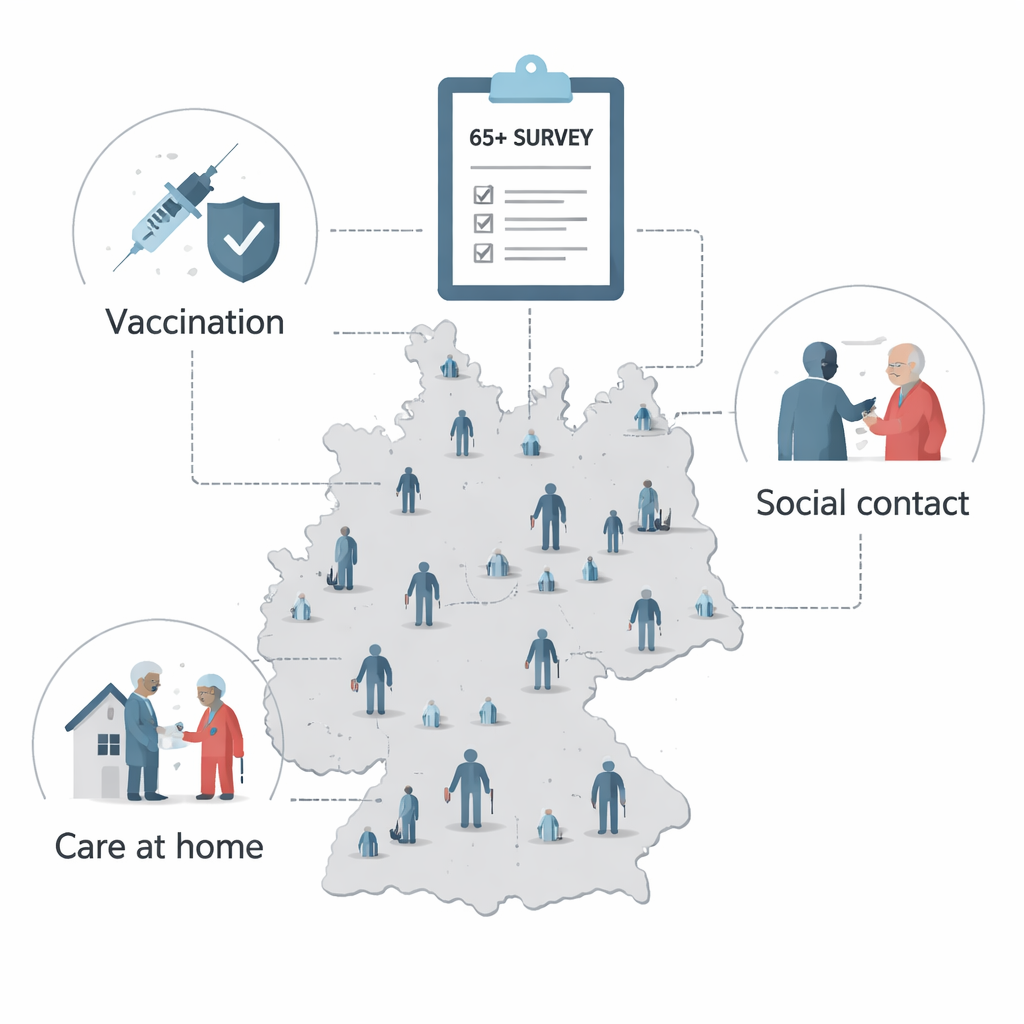
Researchers used a large, nationwide survey called “Gesundheit 65+” that followed people aged 65 to 100 across Germany. They focused on the first survey round, conducted between June 2021 and April 2022, a time when vaccines and rapid tests were widely available and strict lockdowns were being relaxed. From 3,450 participants living in private households, the team collected information on past COVID-19 test results, vaccination status, health problems, living situation, social activities, and the kind of help people received with daily tasks.
About 3.5% of participants said they had tested positive for SARS-CoV-2 at least once. Infection was slightly more common in the oldest age group (85 and over) and among those who received home care, but these differences were small and often fell within broad statistical uncertainty. Far more striking were patterns related to vaccination and everyday contact with other people. These patterns help explain who remained safest even as society gradually reopened.
Vaccination stood out as the strongest shield
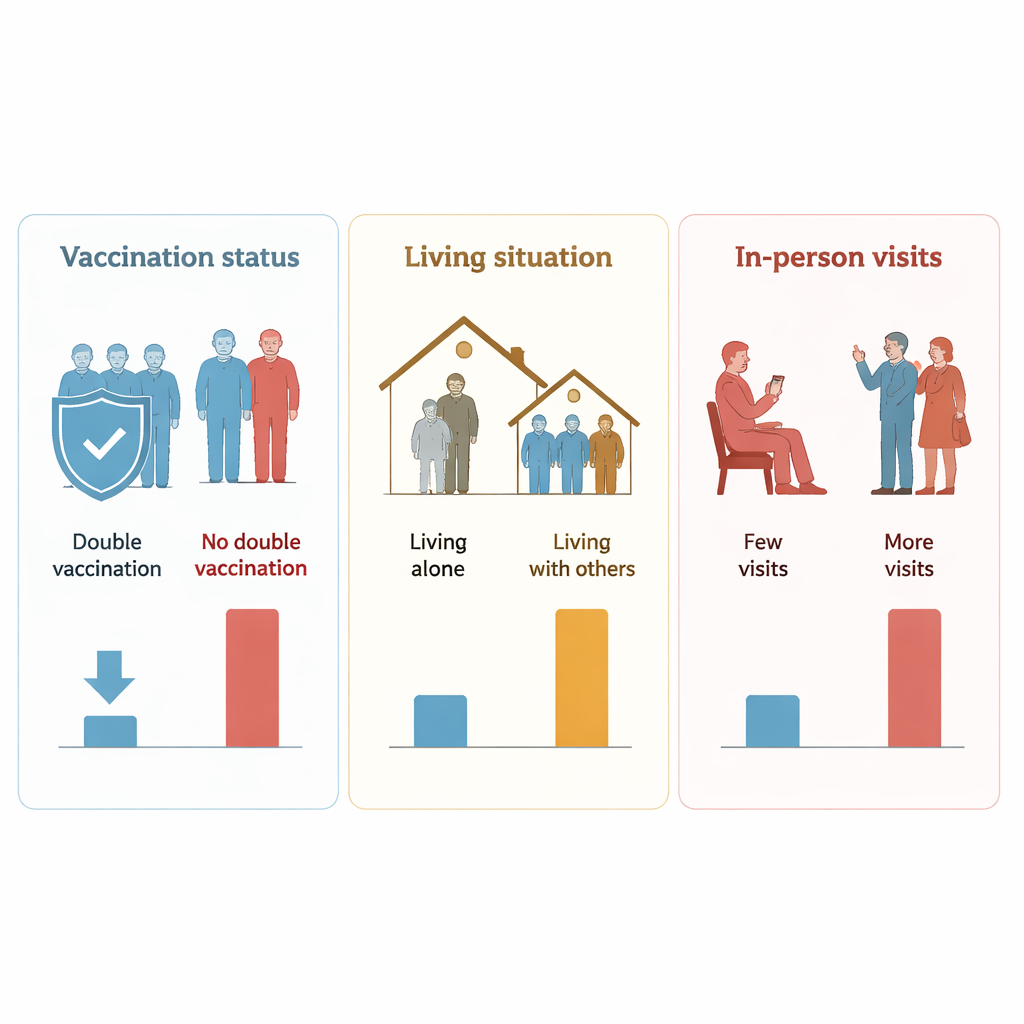
The clearest message from the data is that vaccination made a major difference. In this group of older adults, more than nine out of ten had received at least two vaccine doses. Among those who lacked this “double vaccination,” infections were far more common. When the researchers used statistical models to compare people with similar ages, health conditions, and living situations, not having double vaccination was linked to almost ten times higher odds of having had COVID-19. Even when they tested stricter definitions, such as having received no dose at all, the link between poor vaccination coverage and higher infection risk remained strong.
The authors note that a few people may have caught the virus before they were able to complete vaccination, which could slightly exaggerate this effect. To check this, they repeated the analysis for different time periods within the study and tried alternative ways of classifying vaccination status. Across these checks, being unvaccinated or incompletely vaccinated consistently went hand in hand with more infections, reinforcing evidence from other research that COVID-19 vaccines protect older adults not only from severe disease, but also from infection itself.
Home life and visits: when closeness carries risk
Beyond vaccines, the study explored how ordinary social arrangements shaped risk. Two factors stood out. First, older adults who did not live alone had about twice the odds of infection compared with those who lived by themselves. Second, those who received in-person visits from family or friends showed higher odds of infection than those who saw no visitors. These patterns were strongest in the earlier part of the study, before the Omicron wave, and weakened later, possibly as more people around seniors became vaccinated and better at using masks and tests before visiting.
Interestingly, simply taking part in paid work, volunteer roles, religious services, or cultural events did not show a clear link with infection in this older population. Nor did the general burden of chronic illness, despite its known importance for severe outcomes once someone is infected. City size also did not stand out: people in big cities did not have distinctly higher infection rates than those in rural areas, after other factors were considered. One unexpected pattern was that current smokers reported fewer infections, a finding seen elsewhere but likely shaped by reporting biases, quitting behavior during the pandemic, and survival effects rather than any true protection from tobacco.
Care at home did not add noticeable danger
Many feared that close contact with caregivers would make older people receiving help at home especially vulnerable. The study carefully separated three groups: those living independently without support, those helped only by family, friends, or neighbors, and those receiving professional home nursing. While infection was somewhat more frequent among people with home care, once other factors were taken into account, neither informal nor formal care at home was clearly linked to higher infection odds. People receiving support even tended to have slightly better vaccination coverage than fully independent peers, suggesting that outreach to this group may have worked.
What this means for everyday choices
For older adults living at home, the big picture is reassuring but nuanced. Vaccination emerges as a powerful and practical tool to prevent infection, underlining the value of keeping up to date with recommended doses for seniors and those around them. At the same time, the study shows that infection risk creeps up when more people share a household or make frequent in-person visits. That does not mean older people should face isolation; loneliness carries its own serious harms. Instead, the findings argue for making visits safer—through vaccination, testing when appropriate, staying home when ill, and, when needed, using masks—rather than avoiding contact altogether. Crucially, the study found no strong evidence that receiving essential care at home, whether from family or professionals, by itself put older adults at higher risk. With thoughtful precautions, it is possible to protect seniors from the virus while still supporting their independence and social well-being.
Citation: Ordonez-Cruickshank, A.M., Neuhauser, H., Zanuzdana, A. et al. Nationwide cross-sectional study results on long-term care and SARS-CoV-2 infection among older adults in Germany during the COVID-19 pandemic. Sci Rep 16, 4334 (2026). https://doi.org/10.1038/s41598-026-37108-7
Keywords: older adults, COVID-19 vaccination, home care, social contacts, Germany