Clear Sky Science · en
Integrated metagenomic and 16S rRNA analysis reveals temporal associations between resistance genes and microbial communities during dairy manure composting
Why manure and microbes matter to you
Dairy farms help feed the world, but the waste they produce can also spread invisible threats: bacteria that carry genes making them resistant to antibiotics and other chemicals. This study looks at what happens to these resistance genes when cow manure is turned into compost, a common fertilizer for crops. By following both the genes and the microbes over time, the researchers ask a practical question with big public health stakes: does composting really make manure safer, or can resistance genes survive the heat and end up back in our environment?
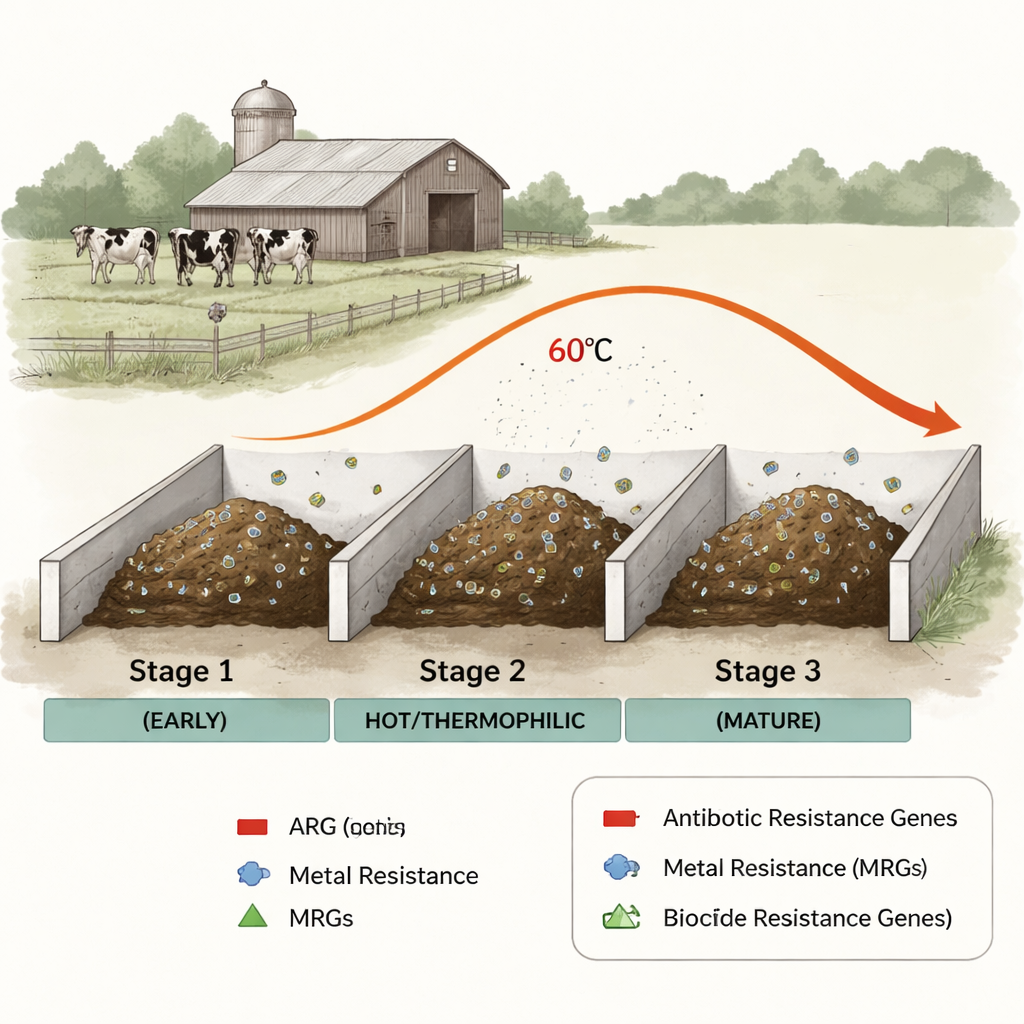
The journey from fresh manure to finished compost
The team composted dairy manure mixed with bedding materials in a controlled container for 35 days, mimicking how many farms manage waste. As the pile heated up, temperatures quickly rose above 60 °C before slowly cooling down. At several key days, the researchers sampled the compost and used powerful DNA sequencing methods to read the genetic material of all microbes present. They focused on three kinds of resistance genes—those against antibiotics, metals such as copper and arsenic, and cleaning chemicals known as biocides—as well as the bacteria that carried them and the mobile DNA elements that help genes jump between species.
Antibiotic resistance falls, but not all genes give up
During the early, hottest phase of composting, genes that confer resistance to antibiotics dropped sharply—by about 86 percent compared with the start. High temperatures likely killed many host bacteria and damaged free DNA, weakening the overall pool of antibiotic resistance in the pile. Yet this decline was not the full story. As the compost cooled and microbes recolonized, the total level of antibiotic resistance genes crept back up slightly. Some specific genes, such as one called sul2 that protects against a class of drugs known as sulfonamides, actually became more common over time. This pattern suggests that while heat knocks resistance down, it does not wipe it out, and certain genes are especially good at surviving composting conditions.
Stubborn metal and biocide resistance
Resistance genes linked to metals and biocides behaved differently. Metal resistance genes dipped briefly, then returned to or exceeded their original levels by the end of the process, likely because the metals themselves remain in the compost and keep selecting for tolerant microbes. Biocide resistance genes rose steadily throughout the 35 days, showing that bacteria able to withstand disinfectants and related compounds can thrive in the compost pile. Strong statistical links between antibiotic, metal and biocide resistance genes point to co-selection: when a bacterium is favored because it tolerates metals or cleaners, it may also keep its antibiotic resistance genes, even if no antibiotics are present.
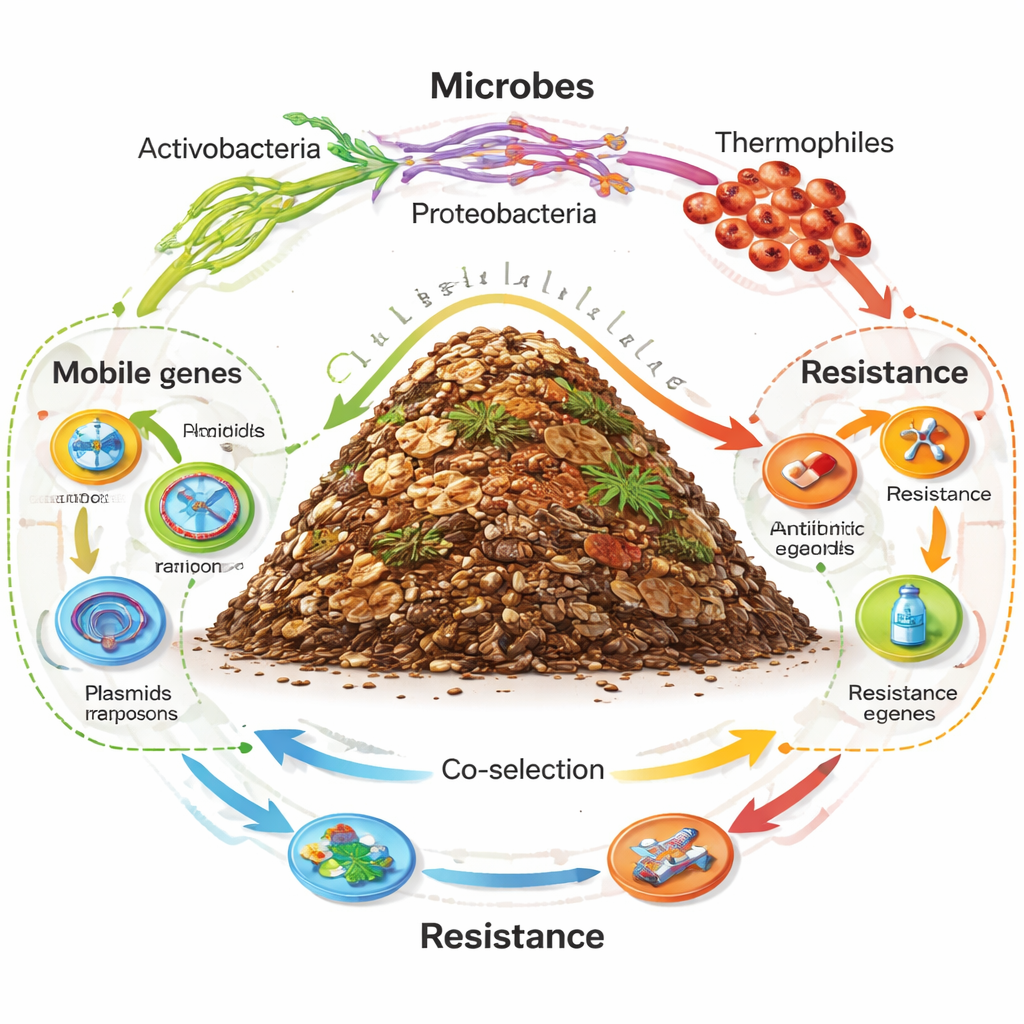
Microbial reshuffling and gene sharing
As the compost matured, its microbial cast changed. Early on, heat-loving microbes surged, while groups such as Actinobacteria gradually gave way to Proteobacteria, which dominated later stages. Some bacteria often associated with infections in animals or people appeared linked to genes that resist important drug types like aminoglycosides and macrolides. Mobile genetic elements—pieces of DNA such as plasmids and transposons that move between bacteria—sat at the center of dense gene networks. They showed strong associations with many antibiotic and metal resistance genes, hinting that much of the observed pattern is driven not just by which microbes are present, but by how efficiently they can swap resistance traits.
What this means for farms and food safety
For non-specialists, the bottom line is that composting dairy manure helps but does not fully solve the problem of resistance genes in farm waste. High temperatures do cut overall antibiotic resistance and reduce many potential pathogens. However, some resistance genes—especially those tied to metals and biocides, or riding on mobile DNA—can persist or even grow more common as the compost matures. This means finished compost can still act as a vehicle for spreading resistance into soils, water, and possibly crops. The study suggests that safer manure management will require keeping piles hot for longer, reducing on-farm use of antibiotics and heavy metals, and paying attention to the whole network of microbes, mobile DNA, and multiple types of resistance—not just antibiotics alone.
Citation: Zhou, Y., Liu, K., Gong, P. et al. Integrated metagenomic and 16S rRNA analysis reveals temporal associations between resistance genes and microbial communities during dairy manure composting. Sci Rep 16, 7325 (2026). https://doi.org/10.1038/s41598-026-37092-y
Keywords: antimicrobial resistance, dairy manure composting, soil microbiome, resistance genes, mobile genetic elements