Clear Sky Science · en
Ginsenoside Rg5 inhibits colorectal cancer, at least partially by blocking the lysosomal degradation of colorectal cancer cells
Why a cancer-fighting compound in ginseng matters
Colorectal cancer is one of the most common and deadly cancers worldwide, and standard chemotherapies often come with harsh side effects. This study explores whether a natural compound from red ginseng, called ginsenoside Rg5, can slow colorectal cancer while staying relatively gentle on the rest of the body. By uncovering how Rg5 interferes with cancer cells’ internal “recycling centers,” the work points to a fresh way to attack tumors that could one day complement existing treatments.
A new player from a traditional remedy
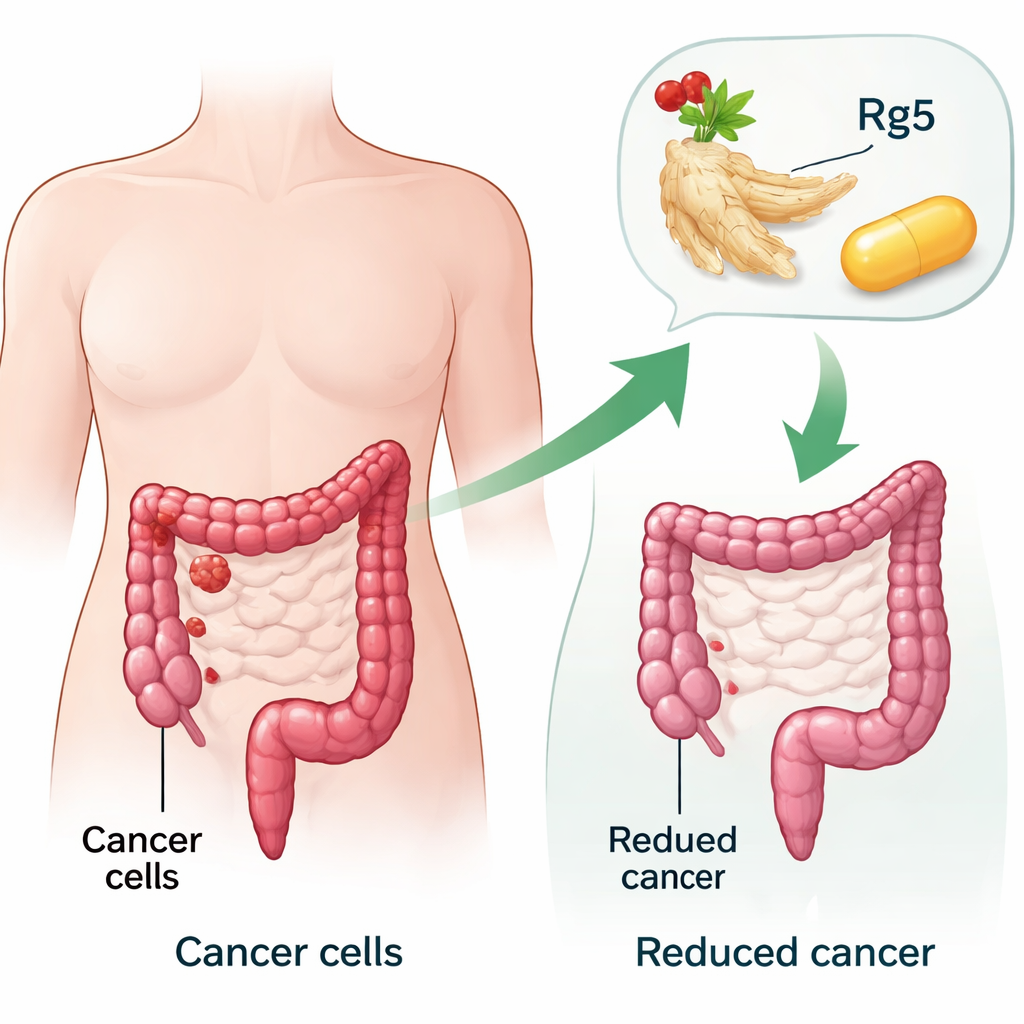
Red ginseng has been used in traditional medicine for centuries, and modern research has shown that some of its ingredients can harm cancer cells. Among them, Rg5 stands out as a particularly potent small molecule. Until now, however, scientists knew little about how Rg5 behaves in colorectal cancer, especially in living animals, rather than just in dishes of cells. The authors set out to test whether Rg5 can shrink colorectal tumors in mice and to understand what is happening inside the cancer cells when they are exposed to this compound.
How Rg5 slows tumor growth in animals
The team first grew colorectal tumors under the skin of mice and then treated some of the animals with Rg5 while others received salt solution as a control. Mice given Rg5 developed much smaller and lighter tumors, and microscopic analysis showed fewer dividing cells and many more dying cells inside the treated tumors. The researchers then moved to a tougher test: a model in which cancer forms directly in the colon after exposure to cancer‑causing chemicals. Again, mice receiving Rg5 had fewer tumors, and those tumors appeared less aggressive under the microscope. Importantly, the hearts, livers, spleens, and kidneys of treated mice looked normal, suggesting that Rg5 did not cause obvious organ damage at the doses used.
Cutting off the cancer cell’s cleanup crew
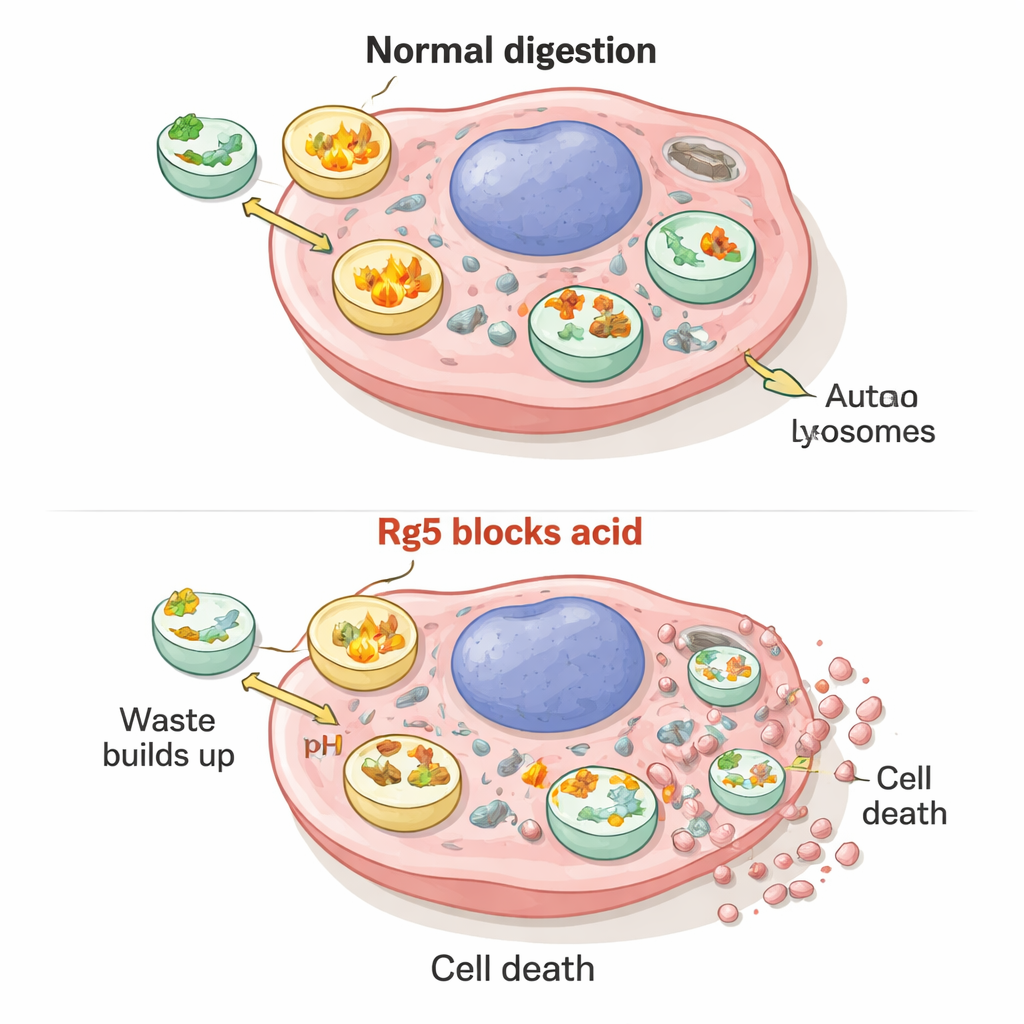
To probe what Rg5 was doing inside cancer cells, the scientists turned to both mouse and human colorectal cancer cell lines. Rg5 slowed their growth, pushed them to pause in the cell cycle, and triggered a wave of programmed cell death. Gene and protein analyses pointed to a key process known as autophagy—the cell’s built‑in cleanup and recycling system. Under normal conditions, worn‑out components are wrapped into tiny sacs that fuse with acidic compartments called lysosomes, where the contents are broken down and reused. In Rg5‑treated cells, these sacs piled up instead of being properly cleared, a sign that the recycling line had jammed.
Neutralizing lysosomes to push cells over the edge
The researchers discovered that the jam occurred not at the point where waste sacs meet lysosomes, but inside the lysosomes themselves. Cancer cells exposed to Rg5 showed less acidic lysosomes and lower levels of mature digestive enzymes. This change was tied to a drop in a crucial lysosomal pump protein, ATP6V1A, which normally helps keep these compartments acidic. When the team used a separate small molecule that boosts the same pump and restores acidity, it partly rescued the cells from Rg5‑induced death. This suggests that Rg5 kills colorectal cancer cells in large part by sabotaging their lysosomes, causing waste products to build up until the cells self‑destruct.
What this means for future colorectal cancer therapies
For non‑specialists, the main message is that Rg5 from red ginseng helps shut down colorectal tumors in mice by turning the cells’ recycling centers from helpers into liabilities. By raising the internal “pH” of lysosomes and blocking proper cleanup, Rg5 pushes cancer cells toward programmed death while sparing major organs in animal tests. Although much work remains before this compound could be tried in patients—such as improving its delivery, confirming safety, and combining it with standard drugs—the study positions Rg5 as a promising, relatively low‑toxicity add‑on that attacks cancer through its hidden waste‑management system.
Citation: Guo, X., Sun, R., Su, Y. et al. Ginsenoside Rg5 inhibits colorectal cancer, at least partially by blocking the lysosomal degradation of colorectal cancer cells. Sci Rep 16, 7247 (2026). https://doi.org/10.1038/s41598-026-37091-z
Keywords: colorectal cancer, ginsenoside Rg5, autophagy, lysosome, natural products