Clear Sky Science · en
Differences in motor skill-related physical fitness between moderately thin and normal weight rural Ethiopian children (ages 5–7)
Why child thinness and play skills matter
All over the world, millions of children grow up without enough nutritious food. We usually worry about their height and weight, but there is another, quieter cost: how well they can run, jump, catch, and play. This study looked at 5- to 7-year-old children in rural Ethiopia to see how being moderately thin affects their ability to move and be active compared with children of normal weight. Because these basic movement skills support school participation, social life, and long-term health, the findings matter to parents, teachers, and policy makers alike.
Who the children were and what was tested
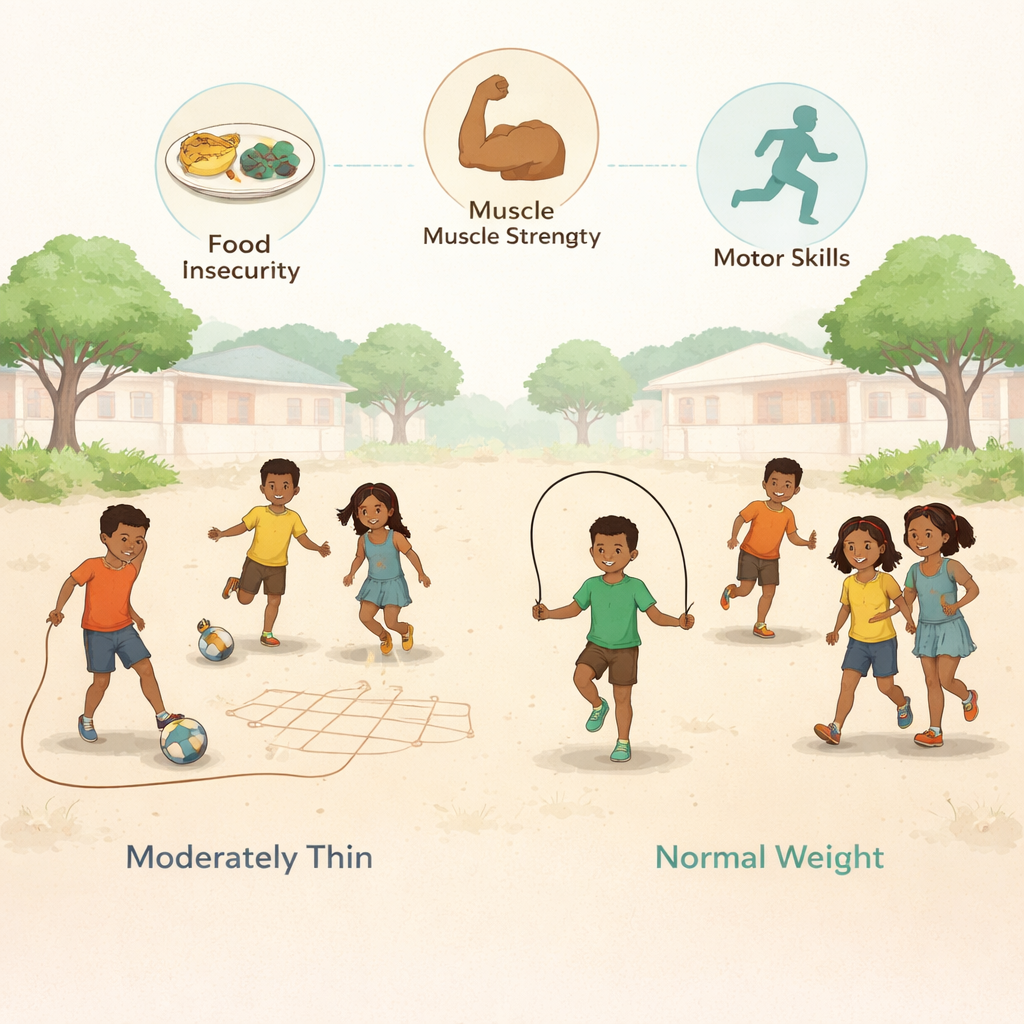
Researchers studied 167 children from village schools in the Kersa district of southwest Ethiopia. About half were classified as having moderate thinness based on body mass index (BMI) for their age, and the rest had normal weight. All children lived in the same rural area, attended local schools, and had no known disabilities or serious medical conditions. The team measured each child’s height, weight, and hand-grip strength, and asked caregivers about family income, food security, education, and health history. To assess movement, they used a test called PERF-FIT, designed for low-resource settings, which combines short, game-like tasks such as running, jumping, throwing, catching, and balancing.
How thinness, age, and strength shape movement
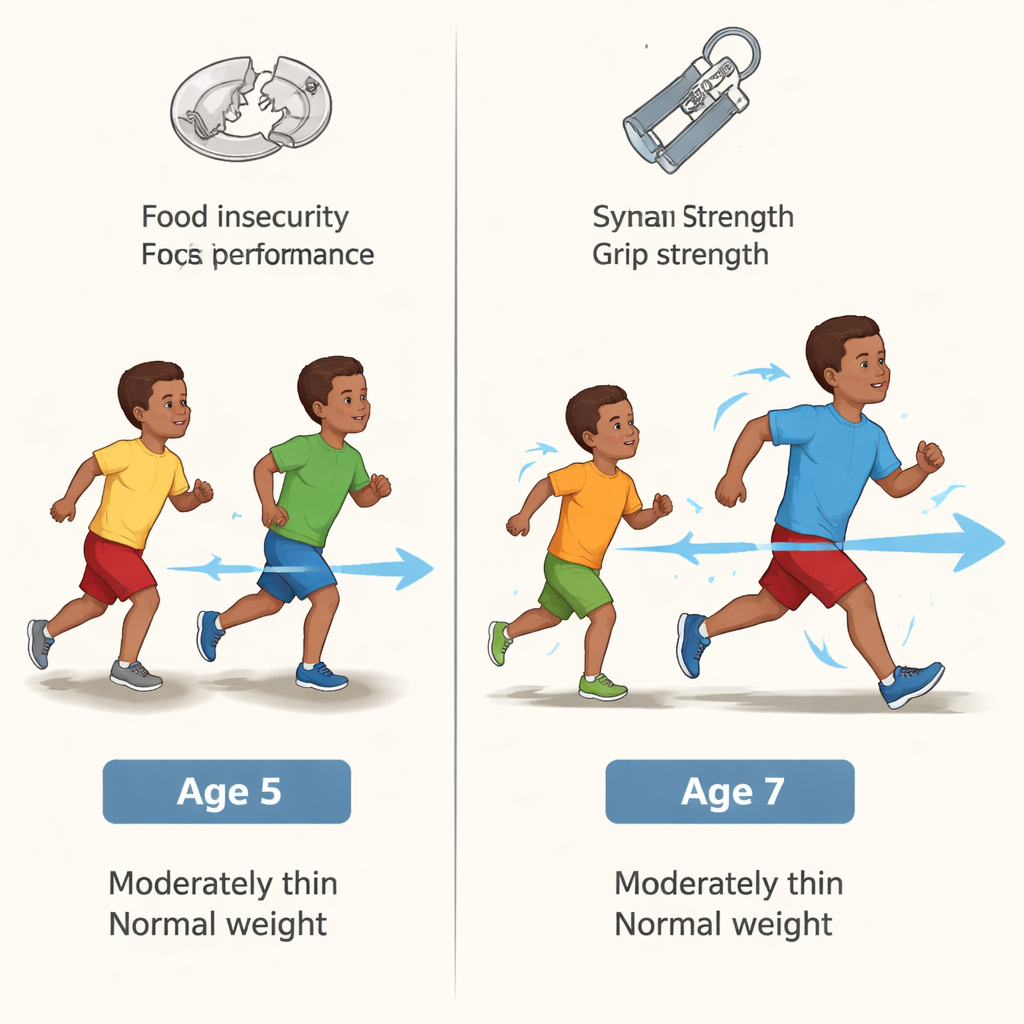
The study found that children who were moderately thin generally had poorer motor skill-related physical fitness than their peers of normal weight, but the picture changed with age. At ages 5 and 6, thin and normal-weight children performed similarly overall, and in a few activities—especially running and some balance tasks—the younger thin children even did slightly better. By age 7, however, the pattern reversed: normal-weight children were clearly ahead in total PERF-FIT scores, especially in tasks that required power and coordination, such as jumping, overhand throwing, and combined throwing-and-catching games. This shift suggests that early thinness may catch up with children as tasks become more demanding with age.
The hidden role of food security and family background
Beyond body size, the researchers examined which everyday factors best explained differences in performance. They found that whether a household was food secure or food insecure was a stronger predictor of a child’s movement scores than weight category alone. Children from food-insecure homes tended to score lower, even if they were not classified as thin. Grip strength also played an important role: stronger hands were linked to better results across nearly all movement tasks, hinting that simple strength checks might help identify children at risk of broader motor difficulties. Mothers’ education showed a weaker but noticeable association, pointing to the importance of knowledge and caregiving practices in supporting children’s development.
What this means for schools and communities
These findings show that thinness, especially when combined with ongoing food insecurity, does more than reduce body weight—it gradually erodes children’s ability to move with confidence and power. Younger thin children may keep up with their peers in basic running and balancing, but by age 7 they begin to fall behind in more complex and strength-dependent skills. For a layperson, the takeaway is simple: when children do not get enough nutritious food, it can limit not only their growth but also how well they can play, participate in school activities, and build a foundation for an active life. The authors argue that early, school-based nutrition programs, regular meals, and opportunities for active play could help protect and improve motor skills in at-risk children, giving them a better chance at healthy development.
Citation: Dubale, Y.M., Belachew, T., Wondafrash, B. et al. Differences in motor skill-related physical fitness between moderately thin and normal weight rural Ethiopian children (ages 5–7). Sci Rep 16, 7310 (2026). https://doi.org/10.1038/s41598-026-37079-9
Keywords: child malnutrition, motor skills, physical fitness, Ethiopia, food insecurity