Clear Sky Science · en
Evaluating the information quality and reliability of ovarian cancer educational content on TikTok and Bilibili: a cross-sectional study
Why these cancer videos matter to everyday viewers
For many people, short videos on their phones are the first place they turn with health worries—from puzzling symptoms to frightening words like “ovarian cancer.” This study looks closely at ovarian cancer videos on two hugely popular Chinese platforms, TikTok and Bilibili, to ask a simple but crucial question: when people scroll for answers, are they actually getting reliable, complete information that could help them spot disease early and make better treatment decisions?
Where the videos come from and what they talk about
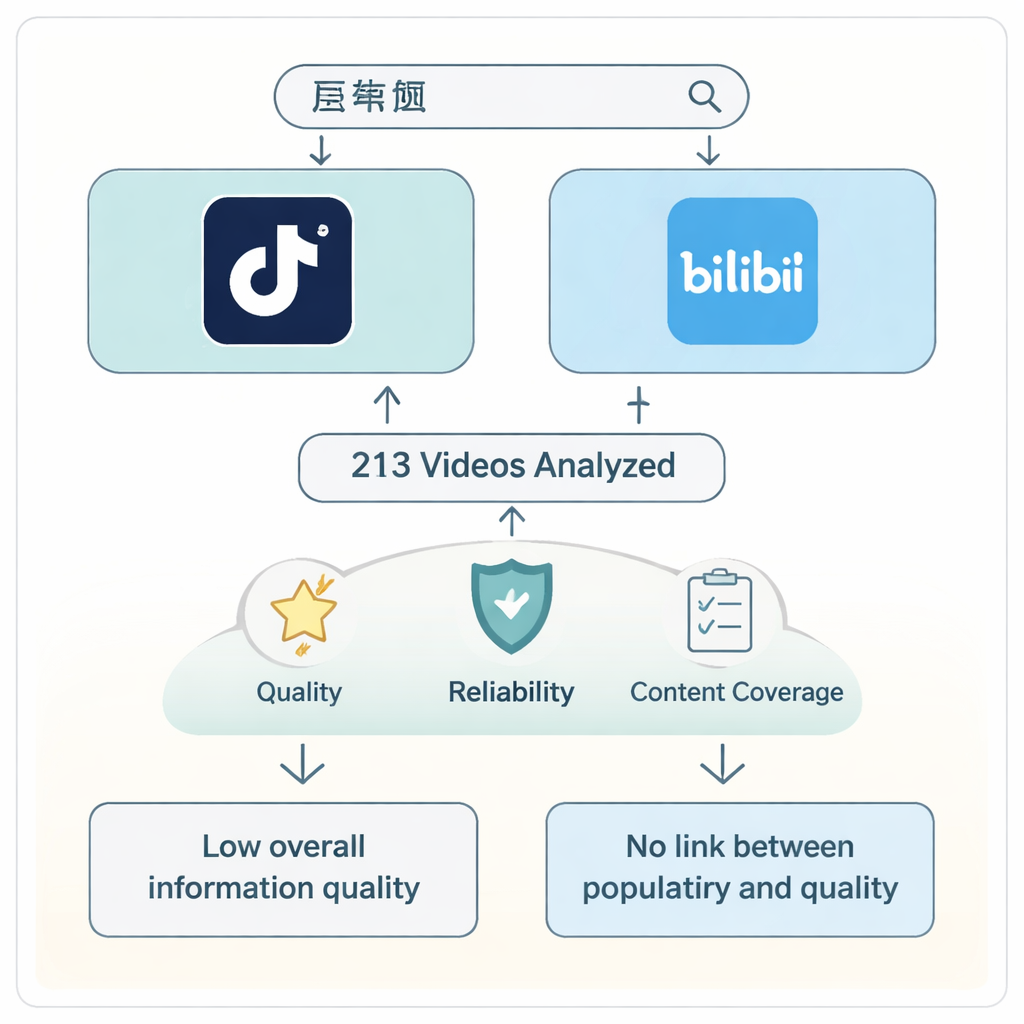
Researchers searched TikTok and Bilibili using the Chinese term for ovarian cancer and pulled the top 150 results from each site, similar to what a typical user might see. After removing duplicates and off-topic clips, they carefully reviewed 213 videos. These came from different sources: specialist cancer doctors, other doctors, ordinary users (including patients), and organizations such as hospitals or media outlets. Most videos focused on basic explanations of ovarian cancer, especially how it is diagnosed and treated, but important topics like early warning signs, long-term outlook, and prevention were covered far less often.
Different platforms, different styles—but similar problems
The two platforms turned out to have very different “cultures.” On TikTok, short, punchy science videos from specialist doctors dominated and drew far more likes, shares, and comments. On Bilibili, videos were longer, more lecture-like, and more often uploaded by general users and students, attracting fewer reactions. But despite these contrasts, when the team scored each clip using standard checklists for overall quality, trustworthiness, and how many key topics were covered, the results were surprisingly similar: across both platforms, most videos fell into the low or only fair range. In other words, neither snappy TikTok clips nor long Bilibili lectures consistently delivered the clear, balanced cancer education that viewers might expect.
Who posts the best content—and where it still falls short
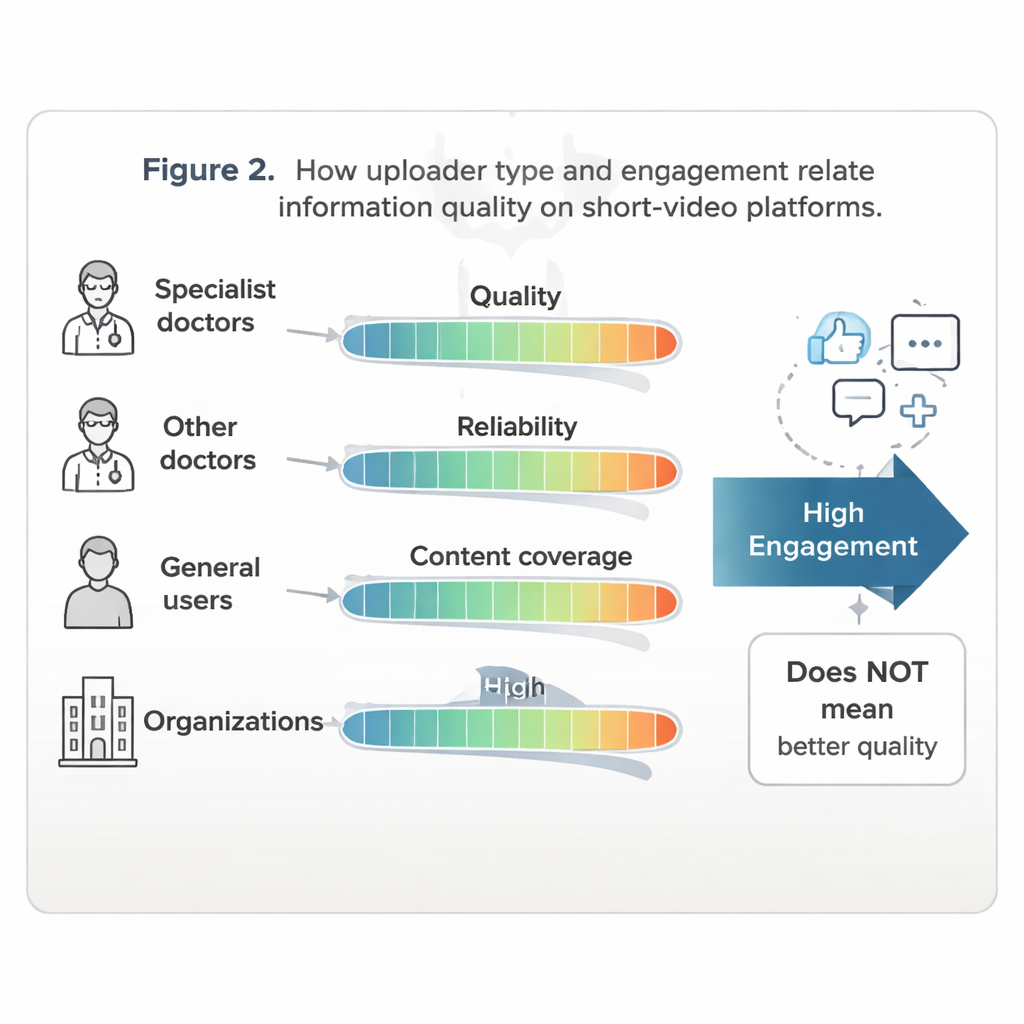
Not all uploaders performed equally. Videos made by doctors—both cancer specialists and physicians from other fields—generally scored higher in overall quality than those from general users or organizations. Yet even many doctor-made clips left out important pieces of the puzzle, such as explaining where information came from, discussing different treatment options in a balanced way, or covering prevention and prognosis. Personal stories from patients, while emotionally powerful and often longer in length, tended to be the least reliable and the least complete. Some of the most thorough videos on Bilibili were recordings of professional talks shared by non-experts, but these tended to be dense, dry, and watched by relatively few people.
Popularity does not equal trustworthiness
A particularly worrying finding is that video popularity—measured by likes, comments, saves, and shares—had no meaningful link to how accurate, reliable, or complete the information was. Clips that spread quickly and generate lively discussion are not necessarily those that give viewers the best guidance about ovarian cancer. In fact, the “traffic-first” algorithms that reward eye-catching, easy-to-digest content may push simple or sensational messages ahead of careful, nuanced explanations that would actually help patients and families make informed decisions.
What this means for patients, doctors, and platforms
For the everyday viewer, the takeaway is clear: ovarian cancer videos on TikTok and Bilibili can be helpful starting points but should not be treated as solid medical advice. Because most clips are incomplete and many are of only modest quality, viewers should double-check what they see with trusted sources, especially their own doctors. The authors urge platforms to adjust their recommendation systems so that medically sound content is easier to find, and they encourage more health professionals to create short videos that are both accurate and understandable. Until then, viewers should watch with a critical eye, using social media for quick education but relying on clinicians for real decisions about cancer care.
Citation: Sun, T., Guo, M., Zhao, R. et al. Evaluating the information quality and reliability of ovarian cancer educational content on TikTok and Bilibili: a cross-sectional study. Sci Rep 16, 7296 (2026). https://doi.org/10.1038/s41598-026-37077-x
Keywords: ovarian cancer, health misinformation, short video platforms, TikTok and Bilibili, patient education