Clear Sky Science · en
Indirect effects of higher mean air temperature related to climate change on major life-history traits in a pulsed-resource consumer
Why warmer years matter for a tiny forest sleeper
In many forests, climate change is doing more than just warming the air—it is quietly reshaping when and how trees produce seeds, and in turn, how animals survive and reproduce. This study follows thousands of edible dormice, small hibernating rodents living in Austrian beech forests, to show how slightly warmer temperatures can ripple through trees, seeds, and finally into the lives and deaths of these animals.
Forest feast years and famine years
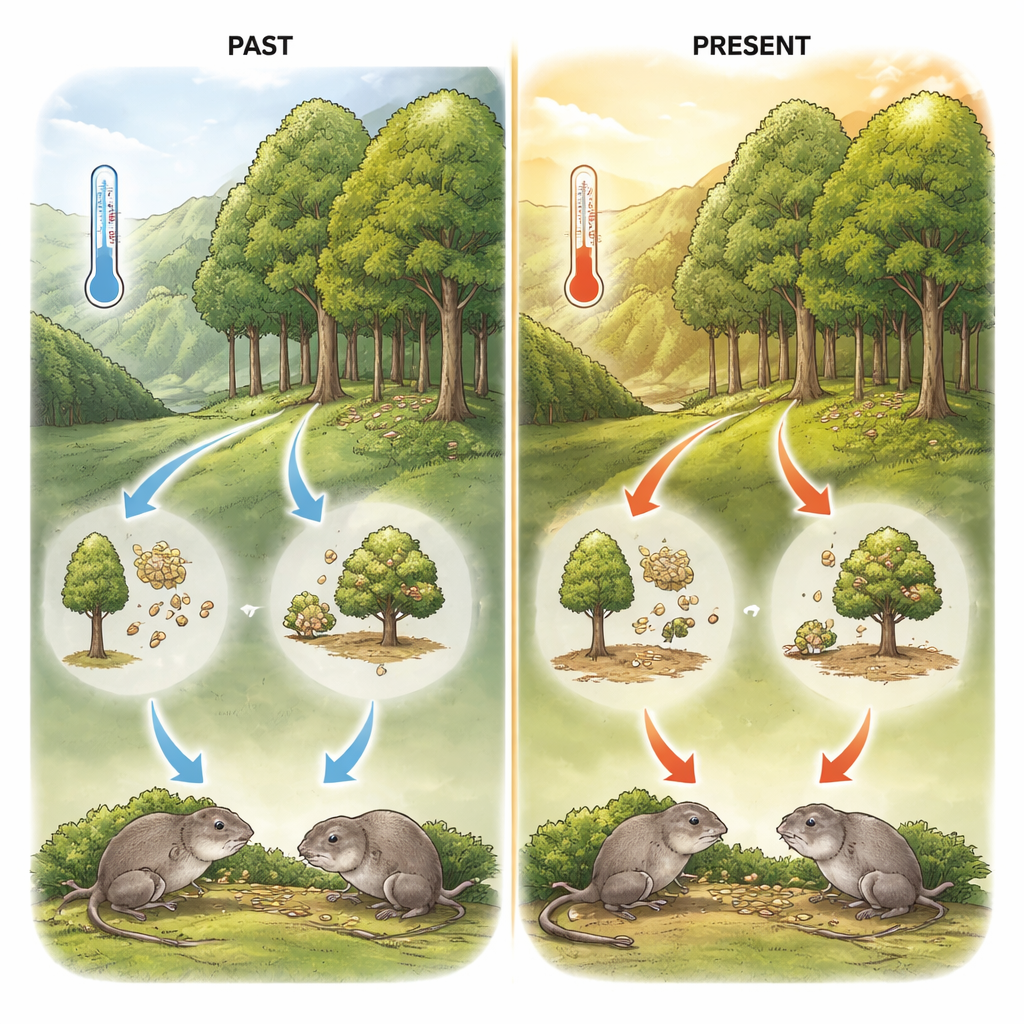
European beech trees do not produce the same amount of seed every year. Instead, they have irregular “mast years” when many trees release a huge crop of seeds, followed by years with few seeds. These large but infrequent seed pulses are a key food source for dormice, which plan their breeding around them. The researchers combined 17 years of detailed tracking of 2,530 dormice with long-term records of air temperature and beech pollen, which reliably predicts how many seeds will fall in autumn. They then split the study into a cooler first phase (2006–2013) and a warmer second phase (2014–2022) to see how changes in temperature and seed production lined up.
Warmer summers, boom‑and‑bust seed crops
Even though the average air temperature rose by less than one degree Celsius between the two periods, this modest increase was enough to change the beech seed cycle. Higher mean summer temperatures in the year before a mast strongly boosted pollen production, and overall pollen levels were higher and more variable in the warmer period. Instead of irregular, moderate seed crops, the beech forest shifted toward a more regular two‑year rhythm: one year with extremely high seed availability, followed by a year with very low seed production. These more extreme ups and downs created a stronger pattern of feast years alternating with famine years for seed‑eating animals.
Dormice adjust their breeding but pay a survival price
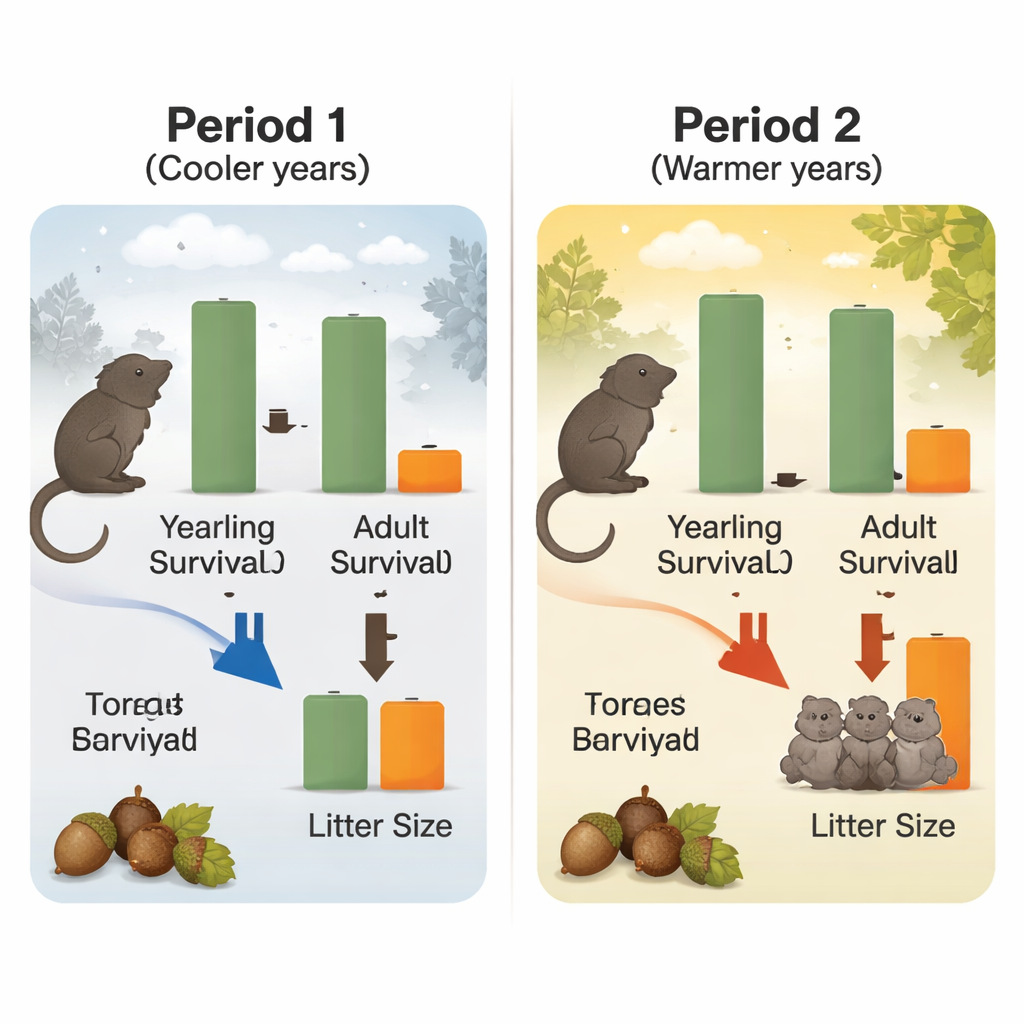
Because dormice depend on beech seeds to raise young, they adjusted their reproductive strategy as the mast cycle changed. In years with abundant pollen—and thus seeds—many more females bred, and litters were larger. In the warmer second period, both adult and first‑year dormice (called yearlings) had significantly bigger litters than in the cooler years. Adult females in particular responded strongly: at high pollen levels almost all adults reproduced, and they produced more offspring per litter. Yearlings also increased their breeding in good seed years, but still lagged behind adults in both the likelihood of breeding and in litter size.
Young dormice struggle more in the new climate pattern
The boost in reproduction came with a hidden cost. Yearling survival dropped in the warmer period, even though adults managed to keep their survival rates roughly stable overall. During mast years in the warm period, both adults and yearlings survived less well than during mast years in the cooler period, likely because raising large litters forces animals to forage more and expose themselves to predators. In contrast, in years with very few seeds, adult dormice could retreat underground into prolonged bouts of torpor, saving energy and avoiding predators, and their survival in such famine years stayed high. Yearlings, being lighter and still growing, had fewer reserves for long underground retreats and generally survived less well than adults, especially under the new, more extreme feast‑and‑famine cycle.
What this means for forests and their hidden residents
To a casual observer, a slightly warmer forest might look unchanged. But this work shows that subtle shifts in average temperature can reorganize the timing and intensity of seed production, and that this in turn reshapes how animals trade off having many offspring versus staying alive. Adult dormice in this study were able to use their special hibernation abilities and fat stores to keep survival high while raising more young in mast years. Younger dormice, however, paid with lower survival. If warming continues and mast cycles become even more irregular—or break down altogether—the balance between reproduction and survival in dormice and other seed‑eating animals may shift further, potentially changing population sizes and the way temperate forests function.
Citation: Hochleitner, L., Morris, S., Bastl, M. et al. Indirect effects of higher mean air temperature related to climate change on major life-history traits in a pulsed-resource consumer. Sci Rep 16, 6050 (2026). https://doi.org/10.1038/s41598-026-37071-3
Keywords: climate change, seed masting, hibernation, forest ecology, small mammals