Clear Sky Science · en
Adjusting planting distance plus mineral fertilization to boost growth, yield, and some active ingredients of Moringa stenopetala
A hardy tree with big potential
Moringa stenopetala, sometimes called African moringa or the “miracle tree,” is a tough, drought‑resistant tree whose leaves are packed with protein, vitamins, and minerals. In regions where food and nutrients are scarce, getting more edible leaves of higher quality from each plant could make a real difference to people’s health. This study asked a practical question with big implications: by simply changing how far apart farmers plant moringa trees and how much basic fertilizer they add, can they grow more nutritious leaves without changing the crop itself? 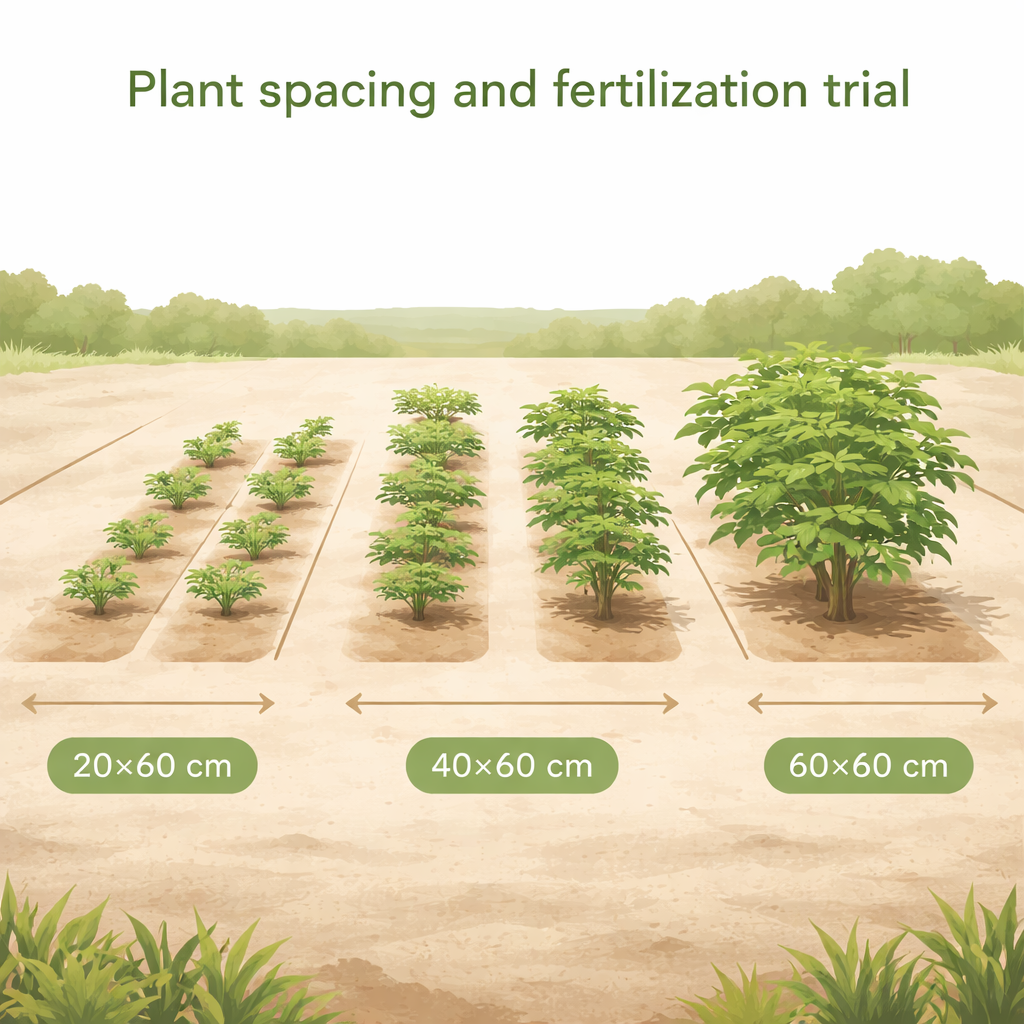
How plant spacing and feeding were tested
The researchers set up field trials in the Egyptian desert, growing African moringa in sandy soil under drip irrigation, conditions similar to those in many dry parts of Africa. They compared three planting distances—tight, medium, and wide spacing between trees (20×60, 40×60, and 60×60 centimeters)—and three levels of common mineral fertilizer containing nitrogen, phosphorus, and potassium (NPK). By combining these options, they created nine different treatments and followed 360 plants over several months, measuring plant height, number of branches and leaves, total fresh weight, and the levels of key nutrients and natural plant compounds in the leaves.
Taller trees, more leaves, and bigger harvests
Giving each tree more room, especially at the widest spacing, clearly helped the plants grow. Moringa trees planted 60×60 centimeters apart and given the highest fertilizer dose were the tallest, with many more leaves and branches than tightly packed, poorly fed plants. These bigger canopies translated into heavier harvests: the same wide‑spacing, high‑fertilizer treatment produced the greatest biomass per plant, while closely spaced trees with low fertilizer gave the smallest yields. The pattern suggests that when trees are not competing as much for light, water, and nutrients, they can invest more energy into leafy growth—exactly what matters most when the leaves are the crop.
Boosting minerals and natural health compounds
The benefits were not just about size. The leaves from widely spaced, well‑fertilized trees also carried more of the minerals and natural compounds that make moringa attractive as both food and medicine. Levels of major nutrients like nitrogen, phosphorus, potassium, calcium, and magnesium rose when plants had extra space and more NPK fertilizer, meaning each serving of leaves supplied more building blocks for human nutrition. Micronutrients such as iron, zinc, and manganese also increased under these conditions, which is especially important where anemia and other deficiencies are common. 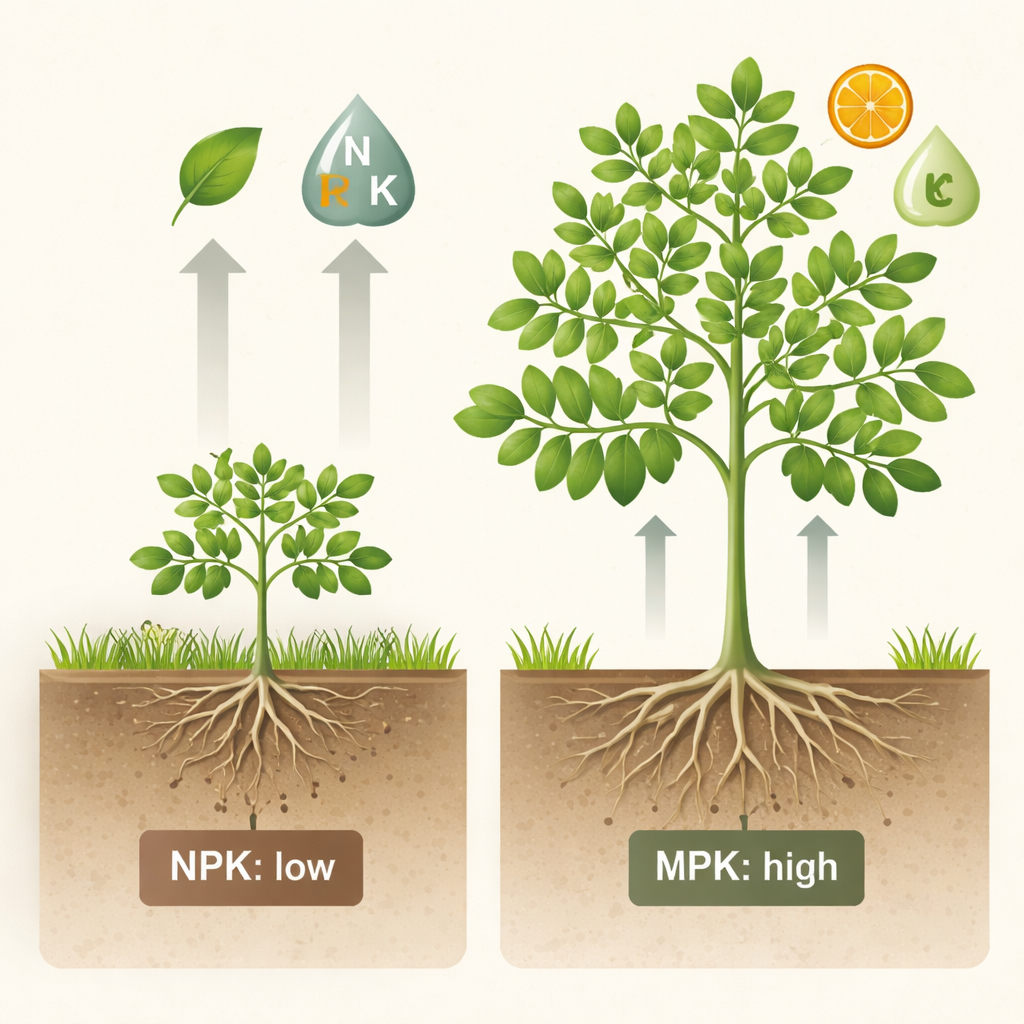
More color, more antioxidants, more vitamin C
Colorful plant pigments and other natural chemicals often signal health benefits, and moringa is no exception. In this study, the treatment that combined the widest spacing with the highest fertilizer level produced leaves richer in chlorophyll (the green pigment used in photosynthesis), flavonoids, carotenoids, and tannins—all substances linked to antioxidant and protective effects in the body. Vitamin C (measured as L‑ascorbic acid) was also highest in these leaves, reaching well above the levels seen in more crowded, less nourished plants. Put simply, the best‑managed trees did not just yield more leaves—they yielded leaves that were more densely packed with helpful nutrients and bioactive compounds.
What this means for farmers and families
For non‑specialists, the take‑home message is straightforward: by planting African moringa trees a bit farther apart and giving them enough basic mineral fertilizer, farmers can harvest more leaves that are also richer in vitamins, minerals, and natural health‑promoting ingredients. The study points to a simple recipe—wider spacing (60×60 centimeters) plus the highest tested NPK rate—as the most effective combination in this sandy, hot environment. While future work will need to fine‑tune these practices for cost and environmental impact, the results show that better field layout and feeding can turn an already valuable “miracle tree” into an even more powerful tool for nutrition and health.
Citation: Abdelhamid, A.N., Nasser, M.A., Helmy, L.M. et al. Adjusting planting distance plus mineral fertilization to boost growth, yield, and some active ingredients of Moringa stenopetala. Sci Rep 16, 6353 (2026). https://doi.org/10.1038/s41598-026-37068-y
Keywords: Moringa stenopetala, plant spacing, NPK fertilization, leaf nutrition, desert agriculture