Clear Sky Science · en
A TODIM based decision-making framework using intuitionistic double hierarchy linguistic terms for evaluating polymer absorbing algae in marine debris management
Why ocean plastics and tiny algae matter to you
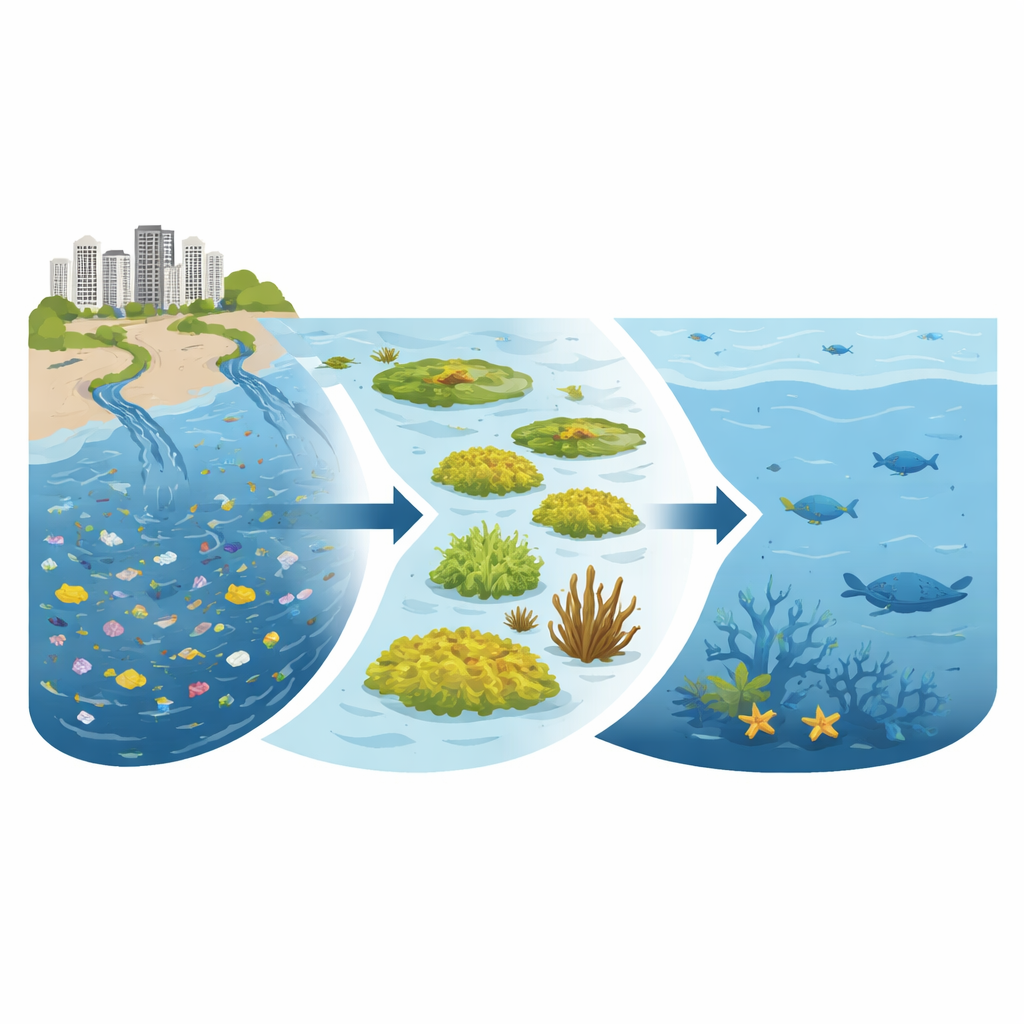
Plastic bottles, bags, and invisible microfragments are now everywhere in the ocean, from sunny beaches to the deep sea. This debris threatens marine life, enters the food chain, and is extremely hard to clean up once it spreads. At the same time, certain algae can cling to plastics and even help break them down. This article explores how mathematicians and environmental scientists teamed up to design a careful, evidence-based way to choose which algal species are best suited to help clean synthetic debris from the sea.
The rising tide of persistent plastic
Global plastic production has soared over recent decades and is projected to triple by 2050. Because these materials are durable and slow to break down, lost packaging, discarded fishing gear, and other waste accumulate in rivers and oceans. Larger items gradually fragment into tiny pieces known as microplastics, which are small enough to be swallowed by plankton, fish, and eventually humans. Traditional clean-up methods struggle with this mixture of sizes and materials, especially once debris disperses through vast marine areas. The article highlights that any realistic clean-up strategy must be both effective and gentle on marine ecosystems.
Algae as tiny helpers in dirty water
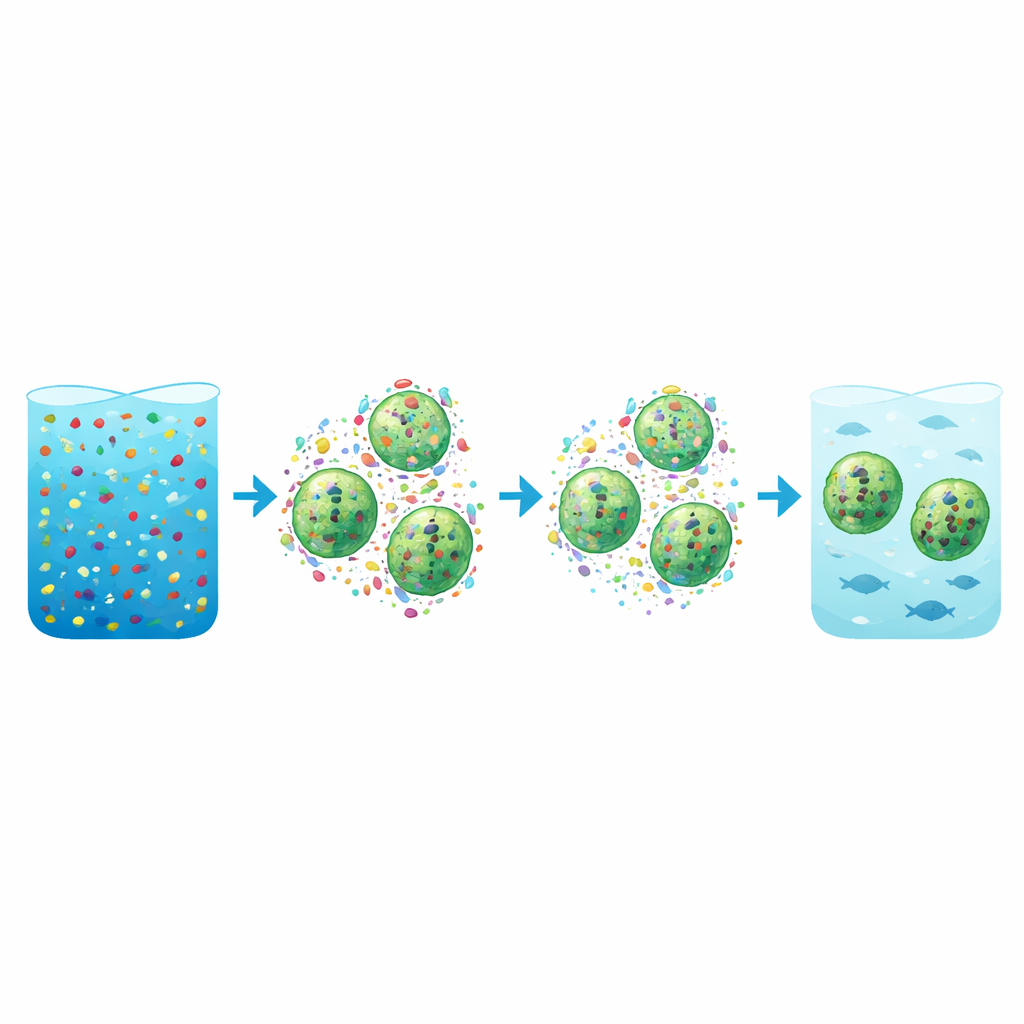
Many microalgae naturally grab onto particles in water or secrete sticky substances that make small bits clump together and sink. Some can even start to break down long plastic chains into smaller fragments, using the released carbon as food. The study focuses on four candidate algal species, including the widely studied Chlorella vulgaris, brown seaweed mats like Sargassum, sheet-like sea lettuce, and filamentous Spirogyra. Each species has trade-offs: some are cheap and easy to grow, some form excellent natural filters, and others have strong biochemical activity but may be harder to manage in large-scale projects.
Turning expert opinions into a clear ranking
Choosing a “best” algal species is not straightforward. Experts must judge several criteria at once, such as how well each species decomposes plastics, how safe and affordable it is to cultivate, and how efficiently it cleans water. These judgments are often expressed in words like “good” or “very suitable,” and experts may be unsure or disagree. The authors build a decision framework that can handle this kind of vague, language-based information. Their method lets experts express both support and doubt for each option, then mathematically combines all views into a single, consistent comparison.
Capturing human caution and uncertainty
The decision framework does more than average scores. It also accounts for a known human tendency: people usually fear losses more than they value similar gains. In environmental choices, this means decision-makers may strongly avoid options that could backfire ecologically, even if those options promise high benefits. The method models this “loss aversion” explicitly, giving extra weight to potential downsides. It also uses a flexible set of mathematical rules to merge different expert opinions while preserving the sense of hesitation and disagreement. The result is a ranking of algal species that reflects both scientific evidence and realistic human risk attitudes.
What the study found and why it is reassuring
When the authors applied their framework to the four candidate algae, they consistently found Chlorella vulgaris to be the most promising species for tackling synthetic polymers in marine environments. Sargassum and sea lettuce ranked as useful secondary options, while Spirogyra was better suited for more limited or specialized uses. The team also checked how sensitive the rankings were to different model settings and compared their results with several other standard decision methods. In every case, the top and bottom choices stayed the same, suggesting that the conclusion is robust. For non-specialists, the key message is that we now have a transparent, systematic tool to help policymakers and conservation managers choose algae-based clean-up strategies that are both effective and low-impact, offering a hopeful avenue for dealing with the growing problem of plastic-laden seas.
Citation: Tahir, M., Zidan, A.M., Saeed, A.M. et al. A TODIM based decision-making framework using intuitionistic double hierarchy linguistic terms for evaluating polymer absorbing algae in marine debris management. Sci Rep 16, 9071 (2026). https://doi.org/10.1038/s41598-026-37057-1
Keywords: marine plastic pollution, algae bioremediation, decision-making methods, microalgae, environmental management