Clear Sky Science · en
Bioaccumulation of potentially toxic elements in selected vegetables of Noakhali district, Bangladesh and their associated health risks
Why the safety of everyday vegetables matters
From radish in winter stews to cabbage in curries, vegetables are a daily staple in Bangladesh and around the world. Yet these familiar foods can quietly pick up traces of toxic metals from soil, water, and fertilizers. This study focuses on vegetables grown in Noakhali, a coastal farming district in Bangladesh, to ask a simple but vital question: are the metals in these crops high enough to threaten human health?
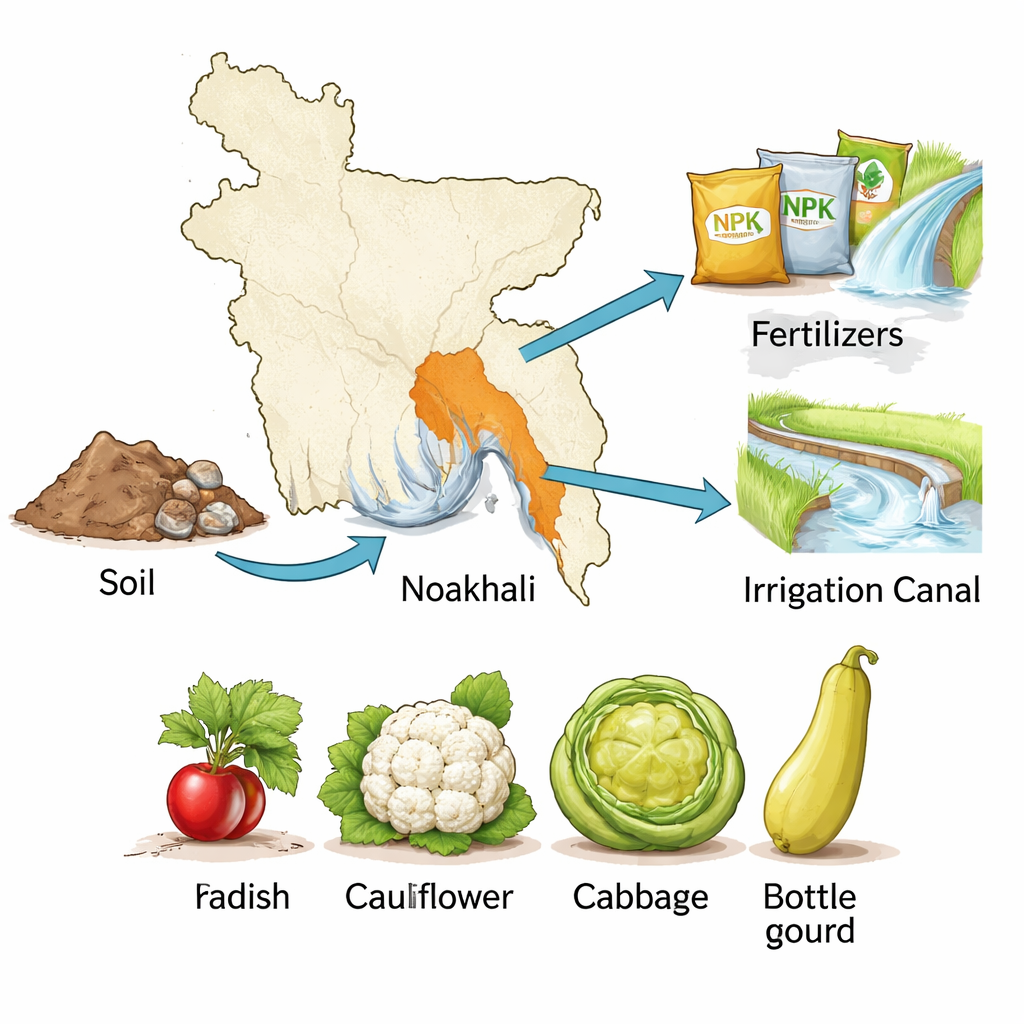
A closer look at coastal farm fields
Noakhali is known for its fertile land, brackish-water canals, and expanding agriculture. The researchers selected 27 farm sites across the district and collected four common vegetables—radish, cauliflower, cabbage, and bottle gourd—directly from the fields. At the same time, they sampled the soil the vegetables grew in, the irrigation water used on the plots, and the fertilizers applied by farmers. In the laboratory, they measured nine metallic elements that can be toxic at high levels, including arsenic, lead, cadmium, chromium, and mercury, alongside more familiar nutrients such as iron, zinc, copper, and manganese.
How metals move from field to food
To understand how these elements enter the food chain, the team did more than just measure their amounts. They calculated how easily metals shift from soil or water into the edible parts of plants—a measure called the bioaccumulation factor. They also used established yardsticks to rate how polluted the soils were overall and to estimate people’s daily intake of each metal through vegetable consumption. Finally, they combined these numbers into health-risk indicators that distinguish between non-cancer effects, such as kidney or nerve damage, and long-term cancer risks.
Mostly within limits, but cadmium stands out
The reassuring news is that, for the most part, metal levels in vegetables, soils, fertilizers, and irrigation water stayed below international safety limits. Mercury was not detectable, and elements like arsenic and lead were generally low. However, there were important exceptions. Cadmium, a metal linked to bone and kidney damage, was higher than recommended in radish, and both cadmium and chromium occasionally exceeded limits in irrigation water. Soil tests suggested that overall contamination was low to moderate, but cadmium in the soil under radish fields posed the highest ecological concern. When the researchers examined how strongly plants drew in metals, they found that uptake from soil was usually modest, while transfer from irrigation water into vegetables was often strong—especially for manganese, zinc, and cadmium.
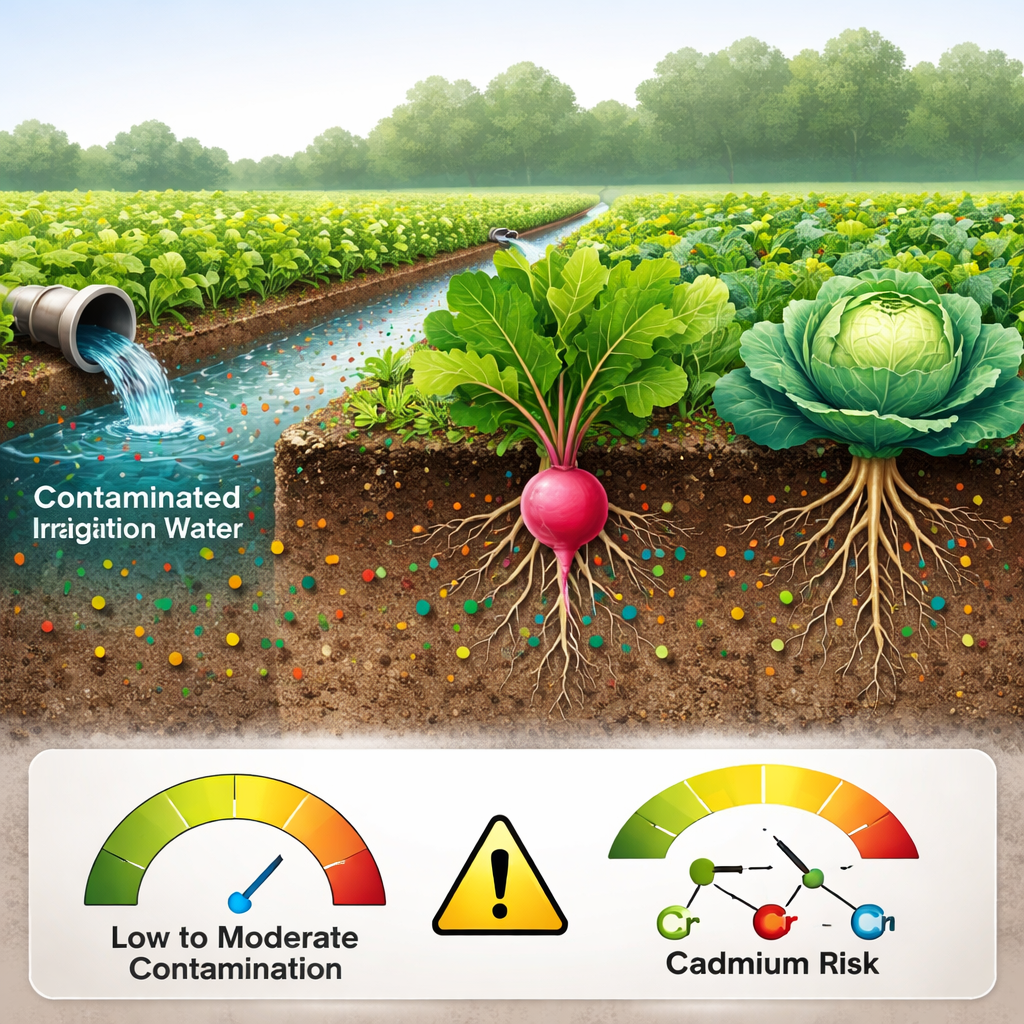
What the numbers mean for human health
Using average vegetable consumption for Bangladeshi adults, the study estimated daily intakes of each metal. On their own, these intakes fell below international tolerable limits, suggesting that individual metals are unlikely to cause harm at current levels. Yet when the combined effect of all measured metals was considered, the non-cancer risk index crept above the safety threshold, driven mainly by cadmium, which contributed nearly three quarters of the total. Cancer risk estimates for arsenic, lead, and chromium stayed in the commonly accepted range, but cadmium in radish and cauliflower produced values that suggest a small yet notable lifetime cancer risk if such exposure continues unchecked.
Protecting plates and people
To a layperson, the core message is that vegetables from Noakhali are not acutely poisonous, but there is a slow, accumulating problem—especially with cadmium—that deserves attention now rather than later. The study points to irrigation water as a key pathway by which metals reach crops and, ultimately, dinner plates. The authors recommend regular monitoring of water, wiser use of chemical fertilizers and pesticides, and more sustainable farming practices to keep contamination in check. By doing so, communities in Noakhali and similar coastal regions can continue to rely on local vegetables as healthy, safe foods for generations to come.
Citation: Hasan, T., Patwary, A.H., Abdullah, A.T.M. et al. Bioaccumulation of potentially toxic elements in selected vegetables of Noakhali district, Bangladesh and their associated health risks. Sci Rep 16, 6614 (2026). https://doi.org/10.1038/s41598-026-37056-2
Keywords: heavy metals in vegetables, food safety, Bangladesh agriculture, irrigation water pollution, cadmium health risk