Clear Sky Science · en
Optimization of academic performance and mental health in college students through an AI-driven personalized physical exercise and mindfulness intervention system
Why this matters for students and parents
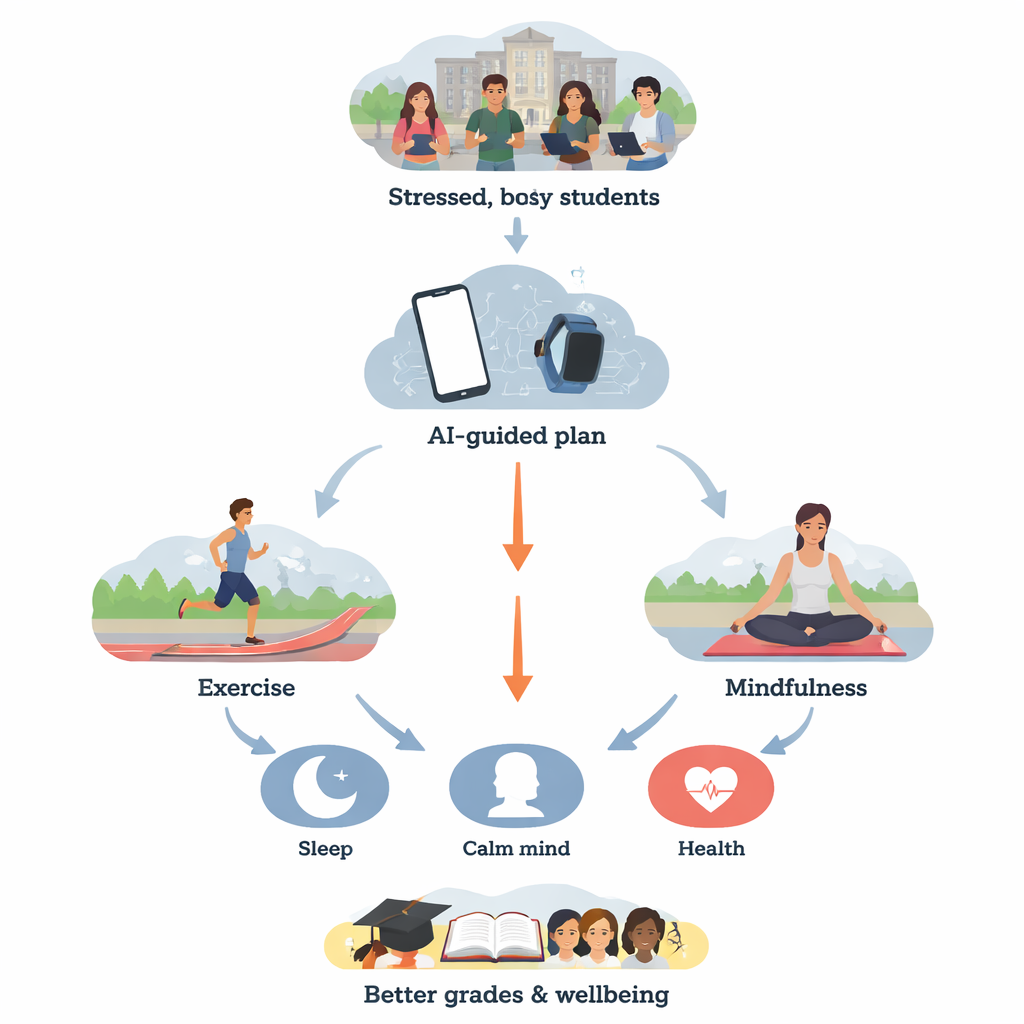
University life can be thrilling, but it also brings heavy workloads, late nights, and mounting pressure about the future. Many students struggle with stress, anxiety, and slipping grades, yet never set foot in a counseling office. This study explores whether a pocket-sized digital coach—powered by artificial intelligence (AI), exercise science, and mindfulness—can realistically help students study better, sleep better, and feel better, all while fitting around their busy schedules.
A smart coach in your pocket
Researchers in eastern China built a smartphone-based system that acts like a personalized wellness coach for college students. Instead of giving everyone the same generic advice, the app uses AI to tailor exercise and mindfulness plans to each student’s body, mood, and study demands. Over 16 weeks, 328 undergraduates from three universities were split into three groups: one used the AI-personalized system, one followed a fixed exercise and mindfulness program delivered through an app, and one continued life as usual with standard campus resources. The goal was to see whether smarter, individualized guidance could improve both academic performance and mental health more than one-size-fits-all programs.
How the system watches, learns, and adapts
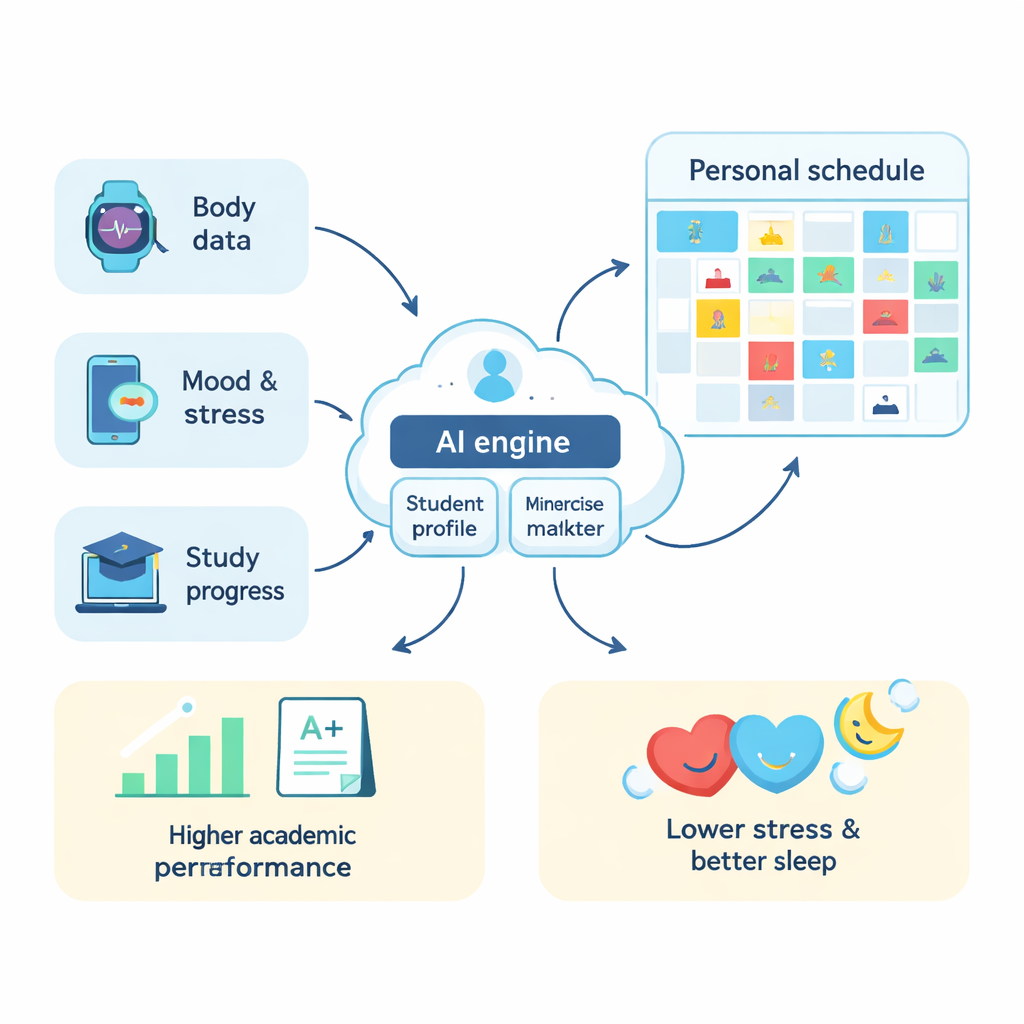
The system quietly collects different streams of information. A wearable wristband tracks heart rate, sleep patterns, and daily movement. Short check-ins on the phone capture stress levels, emotions, and whether students are actually following the plan. Secure links to university systems provide grades and course activity. All these data flow to an AI “engine” in the cloud. There, machine-learning models build a profile of each student and continuously update it. Based on this profile, the app suggests weekly exercise sessions (such as moderate runs or brisk walks) and brief daily mindfulness practices (like breathing exercises or short meditations) and adjusts their timing and intensity according to how the student is responding.
What changed for grades, stress, and sleep
By the end of the semester, students using the AI-personalized system showed stronger gains than those following the fixed program or usual care. Their grade point averages rose by just over 10 percent on average, and exam scores improved notably, especially in courses demanding sustained focus and problem-solving. Stress scores dropped by more than a third, anxiety symptoms eased, and a measure of heart rhythm linked to resilience and recovery improved by nearly 30 percent. Sleep time and sleep efficiency climbed, and cardiorespiratory fitness—how well the heart and lungs perform—also improved. The standardized program produced smaller but still positive changes, suggesting that simply organizing regular exercise and mindfulness helps, while personalization further boosts these benefits.
Why personalization seems to matter
Digging deeper, the researchers found that how faithfully students followed their plans was the single strongest predictor of improvement. Those who stayed with the program around two-thirds to four-fifths of the time gained the most, with benefits leveling off at very high adherence. The AI seemed to help by aligning activities with each student’s sleep patterns, stress reactions, and class schedule—nudging exercise to the times of day they were most likely to do it and tuning mindfulness practices to the kinds of worries they reported. Better sleep and lower stress appeared to be key bridges between daily habits and better grades, hinting that the system works not only by adding more studying time, but by improving the mind and body conditions that make studying effective.
Cautions, limits, and next steps
Despite the promising numbers, the authors are careful not to claim that AI alone “caused” the improvements. Students volunteered and needed smartphones and wearables, so they may already have been more motivated or tech-comfortable than average. Extra attention from using an app and wearing a device could itself lift mood and focus, regardless of personalization. The study lasted one semester, so it is unclear whether gains would persist over years, or how well this system would work in other countries with different cultures, teaching styles, and technology access. The researchers also warn about equity: requiring modern phones, data plans, and wearables could leave out students who might need help the most.
What this means in everyday terms
In plain language, this study suggests that a well-designed digital coach—one that learns your habits, energy levels, and stress patterns, and then tailors exercise and mindfulness around your real life—can be linked to better grades and calmer minds for college students, at least in the Chinese campuses studied. It does not replace counseling or medical care, and it is not a magic fix, but it offers a scalable way for universities to support many students at once. Before such tools are rolled out broadly, they will need to be tested in different settings, checked for fairness, and paired with human support. Still, the work points toward a future where your phone not only reminds you of deadlines, but also quietly helps you move, breathe, and sleep your way to a healthier, more successful college experience.
Citation: Zhang, K., Yang, M. & Li, L. Optimization of academic performance and mental health in college students through an AI-driven personalized physical exercise and mindfulness intervention system. Sci Rep 16, 6024 (2026). https://doi.org/10.1038/s41598-026-37028-6
Keywords: college students, artificial intelligence, exercise and mindfulness, academic performance, student mental health