Clear Sky Science · en
Time-of-day differences in daily functioning in children with obsessive-compulsive disorder
Why the Time of Day Matters
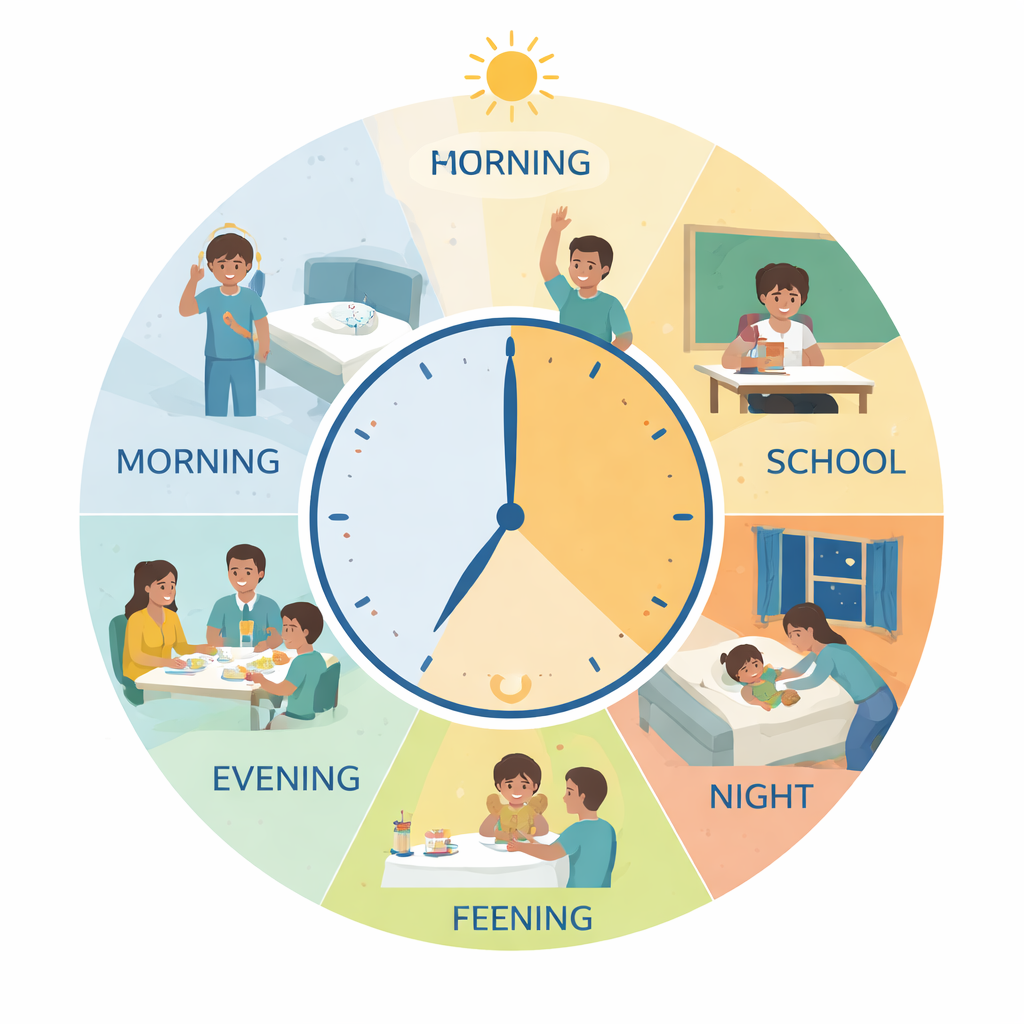
For many children with obsessive-compulsive disorder (OCD), life is not just hard in general—it is especially hard at certain times of the day. This study asks a question that matters to families and schools alike: when, exactly, do daily routines break down for children with OCD, and what family or emotional factors are tied to those rough patches? By zooming in on mornings, school hours, afternoons, evenings, and nights, the researchers show how timing can guide smarter, more targeted help.
Everyday Life Under Pressure
OCD in children involves unwanted, repetitive thoughts and rituals that can take over ordinary routines. To understand how this affects daily life, the researchers analyzed records from 136 children aged 6 to 15 who were newly diagnosed with OCD at a child psychiatry clinic in Japan. Parents filled out a brief checklist called the Questionnaire–Children with Difficulties, which asks how well their child manages common tasks like getting ready for school, participating in class, doing homework, and settling down for bed. The team then compared these scores with those from a large group of local schoolchildren without diagnosed psychiatric conditions.
When the Day Feels Heaviest
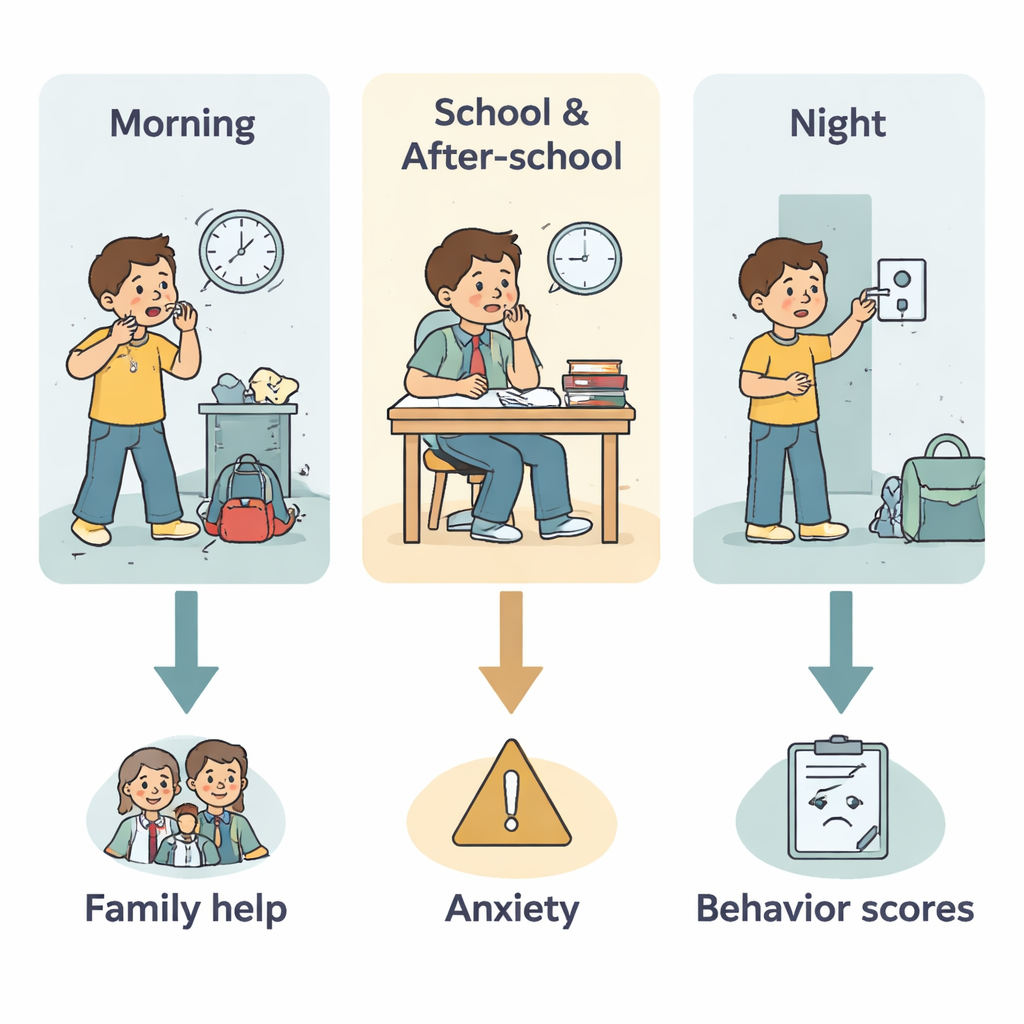
The contrast between children with OCD and their peers was striking. Across all parts of the day, children with OCD were reported to struggle much more. However, the largest gaps showed up during school, after school, and at night. At school, OCD can clash with demands to focus, follow rules, and interact with classmates, especially when rituals or checking behaviors interrupt lessons. After school, looser structure and tiredness may give symptoms more room to expand, making homework and play difficult. Nighttime posed some of the greatest challenges, with many children becoming caught in long washing or checking routines or feeling too anxious to fall asleep, which can then worsen the next day’s functioning.
Family, Feelings, and Routines
The researchers went beyond averages to ask what personal and family factors are linked to these time-of-day problems. They looked at children’s scores on questionnaires for depression, anxiety, and behavior problems, as well as simple details like how many siblings they had and how long they slept on weekdays. Surprisingly, more obvious behavior problems—such as arguing or not following rules—were associated with slightly better functioning in the morning and evening. One possible explanation is that these children receive closer supervision and firmer guidance from parents at those times, providing more structure. In contrast, having more siblings was tied to worse morning routines, perhaps because parents are stretched thin as everyone rushes to get out the door.
Hidden Supports and Mixed Signals
Anxiety showed a curious pattern: higher anxiety scores were linked to somewhat better functioning at night. This may reflect parents stepping in more actively when they see their child is anxious before bed, enforcing routines that help the evening run more smoothly even as they try to soothe fears. Depressive symptoms, which often sap energy and motivation, were not clearly tied to overall day-to-day functioning once other factors were taken into account. The study also notes that nearly half of the children had refused school for at least three months, and some had experienced domestic violence or suicidal thoughts, underscoring how complex and burdened these families’ lives can be.
What This Means for Help and Hope
For families, teachers, and clinicians, the main takeaway is that “when” matters as much as “what” in childhood OCD. Children in this study struggled most during school, after-school, and nighttime routines, and these difficulties were shaped by family structure, behavior patterns, and anxiety. Rather than applying a one-size-fits-all plan, the authors argue for time-sensitive strategies: structured morning routines for busy households, support around homework and transition times, and bedtime plans that limit rituals while still offering comfort. By tailoring help to the clock, caregivers may ease daily friction, improve quality of life, and make room for proven OCD treatments, such as cognitive-behavioral therapy, to work more effectively.
Citation: Usami, M., Sasaki, Y., Ichikawa, M. et al. Time-of-day differences in daily functioning in children with obsessive-compulsive disorder. Sci Rep 16, 7252 (2026). https://doi.org/10.1038/s41598-026-37027-7
Keywords: childhood OCD, daily functioning, family routines, school difficulties, time-of-day patterns