Clear Sky Science · en
Early detection of dust accumulation on solar energy modules using computer vision and machine learning techniques
Dust That Silently Drains Solar Power
Solar panels promise clean, low‑maintenance electricity, but there is a quiet enemy that can slash their output by nearly a third: dust. In dry, windy regions, particles slowly blanket the glass, blocking sunlight and wasting the money invested in rooftop or farm‑scale solar. This paper explores how inexpensive cameras and artificial intelligence can watch over solar panels, decide when they actually need cleaning, and save both energy and maintenance costs—making solar power more reliable and affordable for everyday users.
Why Dirty Panels Are a Bigger Problem Than You Think
Dust on solar modules—often called soiling—does more than make panels look neglected. By shielding cells from the sun, it can cut electricity output by up to 30%, especially in arid climates where rain is rare. Traditional maintenance relies on fixed schedules, such as cleaning every two weeks, or on occasional visual inspections. Both approaches are wasteful: cleaning too often burns money, water, and labor, while cleaning too rarely sacrifices valuable energy. The authors argue that what solar owners really need is “condition‑based” cleaning: panels should be washed only when dirt has actually started to hurt performance in a meaningful way.
Building a Smart Watchdog for Solar Panels
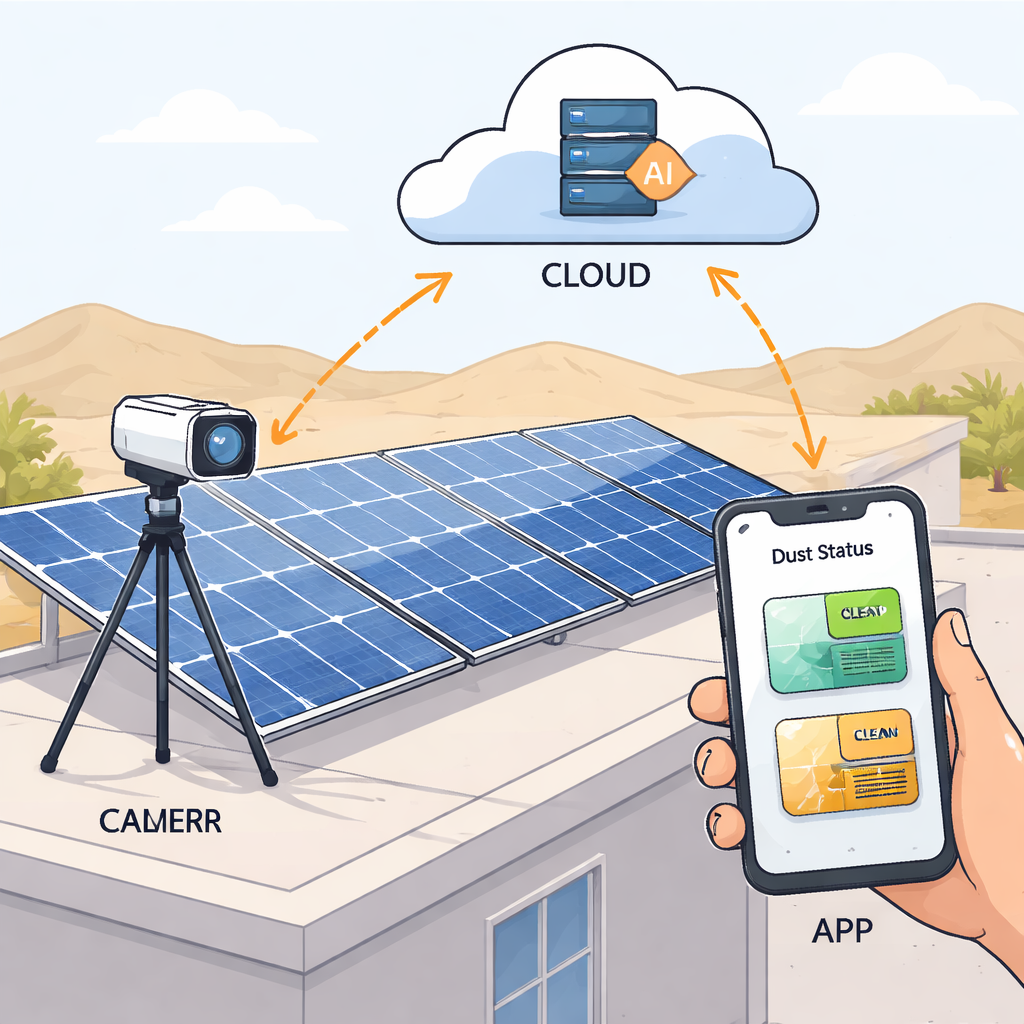
To make that possible, the team installed a 5‑kilowatt solar system in Cairo, Egypt, and equipped it with low‑cost Raspberry Pi cameras housed in 3D‑printed weather‑proof cases. These devices captured up to 200 photos per day from different angles and distances, while the inverter continuously logged how much electricity the panels produced. Over 536 days, the researchers assembled a rich dataset of 17,000 labeled images—10,300 showing dusty panels and 6,700 showing clean ones—paired with daily energy readings. They carefully cleaned the data by removing near‑duplicate images and standardizing their size and orientation, so the AI models would focus on real differences in dust rather than on camera quirks.
Teaching Machines to See Dirt and Sense Power Loss
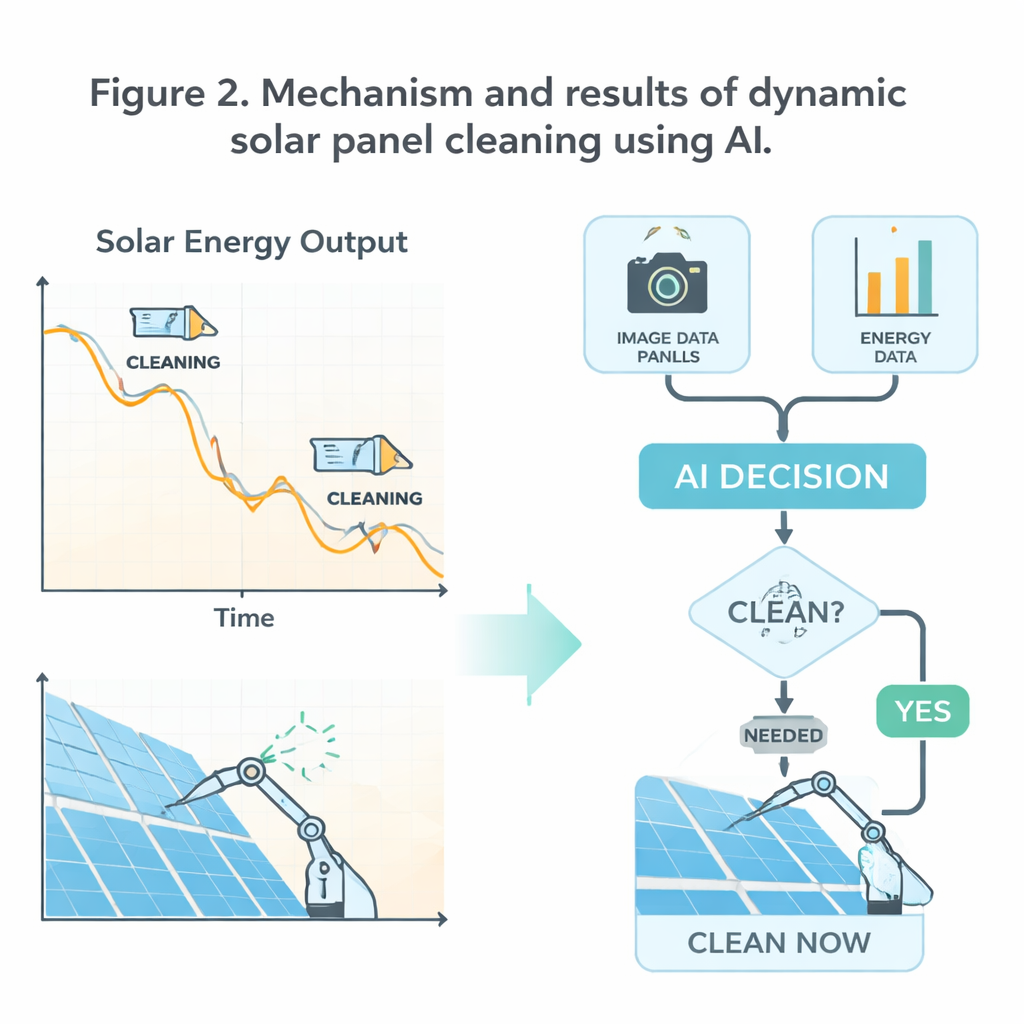
The researchers then trained computer vision models to tell clean panels from dusty ones, and separate machine‑learning models to read the energy trends and infer when cleaning is worthwhile. On the image side, modern neural networks such as YOLOv11 and ResNet learned subtle visual cues—changes in texture, color, and reflection—linked to dust buildup. The best performer, a YOLOv11x model, correctly classified panel images about 91% of the time. In parallel, the team looked at how daily energy output changed over time. Using a method called change‑point detection, they automatically split the power‑production curve into segments where output steadily dropped (likely dust accumulation) or held steady (no urgent problem). These segments were then labeled “potential cleaning” or “no cleaning” and used to train models like Random Forest and Logistic Regression to recognize when performance decline signaled the need for a wash.
A Cleaning Schedule That Adapts Like a Human Expert
Once combined, the image‑based and energy‑based insights form an AI‑driven “cleaning classifier.” Each day, it takes in fresh photos and energy data and issues a simple decision: clean now or wait. Instead of blindly following the calendar, the system reacts to real‑world events—a dust storm that suddenly soils the glass, or an unusually clear spell when washing can be postponed. In side‑by‑side comparisons with a standard two‑week cleaning schedule, the dynamic AI model caught times when an earlier cleaning would recover lost power and skipped washes that would have had little benefit. Over a full year, this smarter timing boosted the system’s energy production by about 23% and avoided unnecessary truck rolls, water use, and labor.
Turning Smart Maintenance Into Real‑World Savings
When the researchers translated these performance gains into money, the picture was striking. Factoring in the cost of cleaning crews, water, cloud storage, and the hardware itself, the AI‑guided approach delivered an estimated annual saving of about $2,023 compared with the conventional schedule. That corresponds to a payback period of under one year for the added equipment and software. To make the technology accessible, the team also created a smartphone app called WattsUp. It shows users a simple dashboard with energy trends, panel photos, and cleaning history, along with alerts when a cleaning is recommended. For a layperson, the key message is straightforward: by letting inexpensive cameras and AI watch over your solar panels, you can keep them producing near their best, cut wasteful maintenance, and help solar power live up to its promise as a dependable, climate‑friendly energy source.
Citation: Hesham, S., Elgohary, M., Massoud, M. et al. Early detection of dust accumulation on solar energy modules using computer vision and machine learning techniques. Sci Rep 16, 6151 (2026). https://doi.org/10.1038/s41598-026-37020-0
Keywords: solar panels, dust monitoring, machine learning, predictive maintenance, renewable energy