Clear Sky Science · en
Nanoformulation of pomegranate peel extract enhances anti-psoriatic efficacy in a rat model
A New Use for a Familiar Fruit
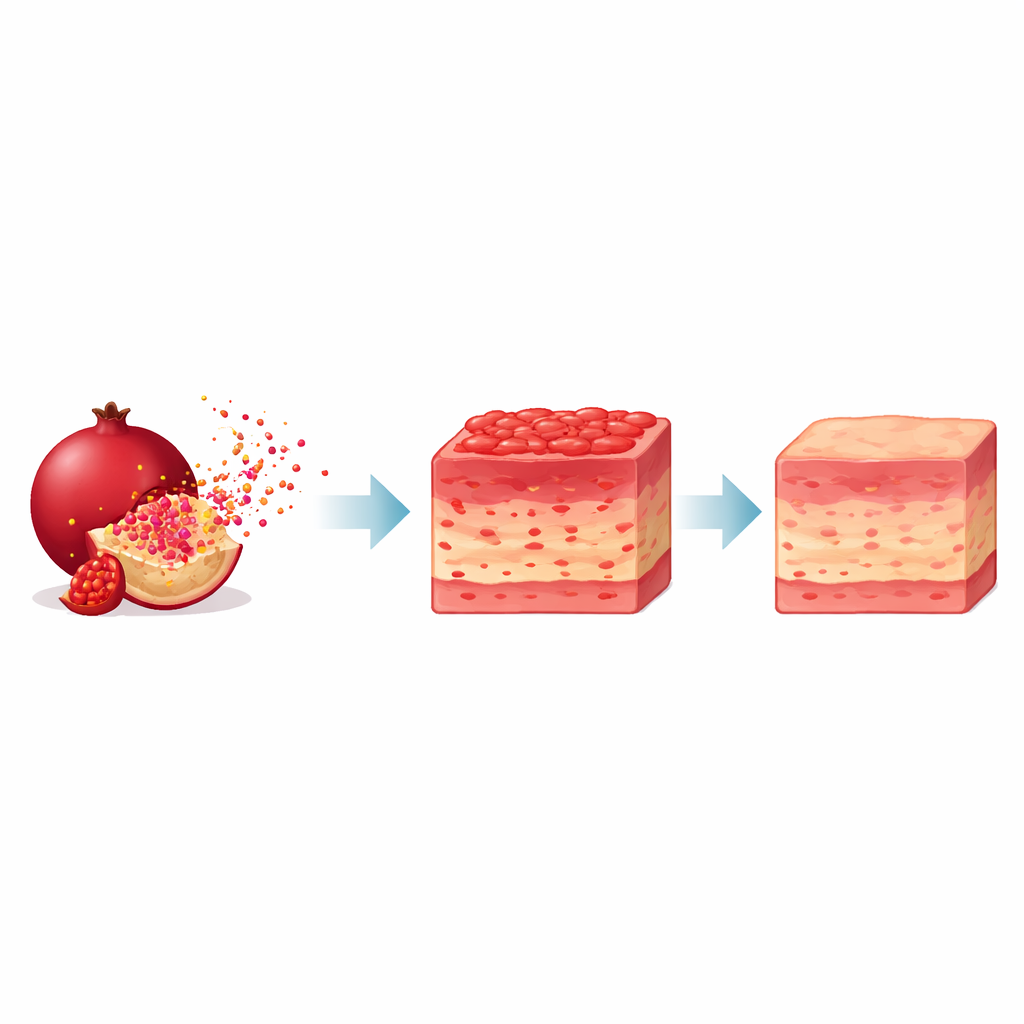
Psoriasis is a stubborn skin condition that causes red, scaly, itchy patches and affects millions of people worldwide. Many standard treatments can thin the skin, lose effectiveness over time, or cause other side effects, pushing patients and doctors to look for safer options. This study explores an unexpected ally: the discarded peel of the pomegranate. By shrinking its beneficial plant compounds down to the nanoscale, the researchers show in rats that these tiny particles can calm psoriasis-like skin inflammation more effectively than the usual plant extract.
Why Psoriasis Needs Better Answers
Psoriasis is more than just a cosmetic problem. It is linked to joint pain, heart and liver disease, and a heavy impact on quality of life. In psoriasis, the immune system becomes overactive, sending signals that make skin cells grow too fast and pile up into thick plaques. These same signals also stir up inflammation and oxidative stress, a kind of chemical "rusting" inside tissues. Current treatments, such as steroid creams, light therapy, and immune-suppressing drugs, can help but often come with trade-offs like skin thinning, cancer risk, or long-term toxicity. This has driven interest in gentler, plant-based approaches that can dial down inflammation without such heavy costs.
The Hidden Power in Pomegranate Peels
Pomegranate peels, usually thrown away after juicing, are packed with polyphenols, flavonoids, and other natural compounds known for antioxidant and anti-inflammatory effects. Earlier work suggested they can fight microbes, support heart health, and protect the liver. However, many of these molecules do not dissolve well in water and break down easily, which limits how much actually reaches and helps the skin. To get around this, the team created pomegranate peel nanoparticles (PGNPs) by treating peel powder with acid and collecting the resulting tiny particles. They confirmed that these nanoparticles stayed small, stable, and positively charged for at least 28 days, and that they retained most of the original peel’s active ingredients.
Testing Tiny Particles on Skin and Cells
The researchers first checked safety and basic performance in the lab. When they exposed skin cells to either the regular peel extract or the nanoparticles, the crude extract was noticeably more irritating, while the nanoparticles caused less cell damage even at high doses. In standard tests of antioxidant power and inflammation control, the nanoparticles outperformed both the crude extract and common reference compounds. They neutralized free radicals more efficiently and better protected red blood cells from damage, suggesting they could shield tissues from the twin pressures of oxidative stress and inflammation that drive psoriasis.
Healing Psoriasis-Like Skin in Rats
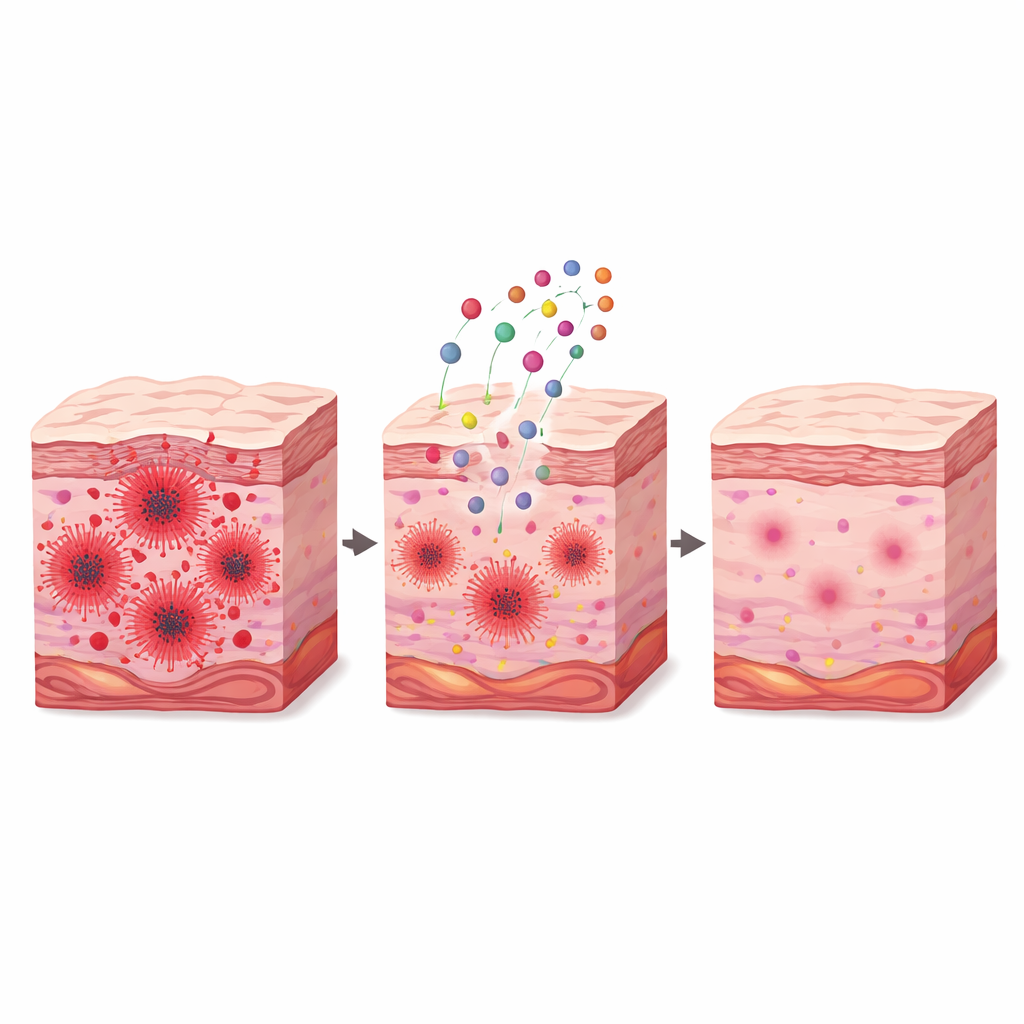
The crucial test came in a rat model where a cream called imiquimod is used to trigger psoriasis-like skin changes. Rats were divided into groups: healthy controls, diseased but untreated animals, animals treated with the regular pomegranate peel extract, and animals treated with the nanoparticles at only half the extract dose. The nanoparticle-treated rats showed much smoother backs with far less redness, scaling, and thickening than those given the crude extract. Inside the skin, levels of damaging oxidative by-products fell back toward normal, while natural defense enzymes rebounded. Key inflammatory messengers that are also elevated in human psoriasis dropped sharply, and an important calming signal, IL‑10, rose again. Under the microscope, skin from nanoparticle-treated rats looked close to normal, with an intact outer layer and reduced scarring and inflammation.
What This Could Mean for Future Skin Care
To a non-specialist, the take-home message is straightforward: by turning pomegranate peel into stable nanoparticles, the researchers delivered its natural protective compounds more deeply and steadily into the skin, achieving stronger benefits with a lower dose than the standard extract. In rats, this approach eased redness, scaling, and tissue damage tied to psoriasis-like inflammation, while appearing safer to skin cells in laboratory tests. Although much more work is needed in different doses, longer studies, and eventually human trials, this nano-sized upgrade of a common fruit waste suggests a promising, plant-based direction for future treatments of chronic inflammatory skin diseases.
Citation: Zid, M.M., Farid, A., Safwat, G. et al. Nanoformulation of pomegranate peel extract enhances anti-psoriatic efficacy in a rat model. Sci Rep 16, 8271 (2026). https://doi.org/10.1038/s41598-026-37019-7
Keywords: psoriasis, pomegranate peel, nanoparticles, anti-inflammatory, skin therapy