Clear Sky Science · en
Sexual dysfunction among Egyptian men with chronic hepatitis C in the post elimination era prevalence and associated factors
Why this matters for everyday life
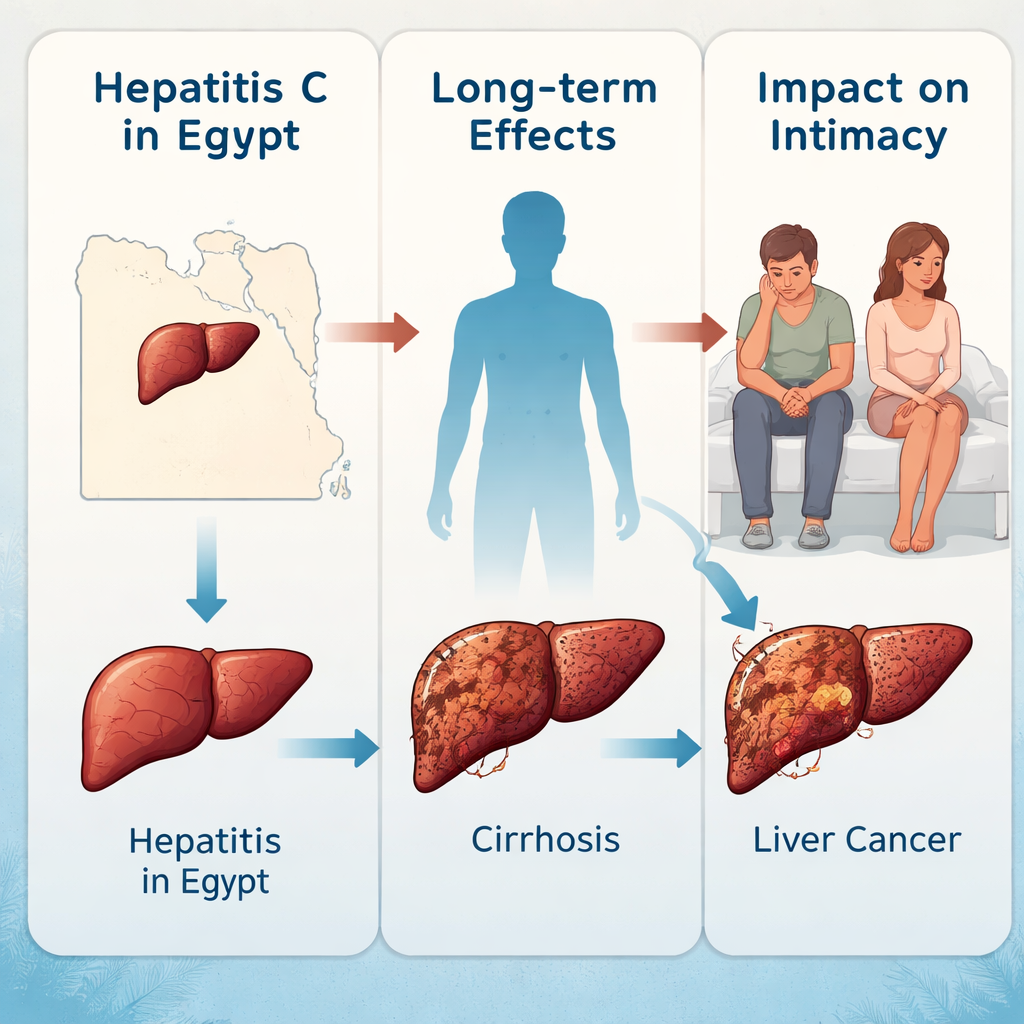
Egypt has become a global success story by dramatically reducing hepatitis C infections. Yet for many men who once lived with this virus, the story does not end when the infection is cured. This study looks at a very private but vital part of health: sexual function. By exploring how long-term liver damage affects men’s sex lives, the research shines a light on quality of life issues that often remain hidden behind the good news of disease elimination.
Life after hepatitis C: more than clearing a virus
The researchers focused on Egyptian men who already had chronic hepatitis C–related liver disease and were being followed in government treatment centers across six regions. Even though Egypt has rolled out powerful new drugs that clear the virus, many patients still carry the scars: liver fibrosis, cirrhosis, and sometimes liver cancer. The team wanted to know how common sexual problems were in this group and which factors made them more likely, so that care could move beyond simply curing the infection to supporting long-term well-being.
What the study did
Over two years, the team interviewed 1,500 married men under age 60 who had chronic hepatitis C–related liver disease and were living with sexually active spouses. They used brief, validated questionnaires designed for everyday clinic use to ask about desire, erections, timing of ejaculation, orgasm, and pain during sex. Doctors also recorded how advanced each man’s liver disease was using a standard staging system (Child–Pugh A, B, or C), as well as age, education, other illnesses such as diabetes, and common medications like beta-blockers, spironolactone, and tramadol.
How common were sexual problems?
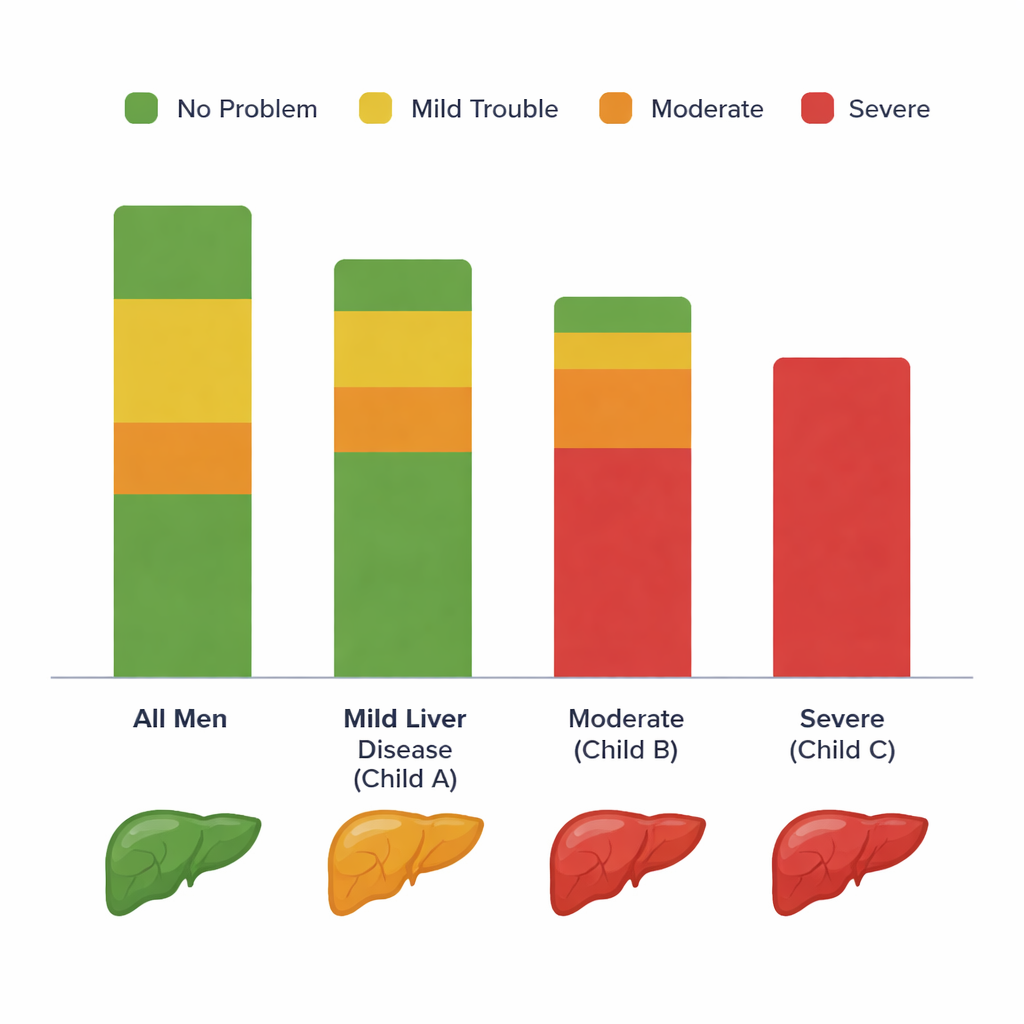
The results were striking: nearly three out of four men reported at least one form of sexual dysfunction. Problems with erections were most frequent, affecting about six in ten men overall, followed by low desire, premature ejaculation, and difficulties reaching orgasm. Pain during intercourse was less common but still affected more than one in ten. These problems intensified sharply as liver disease worsened. Men with the most advanced cirrhosis (Child–Pugh C) almost universally reported trouble in one or more areas, and their erectile problems were far more likely to be severe. Even after taking age into account, men with severe liver damage had much higher levels of sexual difficulties than those with milder disease.
Who was at greatest risk?
Older age, serious liver complications, and other health conditions tended to cluster with poor sexual health. Men aged 50 and older were several times more likely to report loss of desire, erection problems, or premature ejaculation than younger men. Those who had developed liver cancer were at especially high risk of both low desire and premature ejaculation. Diabetes, a common companion of liver disease, strongly increased the chance of erectile problems and early ejaculation. Certain heart and liver medicines also appeared linked to greater sexual difficulties, while patterns involving tramadol use and heavy tea drinking were more complex and may reflect who seeks which treatments rather than simple cause and effect. Men with less education and those doing manual work or living in rural areas also reported more problems, hinting at gaps in health literacy and access to supportive care.
What this means for patients and partners
For many Egyptian men living with the long-term consequences of hepatitis C, sexual difficulties are common, severe, and closely tied to how damaged their livers have become, as well as to other illnesses like diabetes. The authors argue that in the “post-elimination” era, success cannot be measured by virus counts alone. Routine, confidential conversations about sexual health, simple screening tools, counseling, and referral to specialists should become standard parts of liver care, especially for men with advanced disease. In plain terms, beating hepatitis C is not just about saving lives—it is also about helping survivors lead satisfying, intimate lives with their partners.
Citation: Metwally, A.M., Al-Tehewy, M.M., Ibrahim, N.A. et al. Sexual dysfunction among Egyptian men with chronic hepatitis C in the post elimination era prevalence and associated factors. Sci Rep 16, 7381 (2026). https://doi.org/10.1038/s41598-026-37013-z
Keywords: hepatitis C, sexual dysfunction, erectile problems, liver cirrhosis, men's health