Clear Sky Science · en
Influence of different pretreatments on the quality attributes of heat pump dried beetroot slices
Why Drying Beets Matters to Your Kitchen
Beetroots are more than just a colorful side dish. They are packed with vitamins, antioxidants, and natural pigments that can support heart health, exercise performance, and overall wellness. But fresh beets spoil quickly because they contain a lot of water. This study explores how to turn fresh beets into high-quality dried slices that last longer, stay nutritious, and still look and taste appealing—knowledge that could shape future healthy snacks and ingredients on your grocery shelves.
Four Ways to Prepare Beets Before Drying
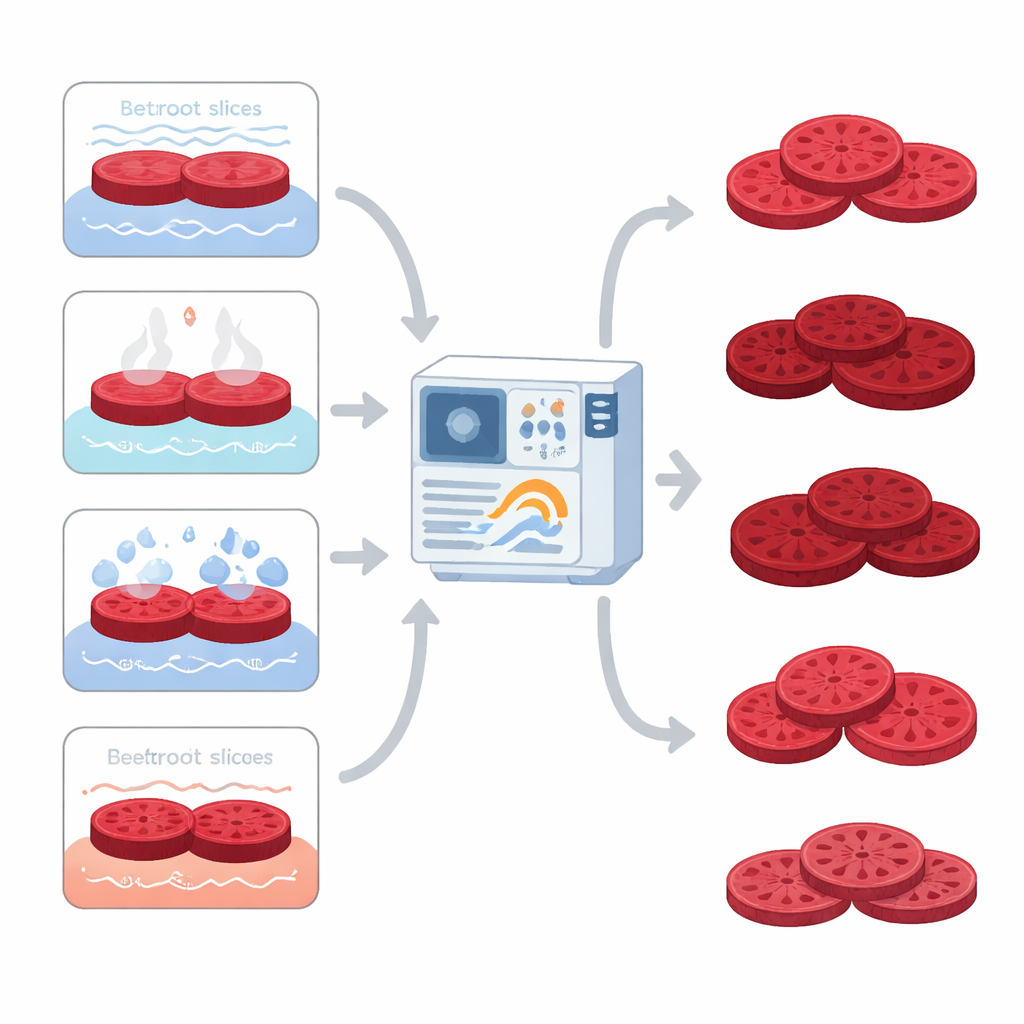
Before drying, the researchers tried four different treatments on thin beetroot slices: ultrasound (sound waves in water), steam blanching (brief exposure to hot steam), freeze–thaw (freezing, then thawing), and osmotic dehydration (soaking in concentrated sugar solution). All slices were then dried using a heat pump dryer, a low‑energy system that removes moisture gently at moderate temperature. The team compared these treatments with untreated slices, looking at drying speed, texture, color, and how well valuable nutrients and antioxidants were preserved.
Speed, Texture, and How the Slices Behave
From a processing point of view, speed and structure matter. Freeze–thaw treatment gave the fastest drying, cutting drying time by about one‑third. When water in the beet slices froze into ice and later melted, it left behind tiny channels that helped moisture escape quickly and also allowed the dried slices to soak water back up well during rehydration. Steam blanching and ultrasound also shortened drying time, though not as much. However, steam‑blanched slices ended up the hardest, most shrunken, and most compact, while ultrasound‑treated slices were softer, less dense, and kept a more open, porous structure. Slices pre‑soaked in sugar solution shrank a lot and rehydrated poorly, suggesting that this treatment damaged cells in ways that hindered their ability to bounce back.
Color and the Look of the Beet Slices
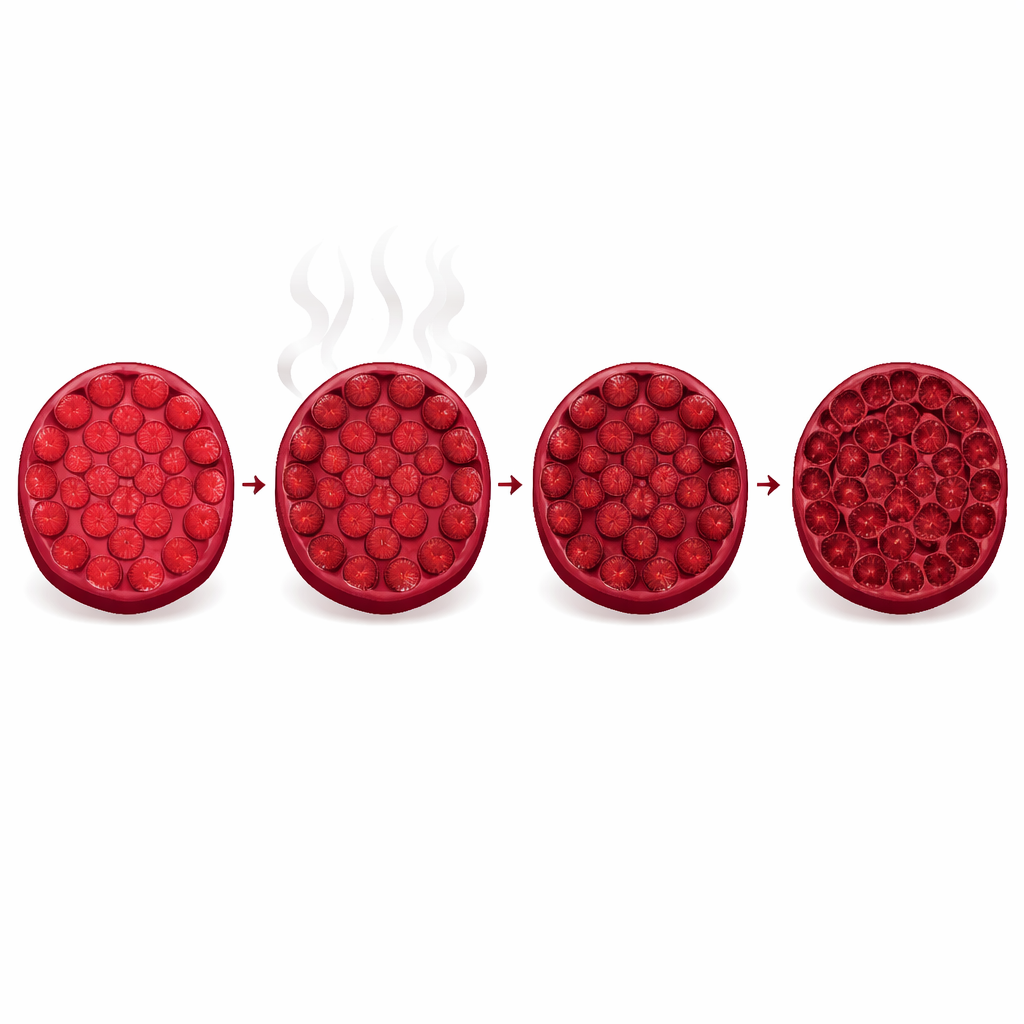
Color is crucial because it is the first thing consumers notice. Fresh beets owe their deep red and yellow tones to natural pigments called betalains. Drying always darkened the slices somewhat, but the way the beets were pretreated made a clear difference. Ultrasound‑treated slices stood out with the brightest, most vivid red color, which makes them especially attractive for snack products or as natural color flakes. Freeze–thaw and steam blanching caused more browning than ultrasound but still maintained an acceptable appearance. In contrast, the sugar‑soaked slices showed the largest color change, likely because pigments leaked into the sugary liquid before drying, leaving the slices duller. Microscopic images confirmed that ultrasound best preserved the original cellular structure, while steam blanching and osmotic dehydration led to more collapsed, tightly packed tissues.
Vitamins, Plant Compounds, and Antioxidant Power
Beneath the surface color, the team measured several health‑linked compounds. These included vitamin C, phenolic substances, flavonoids, and the betalain pigments, all of which help neutralize harmful free radicals in the body. Surprisingly, the untreated slices kept the most betalain pigments overall, showing that any extra handling can cause some pigment loss. Yet steam blanching stood out for preserving more of these pigments than the other pretreatments and nearly doubling the vitamin C content compared with untreated dried beets. Steam‑blanched and ultrasound‑treated slices also retained more phenolic compounds than freeze–thaw or sugar‑soaked ones. When the researchers tested antioxidant capacity, all pretreatments reduced it to some degree, but steam blanching came closest to matching the untreated slices, suggesting a better balance between structural changes and nutrient retention.
What This Means for Future Beet Snacks
Overall, the study shows that how you prepare beets before drying strongly shapes the final product. Freeze–thaw is best for rapid drying and easy rehydration, ultrasound gives the most appealing bright red color and gentlest structure, and steam blanching offers the best protection of vitamin C, helpful plant compounds, and antioxidant activity, even though it makes the slices denser and harder. Among the options tested, steam blanching emerges as a particularly promising step for industrial producers who want long‑lasting, nutritious, and stable dried beet slices. In practical terms, that could translate into future beet snacks and ingredients that keep more of the fresh vegetable’s health benefits while remaining convenient to store, ship, and use.
Citation: Liu, Y., Li, C., Ren, A. et al. Influence of different pretreatments on the quality attributes of heat pump dried beetroot slices. Sci Rep 16, 9744 (2026). https://doi.org/10.1038/s41598-026-37005-z
Keywords: beetroot drying, food pretreatment, steam blanching, antioxidant retention, healthy vegetable snacks