Clear Sky Science · en
Comparison of plyometric repeated sprint and plyometric aerobic training on physical performance in youth soccer players
Why this matters for young soccer players
Parents, coaches, and young athletes are always looking for smarter ways to train without spending extra hours on the field. This study asked a simple, practical question: if you already do explosive jump training, is it better to pair it with short all-out sprints or with hard running intervals to boost speed, stamina, and power in teenage soccer players? The answer helps coaches design efficient sessions that fit into busy practice schedules without sacrificing performance gains.
Two ways to train hard
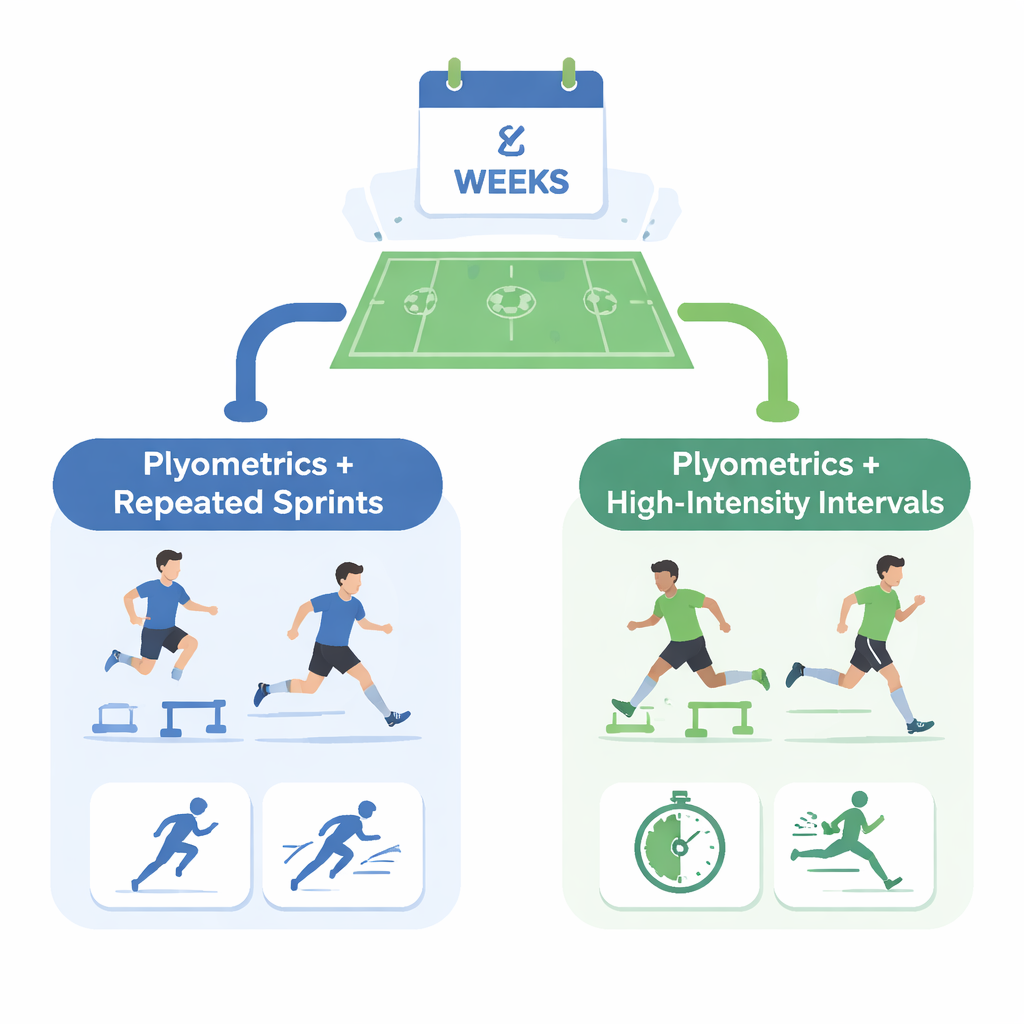
Modern soccer demands frequent bursts of high speed, rapid changes of direction, jumps for headers, and the stamina to repeat these efforts throughout a match. The researchers focused on two popular conditioning methods: repeated sprint sets (very fast, short runs with brief rests) and high-intensity interval training, or HIIT (hard runs at near-maximal speed with structured rest periods). Both were combined with plyometric exercises—explosive jumps and bounds that train the muscles and tendons to store and release energy quickly, like a spring. The key question was whether one of these combinations would be clearly better for highly trained 14–15-year-old boys on a national youth team.
How the study was set up
Twenty-nine male players were randomly split into two groups. One group did plyometric exercises plus repeated sprint sets (PLYO-RSS). The other did the same plyometric work plus high-intensity interval running (PLYO-HIIT). Each combined session lasted about 20 minutes and replaced part of their normal soccer drills, twice a week, over eight weeks during the pre-season. Importantly, both groups continued their regular team practices and weekend matches, so the new routines reflected a realistic training environment rather than a lab-only program.
What the scientists measured
Before and after the eight-week period, the players performed a battery of field tests. These included vertical jumps and a five-jump test to gauge leg power, 10- and 30-meter sprints to assess acceleration and top speed, and a shuttle run test to estimate maximal aerobic speed and VO2max, a key marker of endurance. The researchers also looked at how well the players handled repeated sprints, recording total sprint time, the best individual sprint, and how much their performance dropped off with fatigue. Heart rate, blood lactate, and perceived effort were monitored to understand how demanding the sessions were internally, not just in terms of stopwatch times.
What they found on the field
Both training programs worked. Across the whole group, players jumped higher, sprinted slightly faster over 10 and 30 meters, and improved their ability to repeat sprints with less total time. Their aerobic capacity also rose, with higher maximal aerobic speeds and estimated VO2max after eight weeks. Statistically, there were strong improvements over time, but almost no meaningful differences between the two groups. In other words, pairing plyometrics with repeated sprints or with HIIT produced very similar gains in leg power, speed, and stamina. The only small divergence was in maximum heart rate, which rose slightly more in the repeated-sprint group, but this did not translate into clear performance advantages.
What this means for coaches and parents
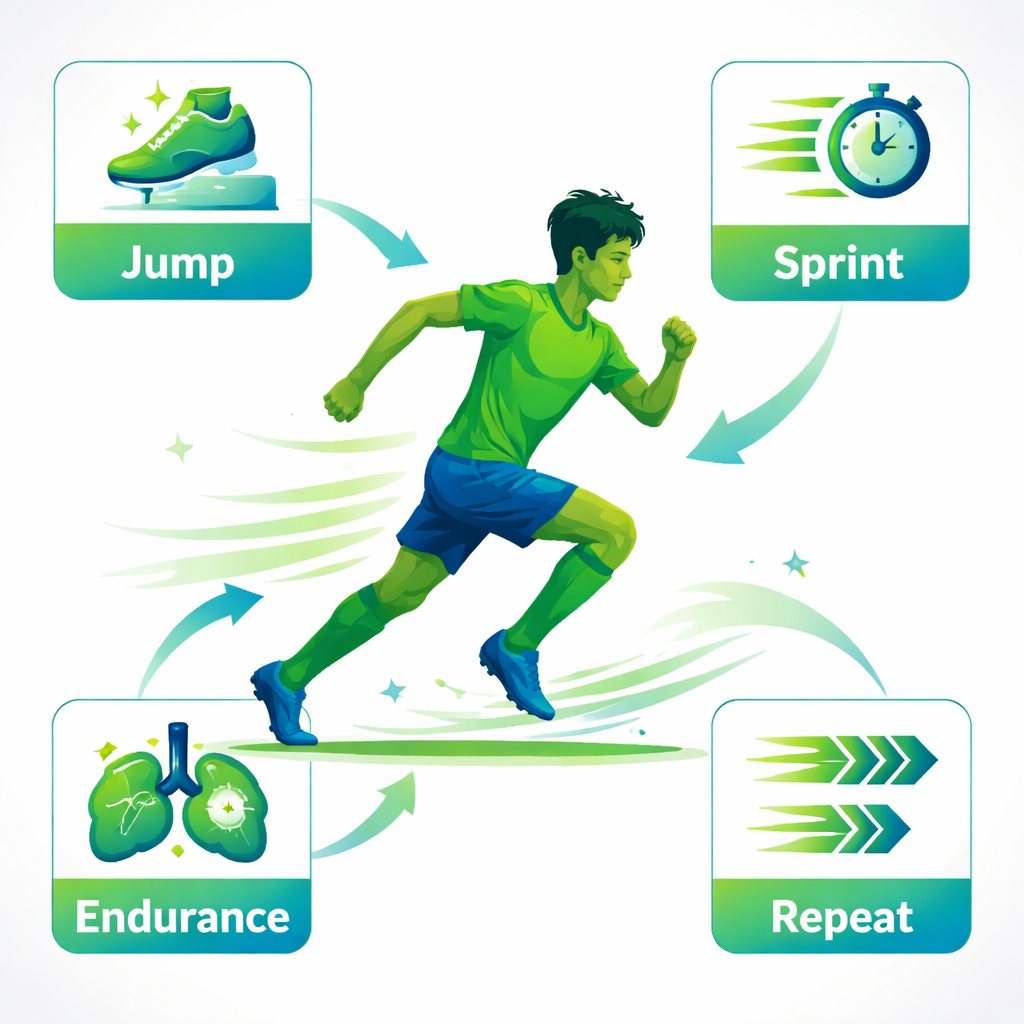
For highly trained youth soccer players, this study suggests there is no single “magic” choice between plyometrics plus repeated sprints or plyometrics plus HIIT. Both approaches can boost jumping ability, straight-line speed, aerobic fitness, and repeated-sprint performance when built into training twice a week over an eight-week block. That gives coaches welcome flexibility: they can select the option that best fits the season, field space, and schedule—using more HIIT when focusing on overall endurance and more repeated sprints when they want to mimic the stop-and-go demands of real matches. For families and athletes, the message is reassuring: well-planned, short, intense sessions that combine jumping and hard running can meaningfully improve performance without requiring extra training days.
Citation: Selmi, M.A., Hammami, R., Ceylan, H.İ. et al. Comparison of plyometric repeated sprint and plyometric aerobic training on physical performance in youth soccer players. Sci Rep 16, 6982 (2026). https://doi.org/10.1038/s41598-026-37000-4
Keywords: youth soccer training, plyometric exercise, high-intensity interval training, repeated sprint ability, aerobic fitness