Clear Sky Science · en
Metabolomic insights into residual Carrot biomass from a bioprospecting approach across Colombian microclimates
Turning Ugly Carrots into Hidden Treasure
Every year, mountains of perfectly edible carrots are thrown away simply because they are cracked, oddly shaped, or blemished. Instead of rotting in landfills and adding to greenhouse gas emissions, this "ugly" produce could be a quiet gold mine of natural chemicals useful for food, medicine, and agriculture. This study looks inside discarded carrot roots from Colombian farms to see how local climate shapes their internal chemistry—and how that, in turn, could fuel a more circular, less wasteful food system.
Why So Many Carrots Go to Waste
Carrots are among the world’s most popular vegetables and a key source of jobs and income in Colombia. Yet roughly 30% of the global carrot harvest never reaches the dinner table. Carrots can be rejected for being too small, oddly shaped, cracked, or marked by disease, even though their nutritional value is largely intact. Farmers sometimes feed these leftovers to animals or compost them, but tons are still burned or dumped, which pollutes air and water and represents a financial loss. Finding higher-value uses for this surplus is one way to boost food security without expanding farmland.
From Farm Fields to Chemical Fingerprints
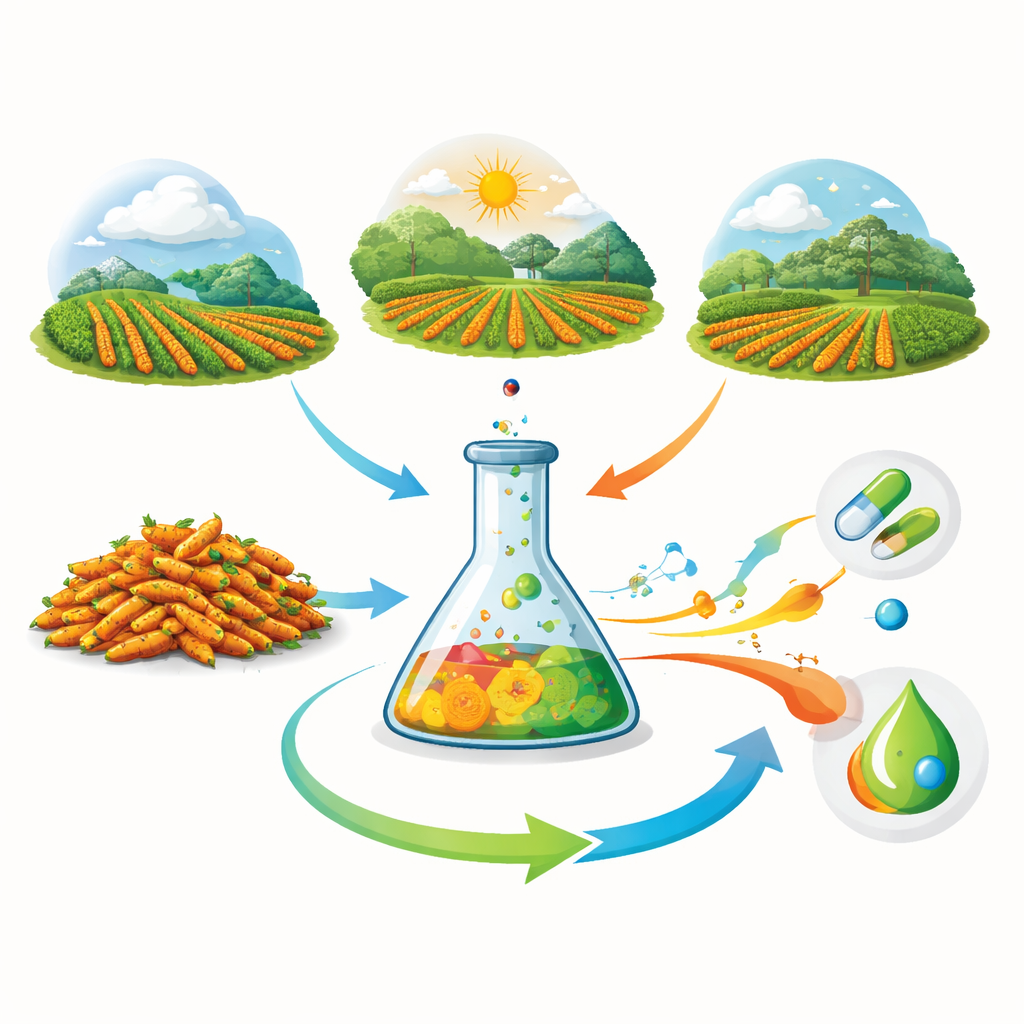
To explore this hidden value, the researchers collected four types of carrots—healthy, cracked, deformed, and disease-marked—from three nearby farming areas in the Colombian Andes: Rionegro, El Santuario, and Marinilla. Although close together, these sites differ in altitude, rainfall, wind, cloud cover, and sunshine. The team froze, dried, and ground the carrot samples, then used powerful chromatography and mass spectrometry tools to generate detailed “metabolic fingerprints”—profiles of dozens of small molecules inside each sample. They then applied advanced statistics to see which factors explained the biggest differences in chemical makeup.
Climate Matters More Than Shape
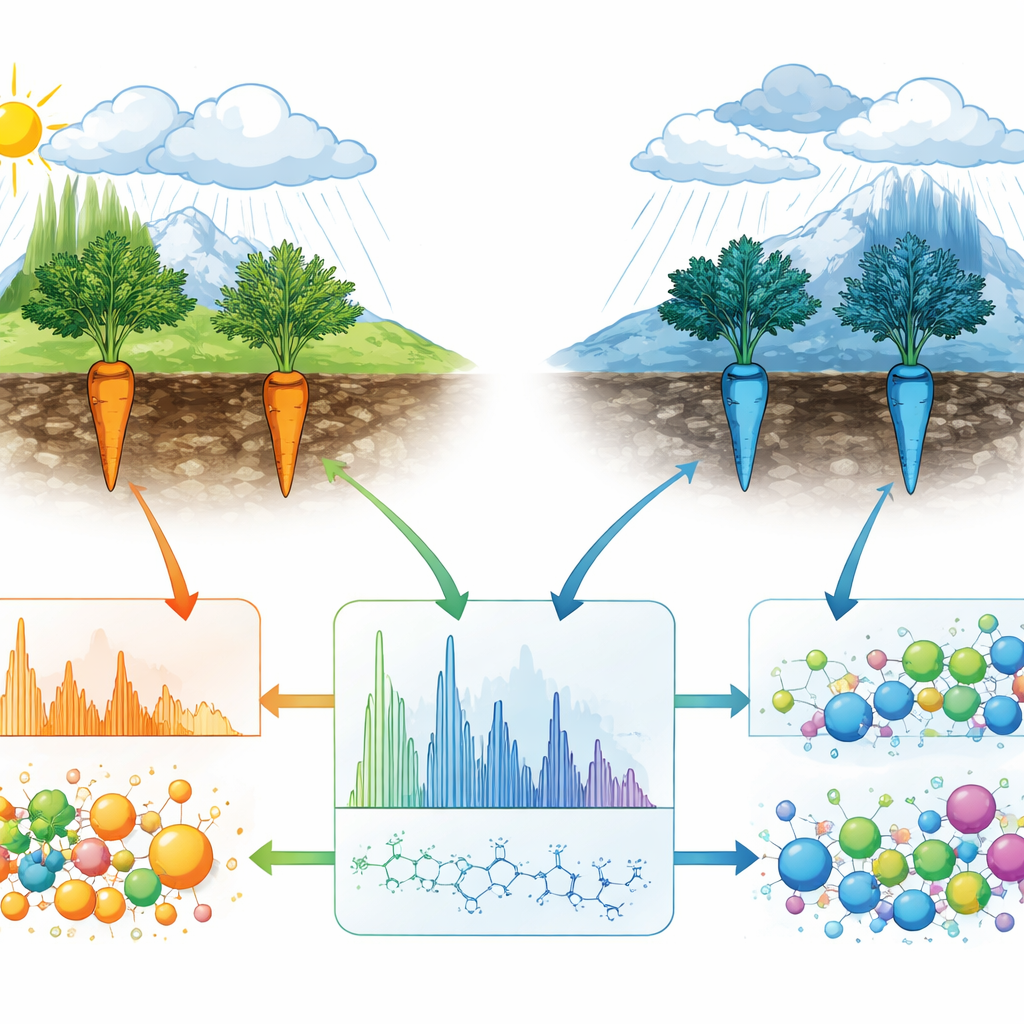
Surprisingly, the outer appearance of the carrots—whether cracked, twisted, or spotted—hardly changed their internal chemistry. Within each location, the different types of residual carrots were metabolically quite similar. Instead, what stood out was where the carrots were grown. The metabolite patterns clearly split into two clusters: one combining Rionegro and El Santuario, which share warmer and sunnier conditions at slightly lower altitudes, and another formed by Marinilla, which sits higher and is cooler, wetter, and windier. In other words, microclimate, not cosmetic defects, was the main driver of chemical differences in this “waste” biomass.
Different Hills, Different Useful Molecules
The warmer sites (Rionegro and El Santuario) were richer in molecules such as nuciferine and cryptotanshinone, compounds previously studied for anti-inflammatory, antioxidant, and potential anticancer and heart-protective effects. These carrot residues could therefore be promising sources for future nutraceuticals or drug ingredients. By contrast, carrots from the cooler, wetter Marinilla site showed greater overall chemical variety and higher levels of compounds linked to plant defense and stress tolerance, including certain flavonoids, alkaloids, and phenolamines. Some of these have antimicrobial, antioxidant, or neuroprotective potential, while others, like microcystin LW, are toxins that flag the need for careful monitoring of irrigation water and safety tests before any product development.
From Food Waste to Circular Farming
Beyond individual molecules, pathway analyses showed that many of the detected chemicals are tied to fatty acid and carotenoid metabolism—the same networks that produce health-relevant omega fatty acids and vitamin A–related pigments. The findings suggest that carrot residues from different microclimates could be tailored to different uses: some batches might be better suited for natural colorants or functional food ingredients, while others might feed into biorefineries for biofuels or serve as leads for new agrochemicals or medicines. However, the authors stress that their identifications still need to be confirmed and quantified with reference standards, and that safety and bioactivity must be tested in detail before any commercial rollout.
What This Means for Everyday Life
For non-specialists, the key message is that the “ugly” carrots rejected by supermarkets are not trash; they are chemically rich resources shaped by local climate. By understanding how altitude, rain, sun, and temperature influence the natural compounds in these roots, farmers and industries can channel waste streams into targeted products—turning loss into value while cutting pollution. This work offers a blueprint for using advanced chemistry tools to guide smarter, locality-aware reuse of agricultural leftovers, helping build a more sustainable, circular food economy where even misshapen carrots have an important role to play.
Citation: Martínez-Saldarriaga, J., Gallego, A., López-Hernández, F. et al. Metabolomic insights into residual Carrot biomass from a bioprospecting approach across Colombian microclimates. Sci Rep 16, 8033 (2026). https://doi.org/10.1038/s41598-026-36993-2
Keywords: carrot waste, circular economy, microclimate, bioactive metabolites, food biorefinery