Clear Sky Science · en
Experimental and archaeological assessment of use-wear persistence on burnt flint from Tinshemet Cave
Fire, Stone Tools, and Traces of Ancient Life
Archaeologists often rely on tiny scratches and polishes on stone tools to reconstruct how our ancestors butchered animals, worked wood, or ground pigments. But at many prehistoric sites, including Tinshemet Cave in Israel, large numbers of stone tools have been exposed to fire. For decades, researchers assumed that heating destroyed the microscopic wear marks that reveal how these tools were used, and so they set burnt pieces aside. This study asks a simple but important question: do those traces really vanish in the flames, or can fire-altered tools still speak for the people who used them?
Why Burnt Tools Matter
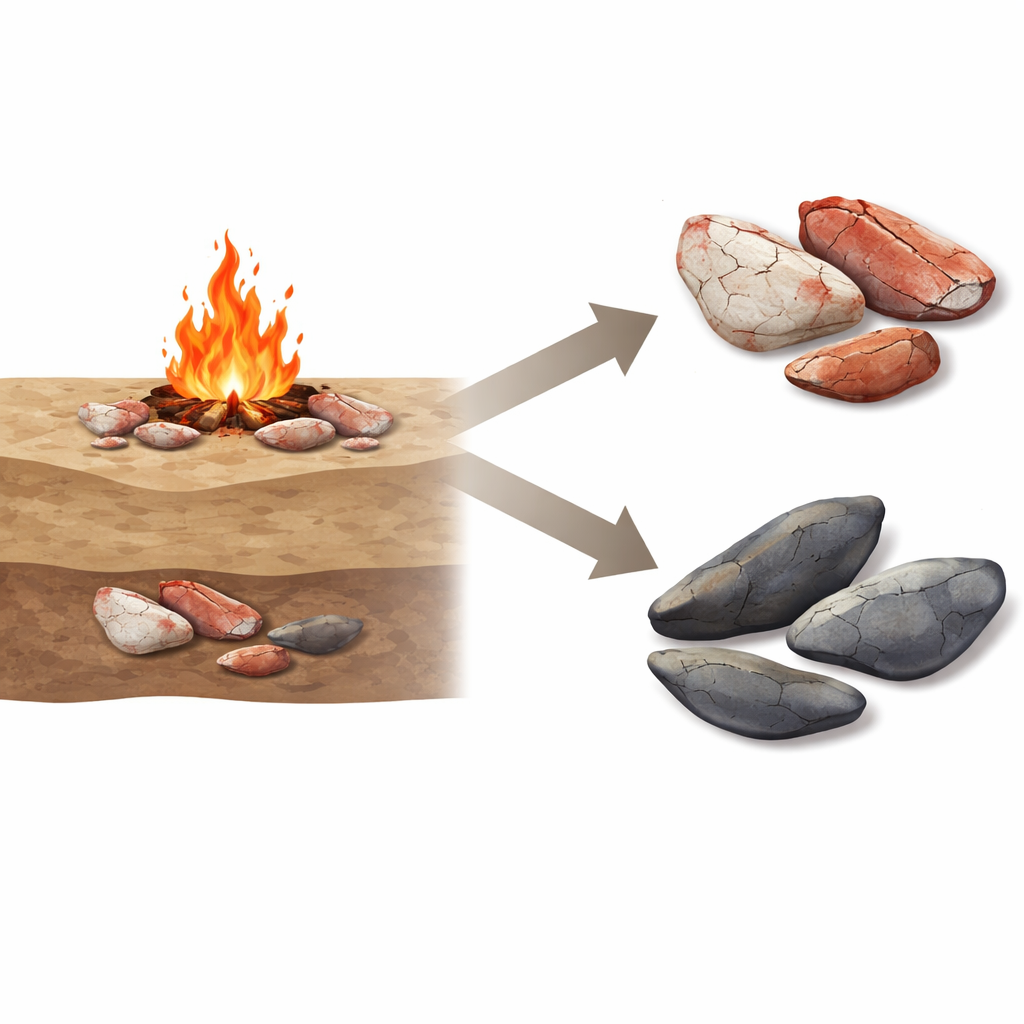
At Tinshemet Cave, dating to roughly 110,000–90,000 years ago, fire was a constant presence. Layers of ash, charcoal, and burned bone show that ancient groups used flames intensively, and nearly 40% of the stone tools (made from local Mishash flint) display signs of heating such as reddening, whitening, and cracking. If all of these pieces are excluded from functional studies, archaeologists lose a large part of the behavioral record—especially activities carried out close to the hearth, like butchering, bone processing, woodworking, or grinding ochre. The authors set out to test whether microscopic use-wear on these heated tools is really destroyed, or whether it is transformed in more subtle, measurable ways that can still be interpreted.
Recreating Ancient Fires in the Present
To tackle this, the team created a controlled experiment with freshly made flint flakes. Volunteers used these flakes to saw dried wood, cut meat, work bone, and grind ochre—activities chosen to mimic common prehistoric tasks. After use, the working edges carried distinct microscopic polishes and textures. The researchers then heated the flakes in a laboratory oven and in open fires built outdoors, carefully tracking temperatures. Some unused flakes were buried at different depths beneath the fire to test how much protection even a very thin sediment layer provides. Before and after heating, the team recorded the three-dimensional surface of the tool edges using a high-resolution confocal microscope and analyzed the resulting "landscapes" of peaks and valleys with advanced surface metrology.
What Heat Really Does to Flint Surfaces
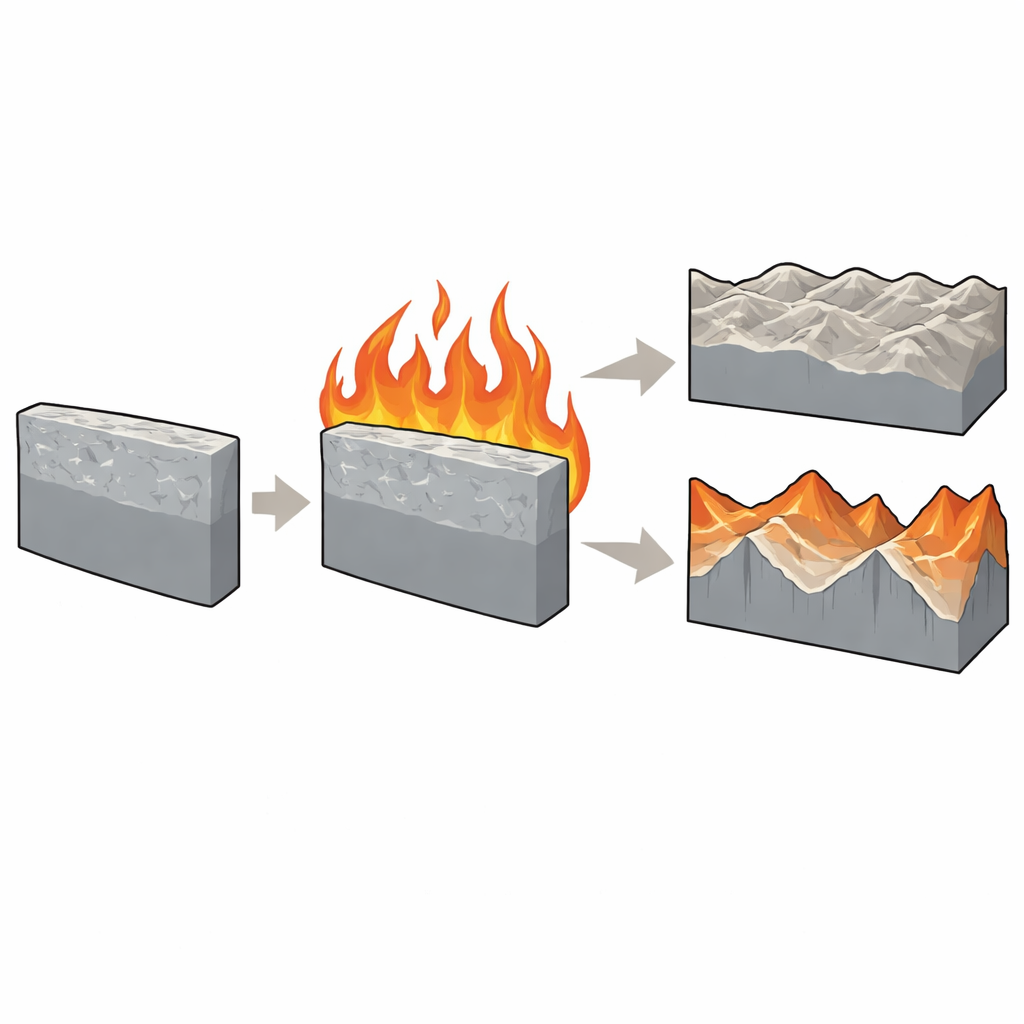
The measurements reveal that heating does change stone surfaces, but not in the way many had feared. Overall, the vertical relief of the surface—how deep the pits are and how tall the peaks become—increased after heating, consistent with the growth of tiny cracks and chips. In technical terms, measures related to maximum depth and total height grew, and the shapes of height distributions shifted toward sharper extremes. Yet the spatial arrangement of the texture—its overall pattern and direction—remained remarkably stable. Parameters commonly used in use-wear studies to distinguish whether a tool cut meat, scraped bone, worked wood, or ground ochre stayed largely unchanged or changed in predictable ways. Importantly, the way heat modified surfaces depended somewhat on what the tool had been used on: flakes used on ochre and butchery residues tended to roughen more than those used on bone or wood, but they still retained recognizable signatures.
Clues from the Cave Itself
The researchers then turned to real archaeological flakes from Tinshemet Cave that show visible signs of burning. By comparing eight carefully chosen surface parameters on these ancient pieces to their experimental dataset, they could ask whether the archaeological flakes behaved like tools used on specific materials before being heated. The answer was encouraging. One burnt flake from Tinshemet matched most closely the pattern seen on experimentally used butchery tools, while another aligned best with flakes used to work ochre. Both fell squarely within the range of values observed in the heated experimental series, indicating that despite their exposure to fire, their microscopic wear still carried a discernible fingerprint of how they had been used. The burial experiments added another layer of insight: flakes buried less than a centimeter below the surface showed no visible or microscopic fire damage, confirming that even a very thin sediment cover can shield stone tools from intense heat.
What This Means for Reading the Past
For non-specialists, the key takeaway is that burnt stone tools are not just damaged leftovers; many of them still preserve readable traces of ancient behavior. Fire tends to exaggerate the tiny hills and valleys on a flint surface rather than wiping them away, while leaving the overall pattern of wear intact. That means researchers can, with care, still infer whether a burnt tool from a hearth-rich site like Tinshemet Cave was used to slice flesh, saw bone, work wood, or grind pigment. Excluding all heated pieces from study would unnecessarily erase a major part of the story of how people lived around their fires. This work shows that by understanding exactly how heat reshapes microscopic wear, archaeologists can bring those long-silent, fire-scarred tools back into the conversation about our distant past.
Citation: Rodriguez, A., Solodenko, N., Haim, S.B. et al. Experimental and archaeological assessment of use-wear persistence on burnt flint from Tinshemet Cave. Sci Rep 16, 8532 (2026). https://doi.org/10.1038/s41598-026-36985-2
Keywords: prehistoric fire use, stone tool wear, burnt flint, microscopic surface analysis, Tinshemet Cave