Clear Sky Science · en
Mindful eating may help explain the association between psychological difficulties and food addiction in adolescents with obesity
Why Paying Attention While Eating Matters
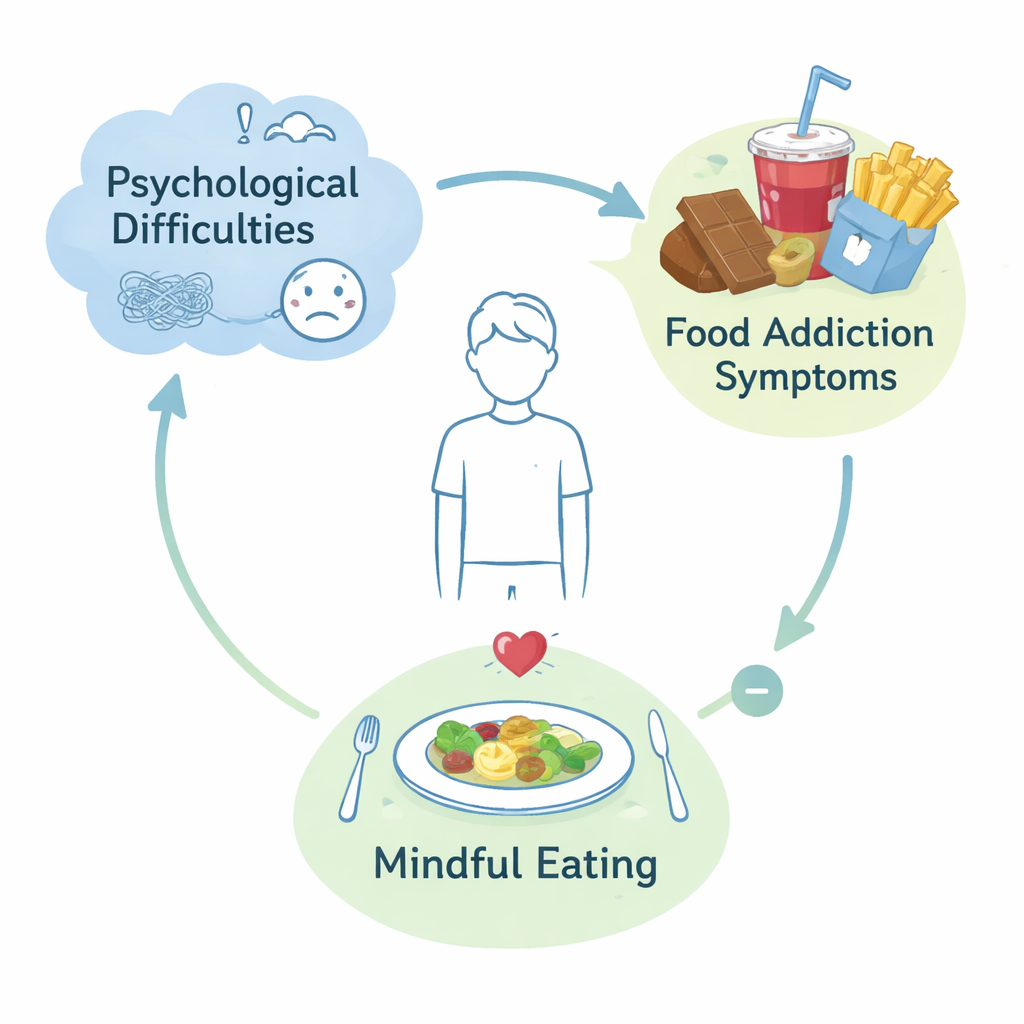
Many parents worry when a teenager seems glued to snacks or sugary drinks, especially if they are already struggling with their weight or mood. This study looks at a simple but powerful idea: the way young people pay attention while they eat—known as "mindful eating"—might help explain why emotional and behavioral difficulties are linked to addiction-like responses to food. Understanding this connection could point toward practical strategies families and clinicians can use to support teens with obesity.
Teens, Tough Feelings, and Trouble With Food
The researchers focused on adolescents with obesity who were being seen at a pediatric clinic in Türkiye. They were interested in three things: how many addiction-like symptoms teens showed around highly tempting foods, how many emotional and behavioral difficulties they were experiencing, and how mindful they were when they ate. Food addiction in this context refers to patterns like strong cravings, feeling out of control around certain foods, and continuing to overeat despite negative consequences—similar to what is seen in substance addictions, but applied to items like sweets, fast food, and sugary drinks.
What It Means to Eat With Awareness
Mindful eating is different from dieting or simply telling a teen to "eat less." It involves paying calm, non-judgmental attention to the experience of eating: noticing hunger and fullness, savoring flavors and textures, and being aware of emotions or outside triggers that may drive eating. Previous work has shown that people with obesity tend to score lower on mindful eating, and that stress, anxiety, and low mood can make it harder to eat in this aware and balanced way. The team wanted to know whether teens with more psychological difficulties were also less mindful when eating, and whether this, in turn, related to more signs of food addiction.
How the Study Was Done
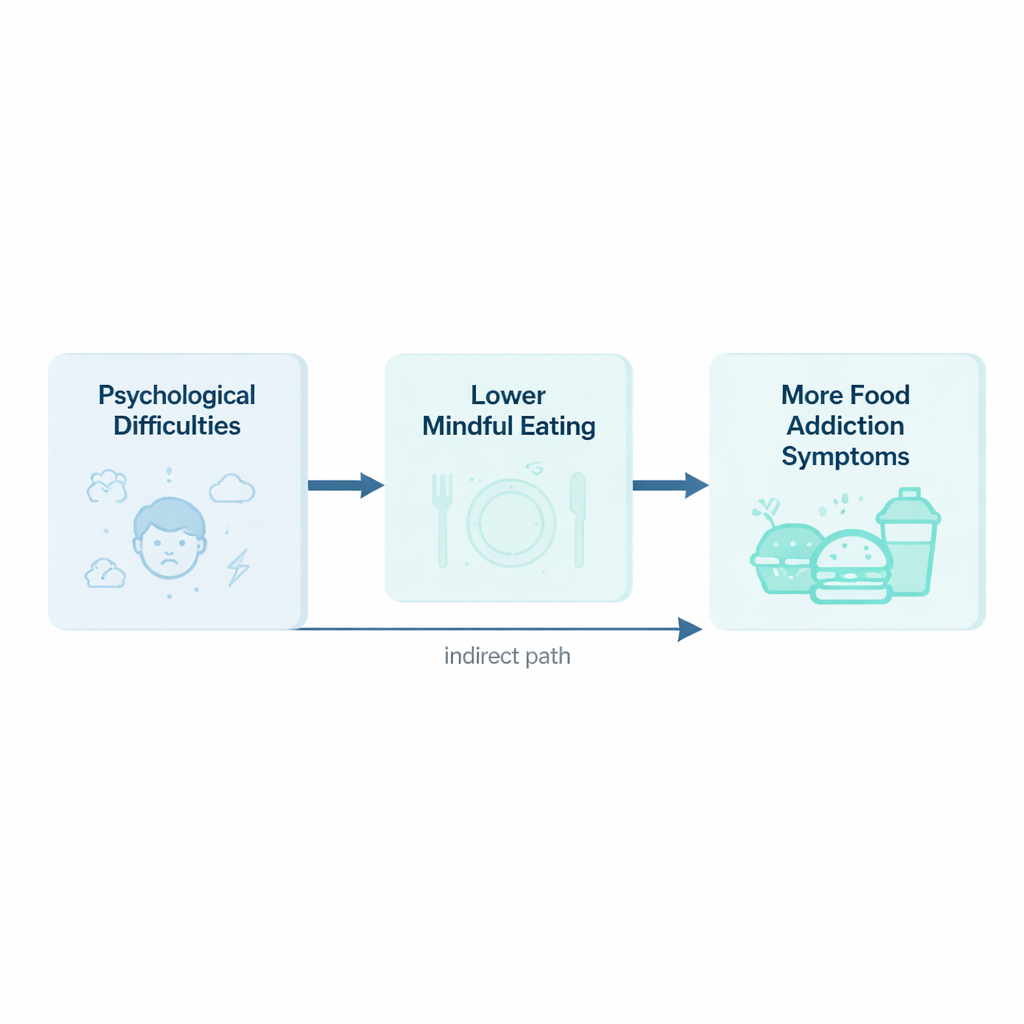
Forty-eight adolescents aged 11 to 18, all with obesity, completed a questionnaire about addictive-like eating focused on highly palatable foods. They also filled out a standard mindful eating questionnaire, while their parents reported on the teens’ emotional and behavioral difficulties using a widely used screening tool. The researchers then looked at how these three sets of scores related to each other. They used a statistical approach that tests whether one factor—in this case mindful eating—can help explain part of the link between two others: psychological difficulties and food addiction symptoms.
Links Between Feelings, Awareness, and Cravings
The results painted a clear and concerning picture. Teens with more psychological difficulties tended to report more symptoms of food addiction. They also tended to report lower levels of mindful eating. In turn, lower mindful eating was strongly linked to higher food addiction symptoms. When the researchers put all three pieces into a single model, they found that psychological difficulties were related to food addiction both directly and indirectly. The indirect pathway ran through mindful eating: teens with more difficulties reported less mindful eating, and this lower mindfulness was associated with more addiction-like responses to food. This pattern is called "partial mediation," meaning mindful eating explains part—but not all—of the connection.
What This Could Mean for Families and Clinicians
Because this was a relatively small, one-time snapshot of adolescents from a single urban clinic, it cannot prove that psychological problems cause food addiction, or that mindful eating training will definitely fix it. However, the pattern supports the idea that helping teens tune in to their bodies and feelings at mealtimes could be a useful piece of the puzzle. Mindful eating exercises might complement other approaches that address mood, stress, and family dynamics. For parents, the takeaway is that a teen’s struggles with overeating may not simply reflect “lack of willpower,” but a complex interaction between emotional challenges and how they relate to food—an interaction that mindful eating may help gently reshape over time.
Citation: İçen, S., Karaca Cengiz, Ş.N. & Cengiz, M. Mindful eating may help explain the association between psychological difficulties and food addiction in adolescents with obesity. Sci Rep 16, 5967 (2026). https://doi.org/10.1038/s41598-026-36967-4
Keywords: mindful eating, adolescent obesity, food addiction, emotional difficulties, eating behavior