Clear Sky Science · en
Polianthes tuberosa L. Extract suppresses melanogenesis through concurrent Inhibition of cAMP/CREB and MAPK signaling pathways
Why a flower could matter for sun spots
Many people worry about dark spots, uneven skin tone, and skin aging caused by the sun. This study looks at an extract made from the fragrant tuberose flower (Polianthes tuberosa L.) and asks a simple question with big cosmetic implications: can this natural ingredient safely reduce UV‑induced darkening and help protect the skin’s structure? Using a mix of modern chemistry, cell biology, and large‑scale genetic and protein analysis, the researchers show how tuberose extract works on several fronts at once to calm inflammation, dial down pigment production, and limit UV‑related damage.
From perfume flower to lab-tested ingredient
Tuberose is best known as an ornamental plant used in perfumery, but its petals are rich in polyphenols and flavonoids—plant compounds famous for antioxidant and anti‑inflammatory effects. The team first optimized how to extract these molecules using warm water and ultrasound, finding that a specific ratio of flower to water, a moderate temperature (50 °C), and a 90‑minute treatment gave the highest yield without overheating fragile ingredients. Advanced chemical analysis (UPLC‑HRMS) then revealed almost 1,500 distinct compounds, with flavonoids and fatty acids especially abundant. These families of molecules are already linked to skin protection, giving a plausible chemical basis for any whitening and anti‑aging effects.
How the extract talks to skin cells
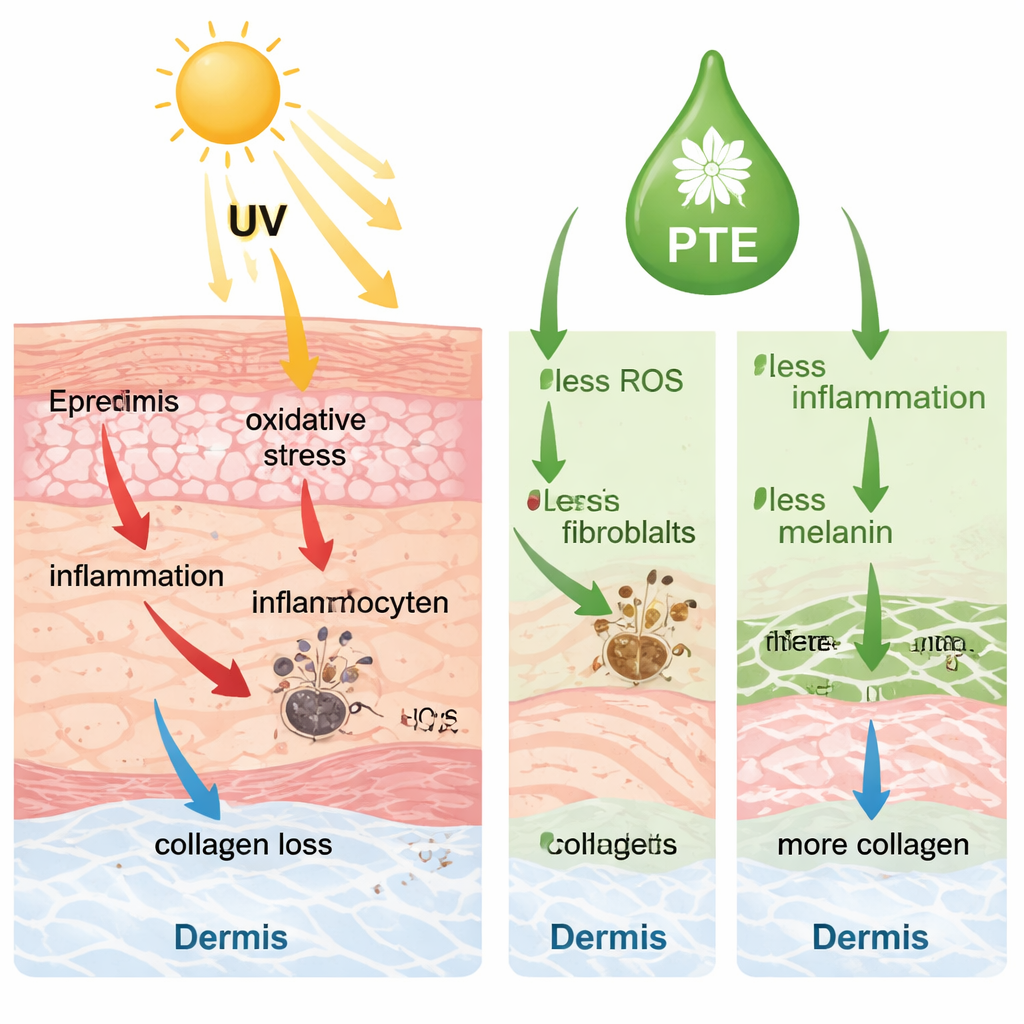
To see how the extract acts on living cells, the researchers studied three key players in skin: keratinocytes (surface cells), fibroblasts (collagen‑making cells), and melanocytes (pigment‑forming cells). In UV‑exposed keratinocytes, tuberose extract sharply reduced harmful reactive oxygen species (ROS) and lowered the release of inflammatory messengers such as IL‑1α, IL‑6, PGE2, and TNF‑α. It also diminished production of paracrine “darkening signals” like α‑MSH, endothelin‑1, and bFGF that normally tell melanocytes to make more pigment. In fibroblasts and keratinocytes damaged by UVA or UVB, the extract helped restore levels of several types of collagen that form the skin’s support structure and the junction between the surface and deeper layers, hinting at a role in both firmness and long‑lasting tone evenness.
Switching off the pigment engine inside melanocytes
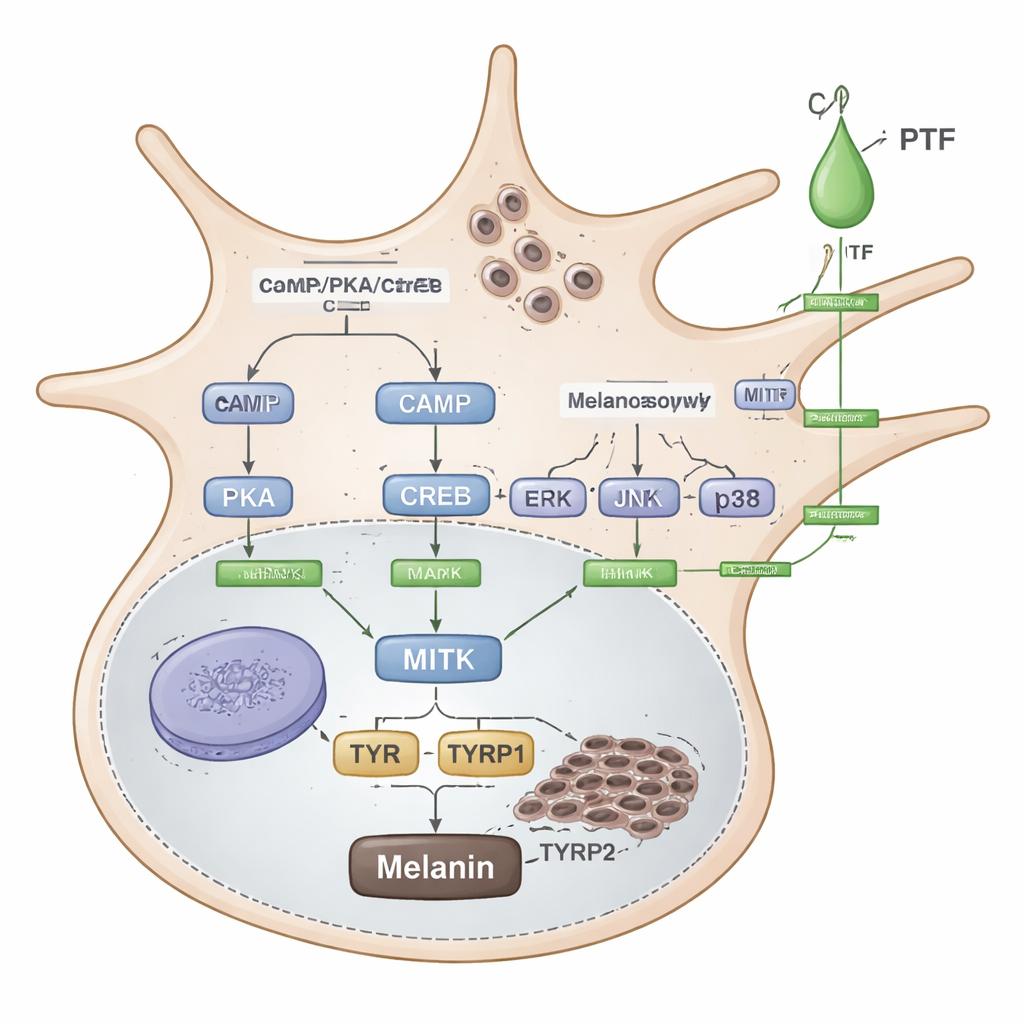
The heart of the study focuses on melanocytes from a mouse melanoma line (B16F10) exposed to UVB. At doses that did not harm cell survival, tuberose extract significantly reduced both total melanin and the activity of tyrosinase, the key pigment‑producing enzyme. To understand why, the authors used transcriptomics (measuring thousands of genes at once) and proteomics (measuring proteins) and found that two main signaling routes were being dampened: the cAMP/PKA/CREB pathway and the MAPK pathway (ERK, JNK, p38). These pathways normally converge on MITF, a master switch that turns on pigment genes. With the extract present, MITF levels dropped markedly, and its target enzymes—tyrosinase, TYRP1, and TYRP2—were all reduced, explaining the fall in melanin production.
A multitasking defender against light and inflammation
Beyond these core pigment controls, the team used network pharmacology—large database‑driven mapping of plant compounds and human targets—to show that key extract components are predicted to influence antioxidant and inflammatory hubs such as NFE2L2, SOD1, IL‑6, and NF‑κB. Experiments supported this: tuberose extract cut oxidative stress, blunted inflammatory signaling, and countered UV‑driven collagen breakdown. By helping to preserve the basement membrane (the thin structure anchoring the epidermis), the extract may reduce the chances that pigment‑making cells or pigment granules drift abnormally, a process thought to contribute to stubborn dark patches with age and repeated sun exposure.
What this means for everyday skin care
For non‑specialists, the message is that tuberose flower extract does not act as a harsh bleach on a single target. Instead, it behaves like a careful traffic controller inside the skin. It calms the oxidative and inflammatory surge after UV exposure, quiets the chemical “messages” that tell pigment cells to overreact, and turns down the central pigment switch (MITF) and its machinery from the inside. At the same time, it helps maintain collagen and the skin’s structural scaffold. Together, these actions suggest tuberose extract could become a promising natural ingredient for brightening and evening skin tone while supporting barrier health—offering a gentler alternative to classic lightening agents that can irritate or damage skin when overused.
Citation: Li, Q., Zhu, H., Jiang, T. et al. Polianthes tuberosa L. Extract suppresses melanogenesis through concurrent Inhibition of cAMP/CREB and MAPK signaling pathways. Sci Rep 16, 6137 (2026). https://doi.org/10.1038/s41598-026-36962-9
Keywords: skin pigmentation, natural whitening agents, tuberose extract, UV-induced skin damage, melanogenesis