Clear Sky Science · en
Patient profiles, incidence and trends of lung cancer in Ethiopia from 2012 to 2023 using a cancer registry
Why this study matters for everyday life
Lung cancer is often seen as a disease of heavy smokers in wealthy countries, but this study shows a different and important picture from Addis Ababa, Ethiopia. By carefully tracking all newly diagnosed lung cancer cases over more than a decade, the researchers reveal who is getting sick, how often, and at what stage the disease is found. Their findings matter not only for doctors and policymakers, but also for families who may think lung cancer is rare or only a smoker’s problem.
Taking a city-wide look at lung cancer
Instead of focusing on a single hospital, the team used Addis Ababa’s population-based cancer registry, which gathers information on every new cancer case from public and private health facilities across the city. They analyzed 882 lung cancer cases diagnosed between 2012 and 2023. For each patient, they recorded age, sex, home district, type of lung cancer, how the diagnosis was confirmed, and the stage of disease. They then combined these data with census figures to calculate how common lung cancer is in the population and how this has changed over time. 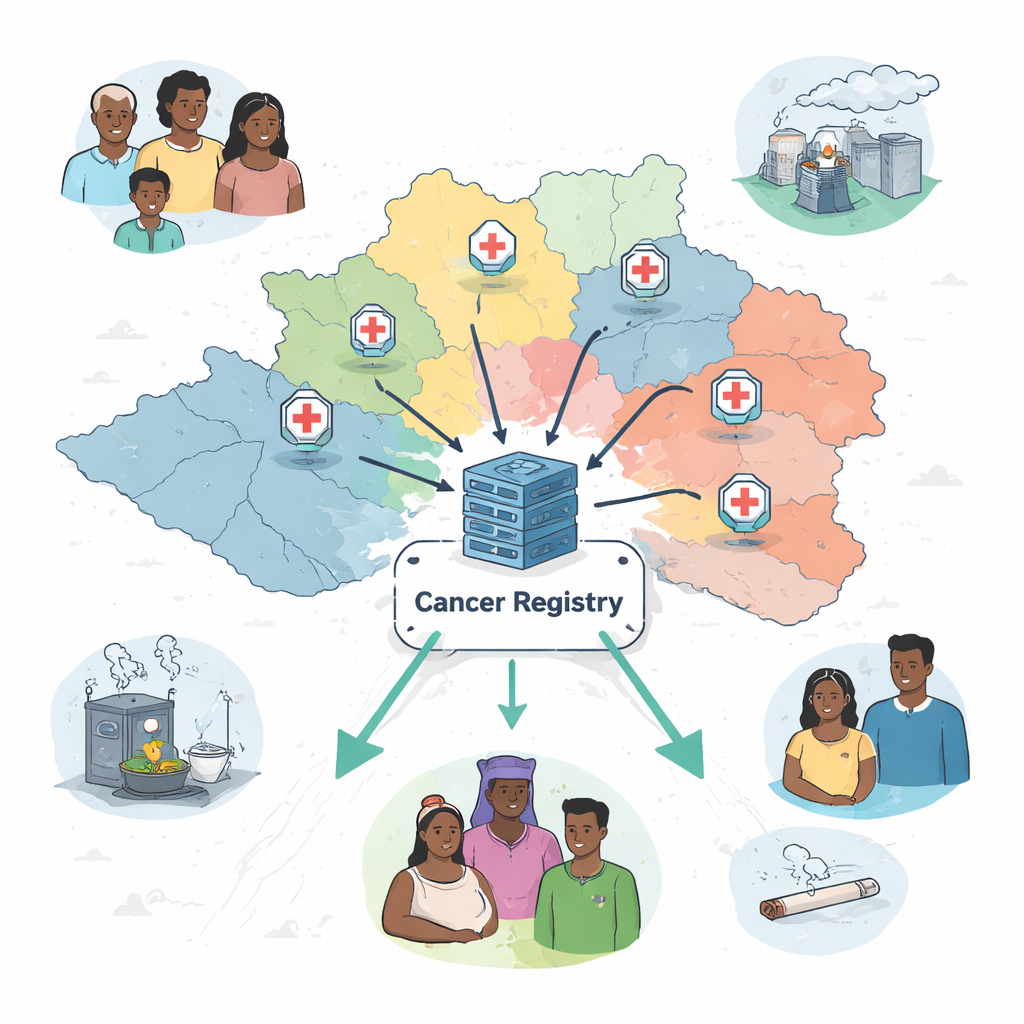
Who is getting lung cancer
The study paints a striking portrait of lung cancer patients in Addis Ababa. The median age at diagnosis was 56 years, and after adjusting for the city’s youthful population, about 60 years—still younger than in many high-income countries. One in four patients was under 45, suggesting that lung cancer is not just a disease of the very old in this setting. Men and women were affected in almost equal numbers, with only a slight excess among men. When the cancer type could be determined under the microscope, adenocarcinoma was the most common form and was more frequent in women. This pattern fits with a population where smoking is relatively uncommon—especially among women—and where other factors, such as air pollution and smoke from cooking fuels, likely play a large role.
How late the cancer is found
Perhaps the most alarming finding is how advanced the disease is by the time it is diagnosed. Among patients whose stage was recorded, 93% already had late-stage cancer (stage III or IV), and there were no recorded cases at the earliest stage. Many records were missing stage information, reflecting limited diagnostic resources, but the data that do exist suggest that very few people are being caught early enough for the best chance of cure. The authors link this to several issues: vague early symptoms that are easy to overlook, limited access to advanced imaging and biopsy tests, the absence of organized screening programs, and confusion with other lung diseases such as tuberculosis, which is common in Ethiopia. 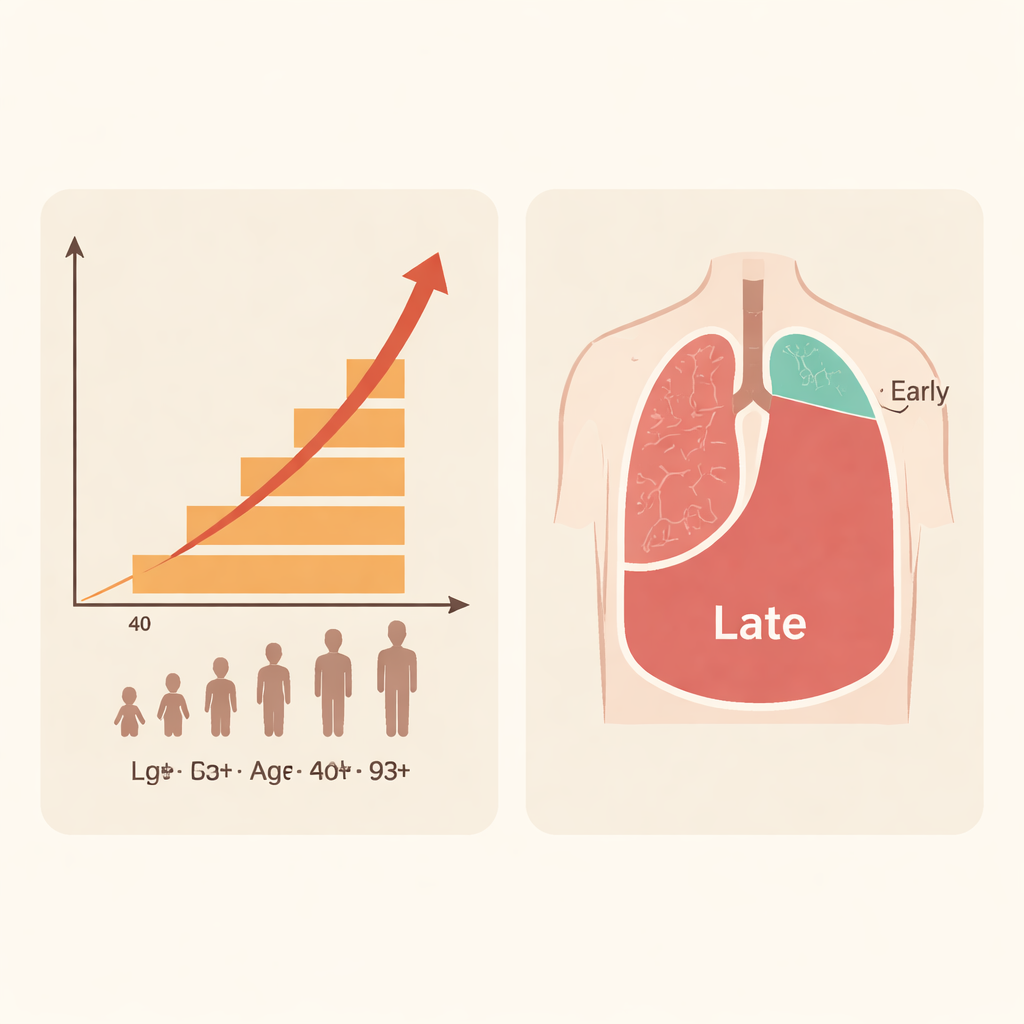
How common lung cancer is, and where
Overall, lung cancer is still diagnosed less often in Addis Ababa than in many parts of the world. The age-standardized incidence rate was about 3 cases per 100,000 people each year—far below the levels seen in East Asia, Europe, or North America. However, the risk climbed sharply with age, reaching its highest levels in people in their seventies. The disease also did not strike evenly across the city. Some sub-cities, such as Bole and several central districts, had incidence rates up to almost twice as high as the lowest district, hinting at differences in air quality, living conditions, or access to diagnosis that warrant closer investigation. Over the 12-year period, the overall incidence remained fairly stable, but rates in women crept upward by about 3% per year, while rates in men stayed flat.
What this means for prevention and care
For a lay reader, the bottom line is that lung cancer in Addis Ababa is relatively uncommon but often strikes younger adults and is usually found very late, when treatment options are limited. Smoking is not the only story; indoor and outdoor air pollution and other local factors likely contribute significantly, especially for women and nonsmokers. The authors argue that Ethiopia needs strategies tailored to its own reality: better diagnostic tools, more complete cancer data, awareness campaigns that teach people and health workers to recognize early warning signs, and prevention efforts that address dirty fuels and polluted air as well as tobacco. By understanding who is getting sick and when, this study provides a roadmap for catching lung cancer earlier and reducing its toll in the years ahead.
Citation: Estifanos, N., Egata, G., Addissie, A. et al. Patient profiles, incidence and trends of lung cancer in Ethiopia from 2012 to 2023 using a cancer registry. Sci Rep 16, 6175 (2026). https://doi.org/10.1038/s41598-026-36944-x
Keywords: lung cancer, Ethiopia, cancer registry, air pollution, cancer trends