Clear Sky Science · en
Cannabis smoke extract disrupts trophoblast differentiation and causes mitochondrial dysfunction beyond the effects of Δ9-THC alone
Why this research matters for parents-to-be
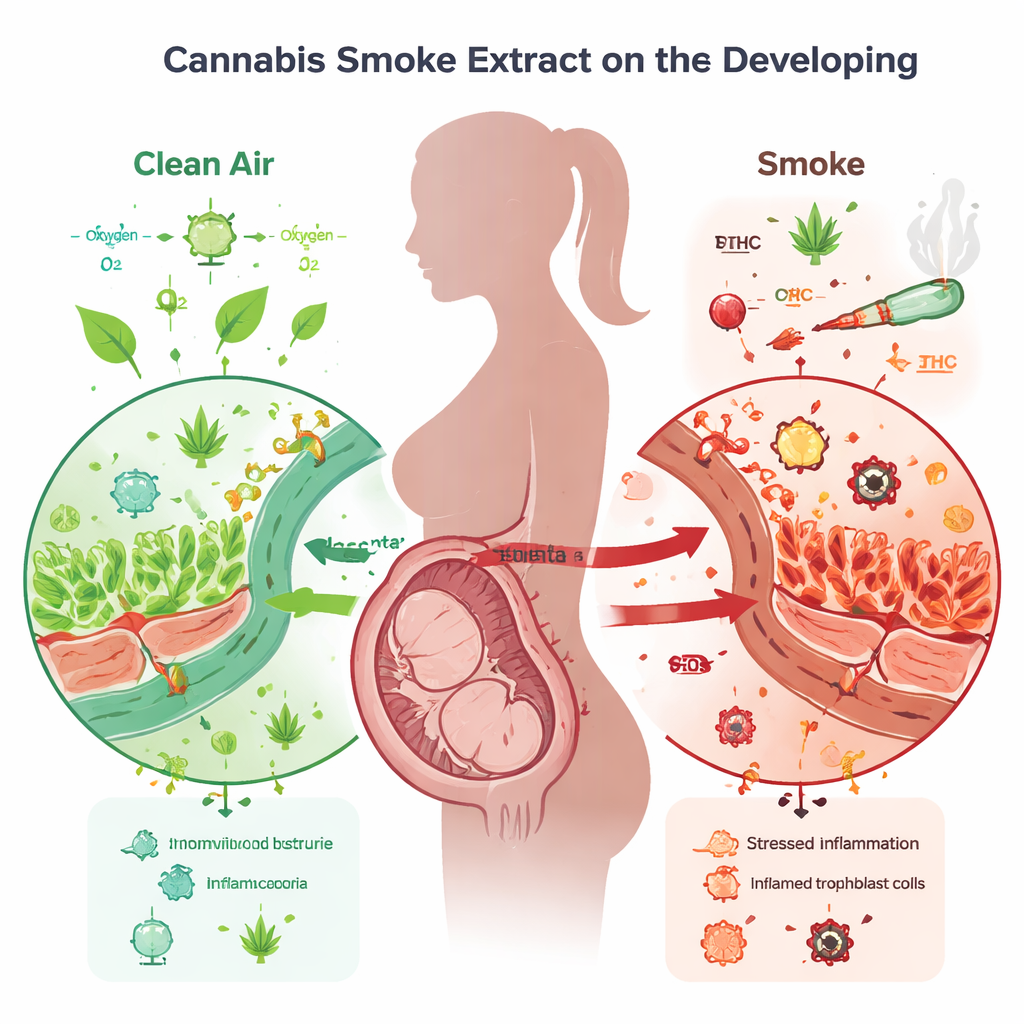
As cannabis becomes more widely available, many pregnant people assume that smoking it is a safer choice than cigarettes, or even that it might ease nausea without much risk. This study asks a basic but crucial question: what does cannabis smoke itself—not just its famous ingredient THC—do to the cells that build the placenta, the organ that nourishes a growing baby? The answers suggest that smoke from cannabis may harm placental development in ways that isolated THC does not fully capture.
The placenta’s frontline builders
The placenta is lined with specialized cells called trophoblasts that fuse together to form a continuous outer layer. This living barrier controls how oxygen, nutrients, and hormones move between parent and fetus. In the lab, the researchers used a widely accepted human trophoblast cell model that can be coaxed to “differentiate” and fuse, mimicking how these cells mature during pregnancy. They compared what happened when the cells were exposed either to pure THC or to a cannabis smoke extract (CaSE) made by pulling smoke from THC-rich cannabis through culture fluid. This design let them separate the effects of THC alone from the complex cocktail of chemicals produced when cannabis is burned.
Smoke chemistry versus THC alone
When the team measured the chemicals in their cannabis smoke extract, they found THC at levels similar to those seen in people who smoke cannabis, but almost no CBD. Crucially, only the smoke extract—not THC alone—strongly switched on a gene called CYP1A1, which is known to respond to combustion by-products such as polycyclic aromatic hydrocarbons, common in tobacco smoke. This shows that the trophoblast cells were sensing and reacting to the burned-byproduct mixture. At modest concentrations, the smoke extract slightly reduced cell survival; at higher levels it sharply damaged viability, so the researchers focused most analyses on low to moderate doses that still left cells mostly alive.
Disrupted hormone signals and cell maturation
Healthy trophoblast differentiation is marked by the production of the pregnancy hormone hCG and by good cell-to-cell fusion. In the study, pure THC caused some changes in the genetic instructions for hCG, but did not lower hCG protein levels. By contrast, the cannabis smoke extract reduced both the gene activity and protein levels of hCG, and also decreased a key fusion gene called syncytin-1. At the same time, smoke-exposed cells showed signs of remaining more “proliferative” (dividing) instead of maturing into fully fused, hormone-producing cells. Together, these patterns suggest that smoke components interfere with the normal transition from growing trophoblasts into the stable, fused layer that is critical for sustaining pregnancy.
Stress inside the cell’s power plants
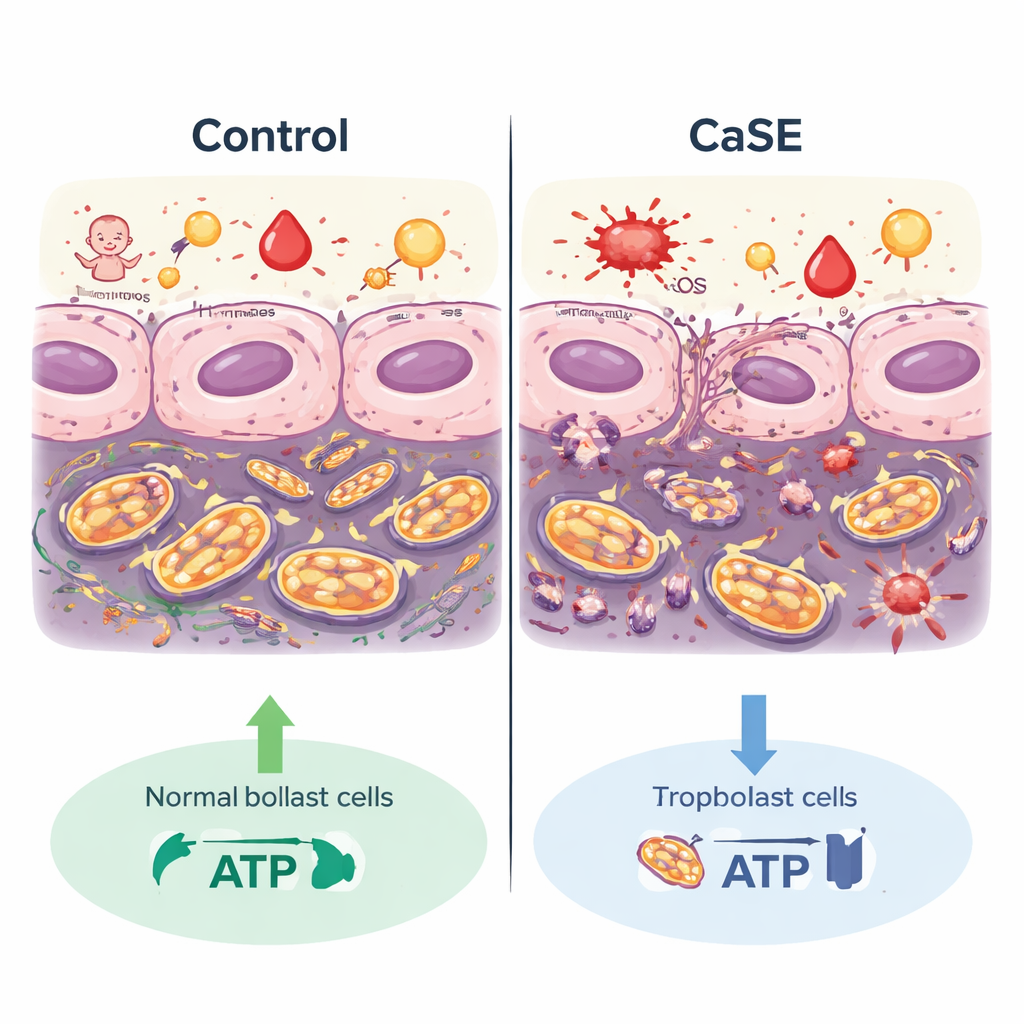
The researchers also examined mitochondria, the tiny power plants inside cells that generate energy and help control responses to stress. Low doses of cannabis smoke extract raised levels of reactive oxygen species—chemically reactive molecules that can damage cell components—without immediately collapsing the mitochondrial membrane potential, a key measure of mitochondrial health. Higher doses, however, lowered this membrane potential and decreased the cells’ oxygen consumption and ATP (energy) production. Pure THC alone also reduced mitochondrial respiration and ATP, but the smoke extract produced similar or worse energy deficits at lower effective THC levels. The smoke-treated cells ramped up some antioxidant defenses, indicating a struggle to counter oxidative stress, yet these responses did not fully prevent mitochondrial dysfunction.
Different signaling routes, added risks
THC acts in part through the body’s own cannabinoid system, especially the CB1 receptor. When the scientists blocked CB1, they were able to reverse some of the THC-induced changes in differentiation markers. However, this same blockade did not rescue the harmful effects of the cannabis smoke extract. That finding implies that non-THC components of smoke—likely combustion-derived chemicals that activate other pathways—play a major role in disrupting trophoblast development. In other words, simply thinking about “THC dose” is not enough to gauge risk: burning the plant adds new toxic actors that behave differently from THC alone.
What this means for real-world cannabis use
For a lay reader, the bottom line is that cannabis smoke appears to interfere with how placental cells grow, fuse, and produce key pregnancy hormones, while also straining their energy systems. These changes were stronger and more complex than those caused by THC on its own, and could help explain links between prenatal cannabis use and problems such as low birth weight or growth restriction. Although this work was done in cells, not in pregnant people, it reinforces the idea that smoking cannabis during pregnancy is unlikely to be harmless. The study underscores that health advice and future research should consider the whole smoke mixture—not just isolated cannabis ingredients—when assessing risks to the developing placenta and fetus.
Citation: Monaco, C., Minhas, M., Podinic, T. et al. Cannabis smoke extract disrupts trophoblast differentiation and causes mitochondrial dysfunction beyond the effects of Δ9-THC alone. Sci Rep 16, 6253 (2026). https://doi.org/10.1038/s41598-026-36939-8
Keywords: cannabis smoke and pregnancy, placental development, trophoblast cells, mitochondrial stress, prenatal cannabis risks