Clear Sky Science · en
Mindfulness promotes pro-environmental behaviors to reduce single-use plastic pollution
Why Paying Attention Can Help the Planet
Most of us know that plastic waste is a problem, but it can be hard to change everyday habits like grabbing a disposable cup or bag. This study asks a surprisingly simple question with big implications: can training our minds to be more present and aware actually help us use less single-use plastic? By looking at university students in Iran, the researchers explored how mindfulness, emotional self-control, and feeling connected to nature work together to nudge people toward more eco-friendly choices.
A Mental Habit With Real-World Effects
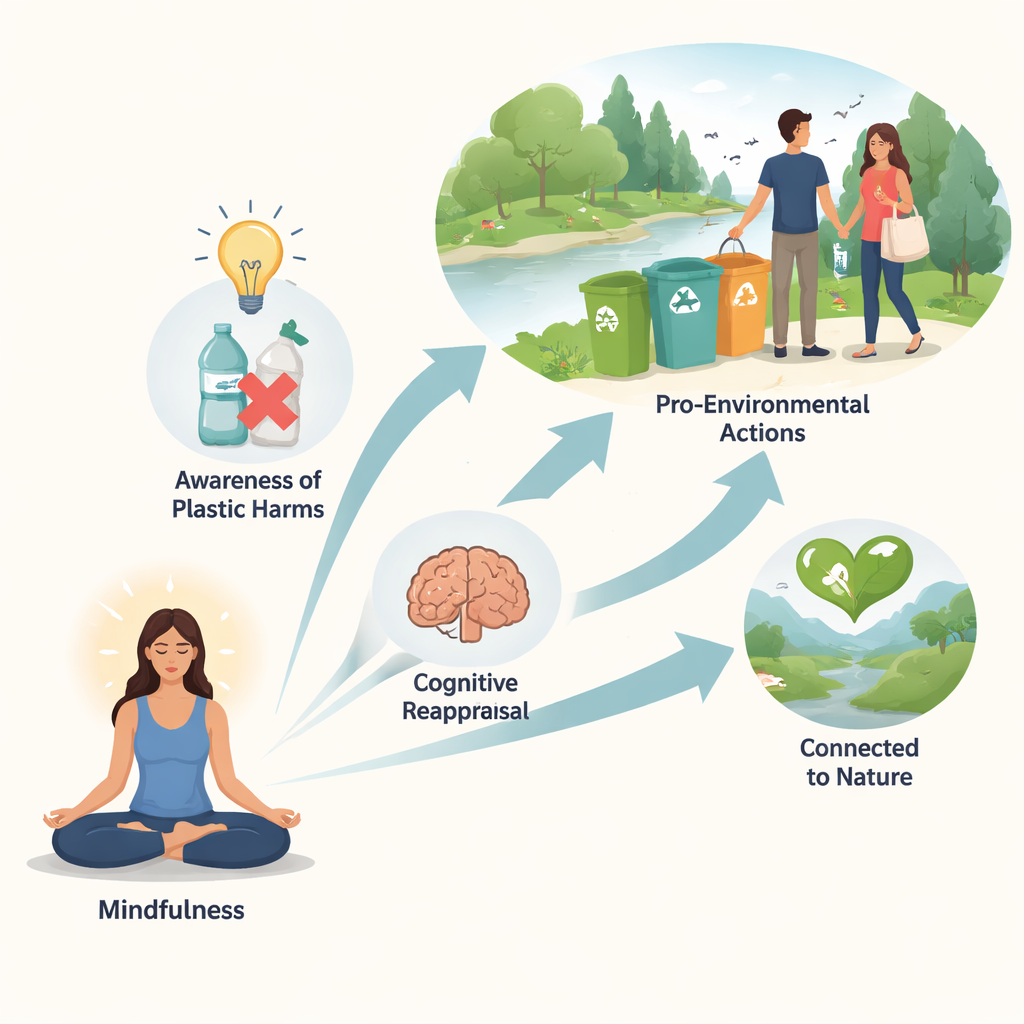
Mindfulness is the practice of paying attention to the present moment without judgment—notice what you are doing, feeling, and choosing right now. The researchers surveyed 309 students about how mindful they tend to be in daily life, how they regulate their emotions, how close they feel to nature, and how often they engage in pro-environmental behaviors such as recycling, reusing bags, saving energy, or taking public transport. They also measured how aware students were of the environmental, health, and economic harms of single-use plastics. Using statistical models, they tested whether more mindful people are in fact more likely to act in environmentally responsible ways.
From Noticing Plastic to Changing Habits
The results showed a clear pattern: students who reported higher mindfulness also reported more pro-environmental behaviors. This link worked in two ways. First, mindfulness had a direct relationship with greener actions—mindful students were more likely to recycle, cut down on plastic bags, and choose lower-impact options in everyday life. Second, and even more importantly, mindfulness boosted awareness of how single-use plastics damage ecosystems, wildlife, and human health. That plastic-specific awareness, in turn, strongly predicted greener behavior. In other words, being more present and attentive seems to make people more likely to notice the true costs of disposable plastics, which then helps turn good intentions into real-world choices.
Feelings, Nature, and What Matters Most
The study also examined cognitive reappraisal—our ability to rethink and reframe our emotional reactions, such as calming down frustration or fear. While this kind of emotional flexibility was linked to pro-environmental behavior, it played a smaller role than simple awareness of plastic’s harms. Rethinking feelings helped somewhat, but knowing concrete facts about plastic pollution was the stronger driver of action. Feeling connected to nature added another layer. Students who felt a sense of unity with the natural world were slightly more aware of plastic’s damage. For people already close to nature, mindfulness did not greatly change their emotional processing, but it still made them more aware of plastic harms, which then encouraged pro-environmental choices.
Turning Insight Into Everyday Action
These findings suggest that the most powerful combination is not abstract inner peace, but mindful attention focused on a very specific, visible problem: single-use plastics. Mindfulness on its own nudges people toward greener living, but it is especially effective when paired with clear information about how plastic waste chokes rivers, harms wildlife, and burdens communities. For educators, community leaders, and policymakers, that means mindfulness sessions, school activities, or workshops that explicitly highlight plastic pollution may be a practical way to encourage reusable bags and bottles, better recycling, and other small but important shifts.
What This Means for Everyday People
For a layperson, the takeaway is straightforward: slowing down and paying attention can help you see the hidden consequences of a throwaway lifestyle. When people become more mindful and more informed about the harms of single-use plastics, they are more likely to choose reusable options, sort their waste properly, and support local efforts to cut plastic. Emotional skills and a love of nature help, but the study shows that targeted awareness—really understanding what plastic does to our environment—is what most strongly turns concern into consistent, planet-friendly behavior.
Citation: Tanhayi, M., Chamani, A. & Mohammadi, S. Mindfulness promotes pro-environmental behaviors to reduce single-use plastic pollution. Sci Rep 16, 6868 (2026). https://doi.org/10.1038/s41598-026-36934-z
Keywords: mindfulness, single-use plastics, pro-environmental behavior, environmental awareness, nature connectedness