Clear Sky Science · en
Depression and long-term mortality among 5-year breast cancer survivors in Korea: a retrospective population-based cohort study
Why emotional health matters after cancer
Many women breathe a sigh of relief when they reach the five‑year mark after a breast cancer diagnosis, a milestone often seen as a sign that the worst is over. Yet emotional scars can linger long after treatment ends. This study from Korea asks a simple but important question: if a woman develops serious depression after breast cancer, does it affect how long she lives in the years that follow?
A nationwide look at life after breast cancer
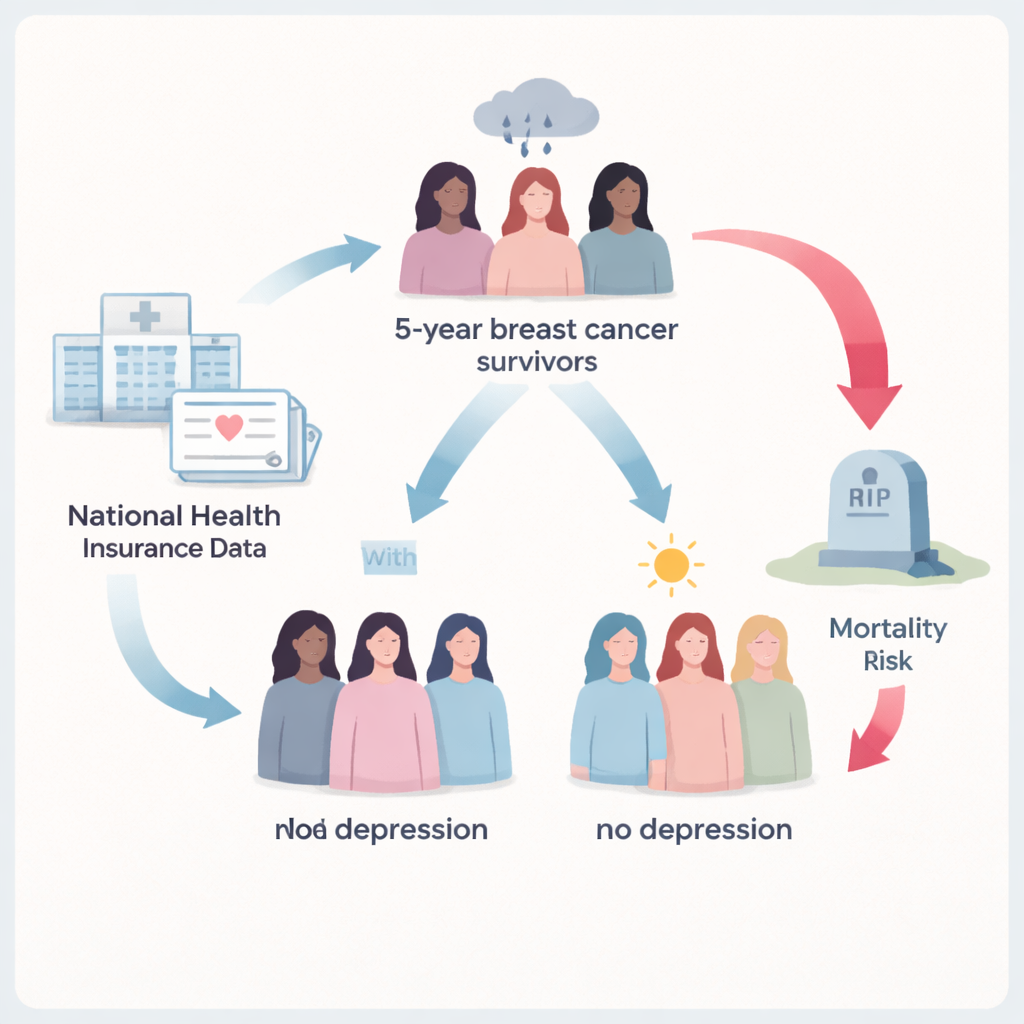
The researchers drew on South Korea’s national health insurance system, which keeps detailed records on medical visits, hospital stays, and deaths for almost the entire population. They focused on more than 63,000 women who were newly diagnosed with breast cancer between 2007 and 2013 and then identified those who survived at least five years. To make sure they were studying new cases of depression that arose after cancer, they excluded anyone who had been treated for depression before the breast cancer diagnosis, as well as women with missing information. In the end, 30,873 five‑year survivors aged 40 or older were followed for many additional years to see who developed depression and who later died.
Who was counted as having depression?
In everyday life, depression can range from feeling low for a while to severe illness that requires hospital care. The team wanted to be certain they were identifying cases of serious, medically recognized depression. They defined depression as a hospital stay of at least two days where depression was the main diagnosis, based on international disease codes. This strict definition meant they were likely capturing women with substantial symptoms, such as deep sadness, loss of interest, or suicidal thoughts, rather than milder or uncertain cases. Over the first five years after their breast cancer diagnosis, 502 women met this definition of new depression; the remaining 30,371 did not.
What happened to women with and without depression?
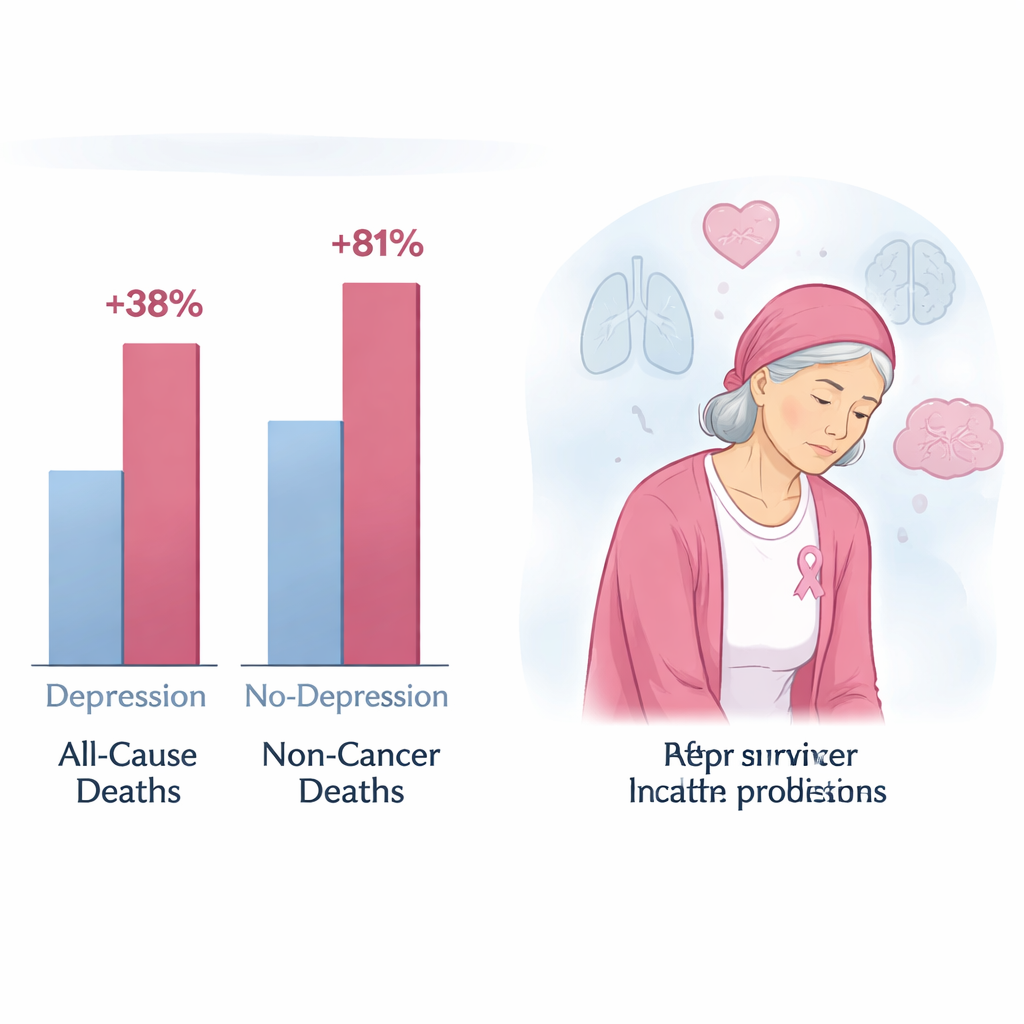
Starting after the five‑year survival mark, the researchers tracked all participants until death or the end of 2021, using national death records. During this time, 1,904 women died. After carefully accounting for age, income, smoking, drinking, exercise, blood pressure, blood sugar, cholesterol, body weight, and other illnesses, women who had been hospitalized for depression had a 38 percent higher risk of dying from any cause than those without depression. When the team looked more closely, they found that the link was strongest for deaths not directly caused by cancer, such as heart disease, lung disease, or other medical problems: here, depression was tied to an 81 percent higher risk of death. By contrast, deaths specifically due to cancer itself did not show a clear increase linked to depression in this group.
Older survivors and lifestyle factors
The study also explored which women were most affected. The added risk tied to depression was particularly marked among women aged 65 and older. In this older group, depression nearly doubled the risk of death. Higher risks were also seen among women with lower incomes and those who reported no regular physical activity, suggesting that social and lifestyle challenges may magnify the impact of poor mental health. These patterns fit with what doctors already know: depression can make it harder to keep medical appointments, follow complex treatment plans, stay active, and pay attention to new symptoms that might signal other serious illnesses.
What this means for survivors and their families
This research does not prove that depression directly causes women to die earlier, but it strongly suggests that serious depression is a warning sign that should not be ignored. Among Korean women who had already cleared the five‑year hurdle after breast cancer, those who developed depression were more likely to die later on, especially from non‑cancer causes. For patients, families, and health systems, the message is clear: emotional recovery is not a luxury after cancer treatment, it is part of survival. Regular screening for depression, access to counseling and appropriate treatment, and efforts to reduce stigma around mental illness may all help breast cancer survivors live not only longer, but better, lives.
Citation: Lee, S.K., Park, S. & Park, S.M. Depression and long-term mortality among 5-year breast cancer survivors in Korea: a retrospective population-based cohort study. Sci Rep 16, 7287 (2026). https://doi.org/10.1038/s41598-026-36919-y
Keywords: breast cancer survivorship, depression, mental health after cancer, Korea cohort study, long-term mortality