Clear Sky Science · en
Effect of online digital storytelling on the comprehension of authentic listening materials and engagement of junior high school EFL learners
Stories That Help Kids Really Hear English
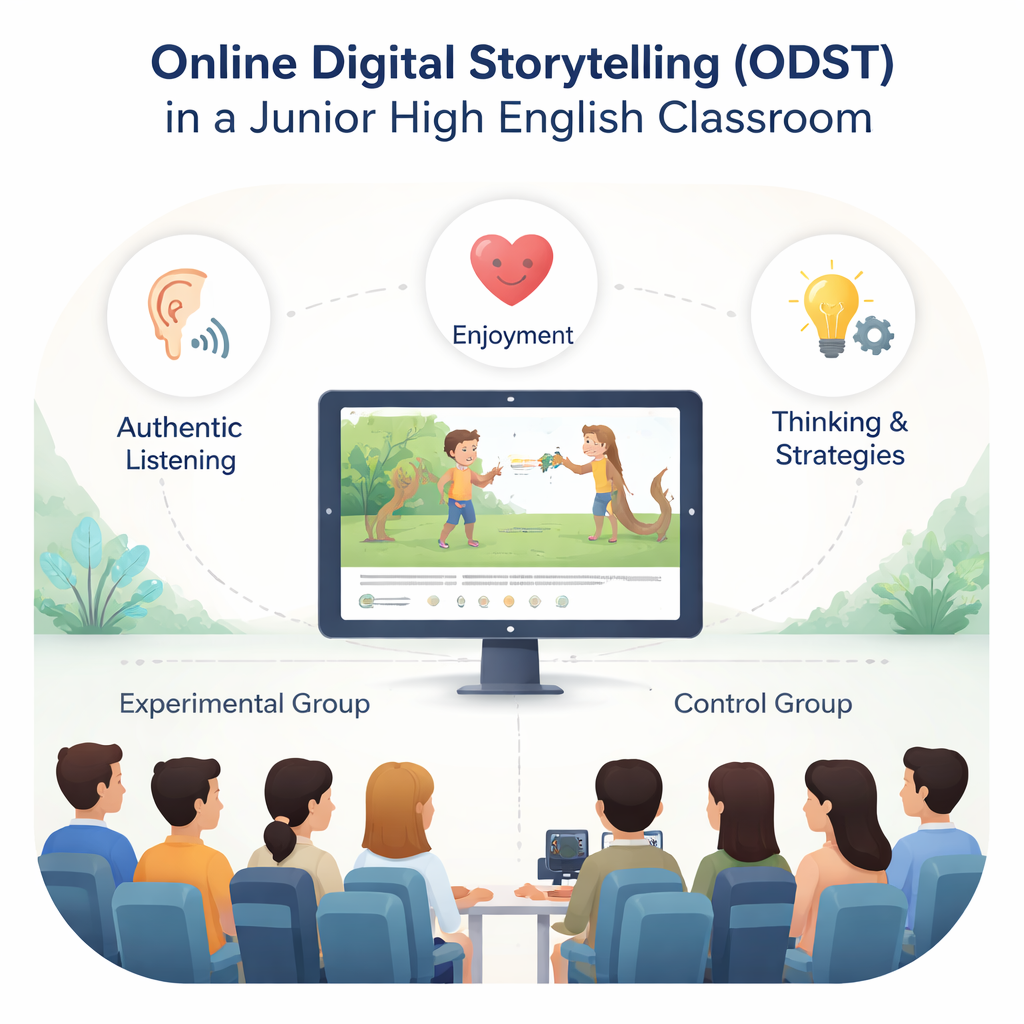
For many children learning English in school, listening exercises feel like a blur of fast words from a textbook CD. This study explores a more inviting option: online digital storytelling. Instead of dry recordings, seventh graders in public schools in China listened to short online stories with pictures, captions, voices, and sound effects. The researchers asked a simple question with big implications for classrooms worldwide: can these rich, story-based clips help students both understand real spoken English better and enjoy listening more?
Why Ordinary Listening Practice Falls Short
Traditional listening lessons often use slow, scripted dialogues written just for the classroom. While these are safe and predictable, they do not sound like real-life English. Real conversations, news clips, and stories are faster, less tidy, and full of natural pauses and expressions. Beginners can easily feel lost and discouraged when faced with this kind of “authentic” speech. Yet, this is exactly the type of language they will meet in movies, online videos, and everyday communication. The challenge is how to give students early contact with authentic speech without overwhelming them or draining their motivation.
Turning Fairy Tales into Digital English Lessons
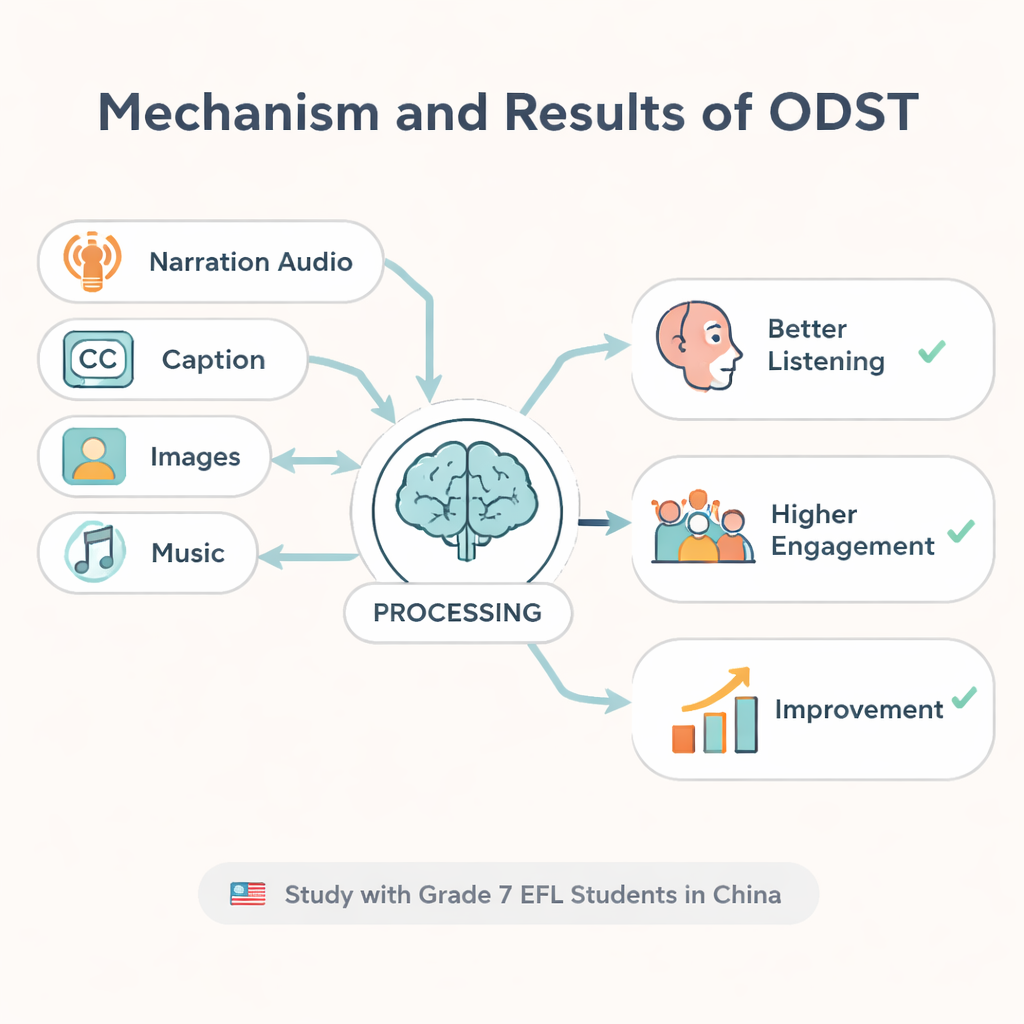
To tackle this problem, the researchers built an eight-week program using online digital storytelling. One group of Grade 7 students listened to adapted fairy tales and short real-life stories on an interactive website. Each 2–3-minute story combined natural-sounding narration by fluent speakers with colorful images, simple English captions, sound effects, and music. The teacher followed a clear routine: before listening, students looked at pictures and key words and predicted what might happen; during listening, they first watched the whole story, then replayed short sections and answered questions; afterward, they retold the story, acted out scenes, or drew their favorite moments. A second, similar class learned the same themes from the national textbook but used only audio CDs and paper exercises, without visuals or digital tools.
Measuring Real Understanding and Real Involvement
Both classes took matching tests before and after the eight weeks. The listening tests used authentic-style recordings and questions about main ideas, details, and implied meanings. Students also filled out a simple 18-item questionnaire with smiley faces to show how engaged they felt: Did they pay attention? Did they enjoy listening? Did they try to think and understand? After the lessons, the researchers interviewed ten students from each class to hear, in their own words, what it felt like to learn with digital stories versus traditional CDs. This mix of numbers and personal comments allowed the team to see not only whether scores changed, but also why.
Big Gains in Listening and Liking English
The results were clear. Both groups started at similar levels, but the digital storytelling group’s listening scores rose sharply, while the textbook group improved only a little. When the researchers adjusted for starting differences, the digital group’s advantage was large and educationally meaningful. The same pattern appeared in engagement: students who learned with online stories reported higher enjoyment, better focus in class, and more active thinking about what they heard. Interviews backed this up. Students using digital stories said that pictures and captions helped them follow the plot, that replaying short parts made confusing moments clearer, and that the music and characters made them curious about what would happen next. Some even reported using new listening tricks—like predicting from titles and tone of voice—when there were no pictures at all. In contrast, many students in the traditional class described the CD as “too fast,” “boring,” and easy to give up on.
What This Means for Classrooms
For everyday schools that cannot fully redesign their English programs, this study suggests a practical path forward. Short, well-designed digital stories can make challenging, real-world English feel understandable and worth the effort. By pairing sound with images, captions, and simple follow-up tasks like retelling, teachers can help young learners stay engaged long enough to build genuine listening skills. The study was done in only two classes in one city, so results should be extended with care. Still, within typical limits on time, devices, and teacher training, online digital storytelling gave students a double benefit: they understood more of the English they heard, and they felt more interested, confident, and willing to keep listening.
Citation: Wang, W., Zheng, L. & Zhang, J. Effect of online digital storytelling on the comprehension of authentic listening materials and engagement of junior high school EFL learners. Sci Rep 16, 6639 (2026). https://doi.org/10.1038/s41598-026-36913-4
Keywords: digital storytelling, English listening, junior high learners, student engagement, authentic materials